 Image 1 of 4
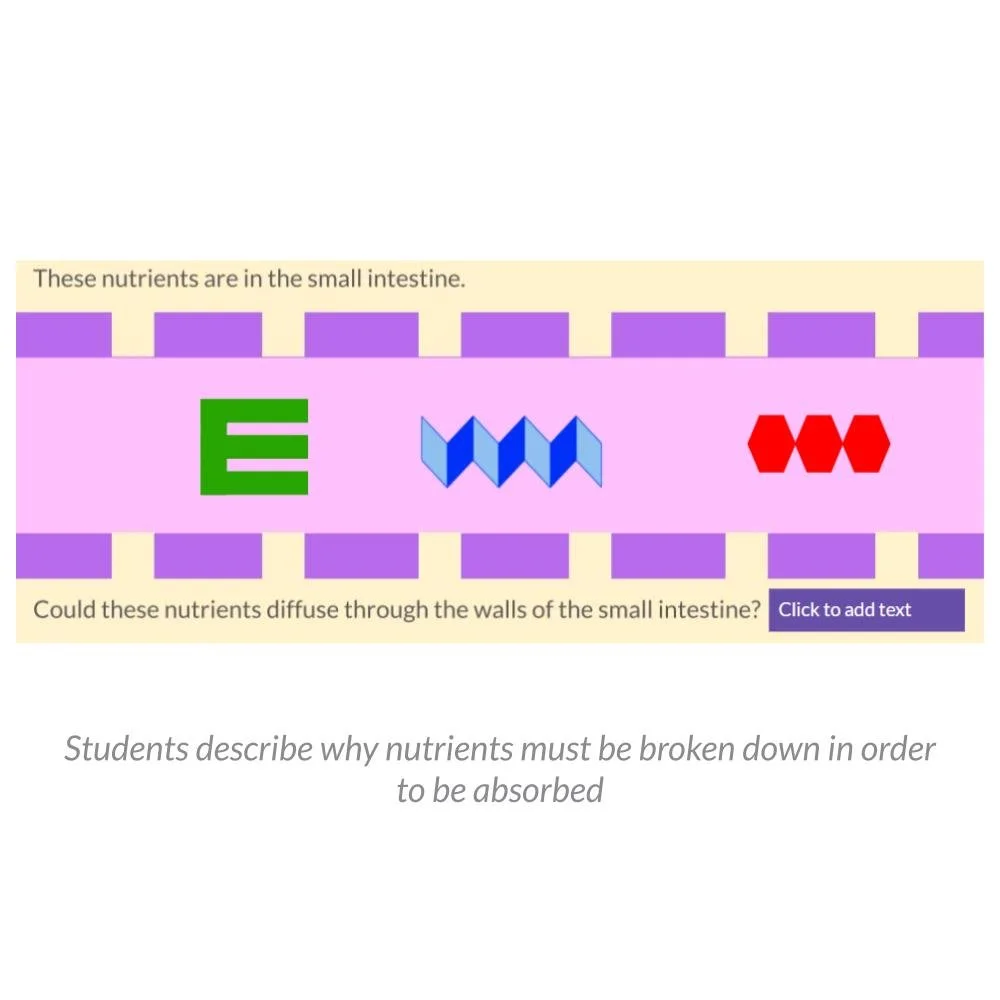 Image 2 of 4
 Image 3 of 4
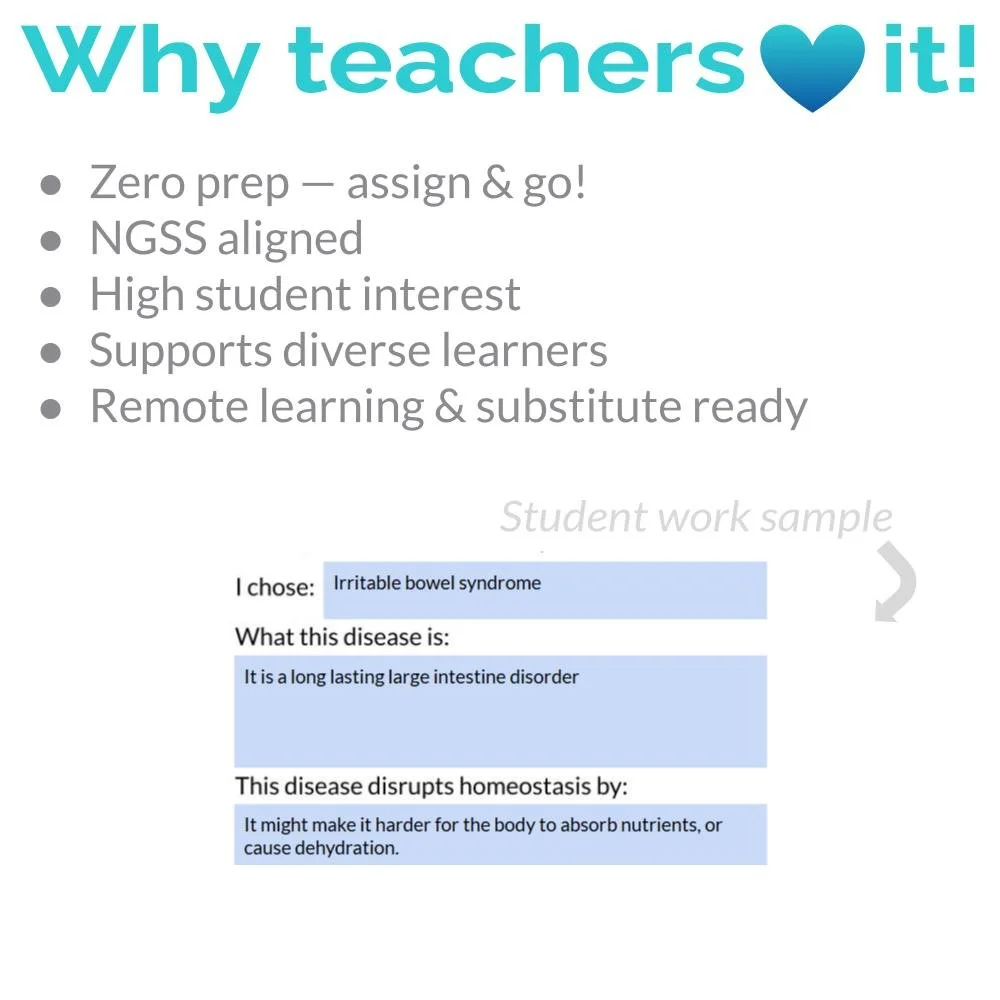 Image 4 of 4
Introductory Human Body Systems Lesson on Digestion.
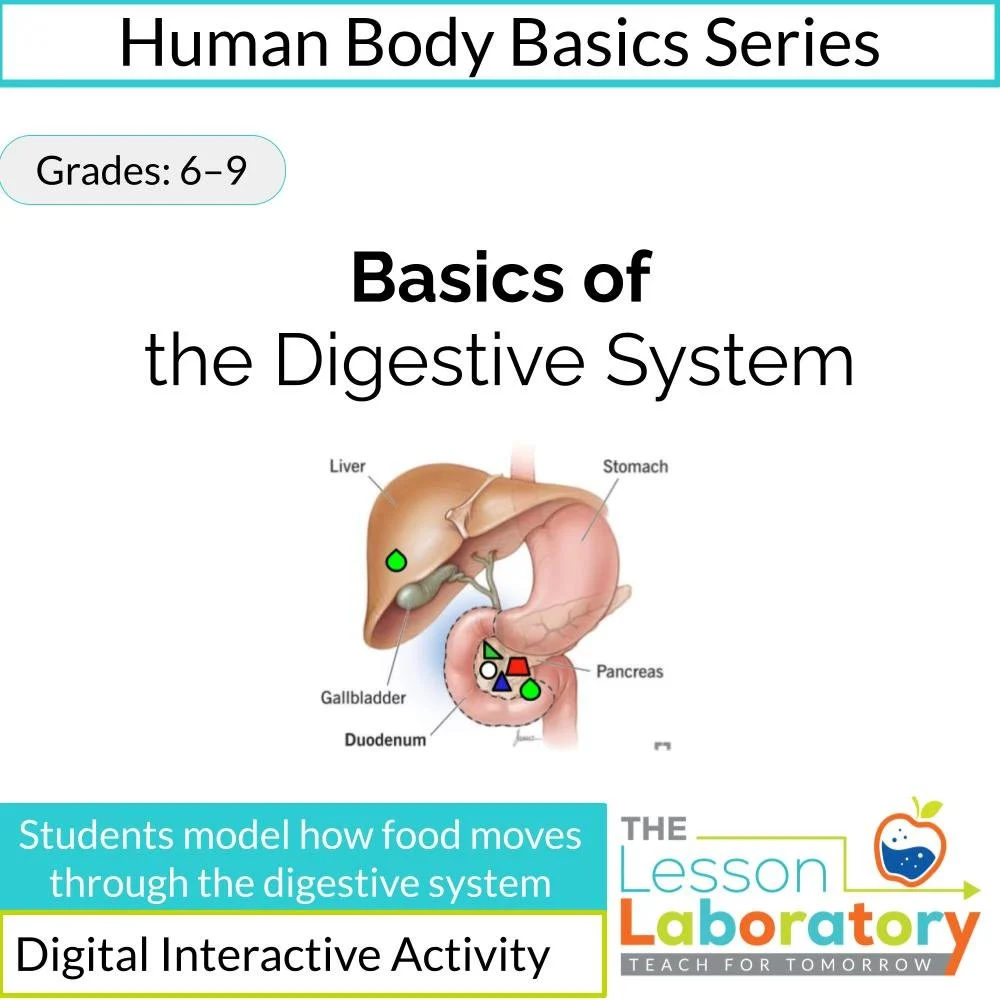
This interactive Google Slides lesson introduces students to the structure and function of the human digestive system through a carefully scaffolded sequence of visual modeling, guided analysis, and applied practice. Students build a foundational understanding of how food is processed, broken down, and absorbed, while developing essential biological vocabulary and systems-thinking skills.
Students begin by exploring the overall purpose of the digestive system and the pathway food follows through the body. They identify and label major organs of digestion and examine the specific role each organ plays in mechanical and chemical digestion. Through drag-and-drop and structured response activities, students connect structure to function across the system.
The lesson then deepens student understanding of digestion at the molecular level by introducing enzymes and the breakdown of macromolecules. Students analyze how nutrients are absorbed in the small intestine and transported for use by the body, reinforcing the idea that digestion is a coordinated, multi-step process rather than a single event.
To connect biology to real-world relevance, students explore common digestive system disorders and consider how disruptions in organ function affect the entire system. Throughout the lesson, students practice interpreting diagrams, applying vocabulary, and explaining biological processes using evidence from visuals and models.
This lesson is designed for in-person or digital classrooms and includes built-in opportunities for formative assessment and structured reflection. A printable, literacy-based exit ticket is included for optional written synthesis and cross-disciplinary skill development.
This lesson supports students in:
Identifying major digestive system organs and their functions
Tracing the pathway of food through the body
Understanding mechanical vs. chemical digestion
Explaining nutrient absorption in the small intestine
Connecting organ function to overall system performance
Applying concepts to real-world digestive health
With its clear progression, visual emphasis, and student-centered activities, this lesson provides an accessible and rigorous introduction to human digestion that prepares students for more advanced study of body systems.
To see a preview of this lesson, click here.
NGSS Alignment (High School):
HS-LS1-2
NGSS Alignment (Middle School):
MS-LS1-3
Science & Engineering Practices (SEPs):
Developing and Using Models; Analyzing and Interpreting Data; Obtaining, Evaluating, and Communicating Information
Crosscutting Concepts (CCCs):
Structure and Function; Systems and System Models; Energy and Matter
Common Core (Literacy in Science):
RST.6-8.2
RST.6-8.4
RST.6-8.7
Introductory Human Body Systems Lesson on Digestion.
This interactive Google Slides lesson introduces students to the structure and function of the human digestive system through a carefully scaffolded sequence of visual modeling, guided analysis, and applied practice. Students build a foundational understanding of how food is processed, broken down, and absorbed, while developing essential biological vocabulary and systems-thinking skills.
Students begin by exploring the overall purpose of the digestive system and the pathway food follows through the body. They identify and label major organs of digestion and examine the specific role each organ plays in mechanical and chemical digestion. Through drag-and-drop and structured response activities, students connect structure to function across the system.
The lesson then deepens student understanding of digestion at the molecular level by introducing enzymes and the breakdown of macromolecules. Students analyze how nutrients are absorbed in the small intestine and transported for use by the body, reinforcing the idea that digestion is a coordinated, multi-step process rather than a single event.
To connect biology to real-world relevance, students explore common digestive system disorders and consider how disruptions in organ function affect the entire system. Throughout the lesson, students practice interpreting diagrams, applying vocabulary, and explaining biological processes using evidence from visuals and models.
This lesson is designed for in-person or digital classrooms and includes built-in opportunities for formative assessment and structured reflection. A printable, literacy-based exit ticket is included for optional written synthesis and cross-disciplinary skill development.
This lesson supports students in:
Identifying major digestive system organs and their functions
Tracing the pathway of food through the body
Understanding mechanical vs. chemical digestion
Explaining nutrient absorption in the small intestine
Connecting organ function to overall system performance
Applying concepts to real-world digestive health
With its clear progression, visual emphasis, and student-centered activities, this lesson provides an accessible and rigorous introduction to human digestion that prepares students for more advanced study of body systems.
To see a preview of this lesson, click here.
NGSS Alignment (High School):
HS-LS1-2
NGSS Alignment (Middle School):
MS-LS1-3
Science & Engineering Practices (SEPs):
Developing and Using Models; Analyzing and Interpreting Data; Obtaining, Evaluating, and Communicating Information
Crosscutting Concepts (CCCs):
Structure and Function; Systems and System Models; Energy and Matter
Common Core (Literacy in Science):
RST.6-8.2
RST.6-8.4
RST.6-8.7