 Image 1 of 4
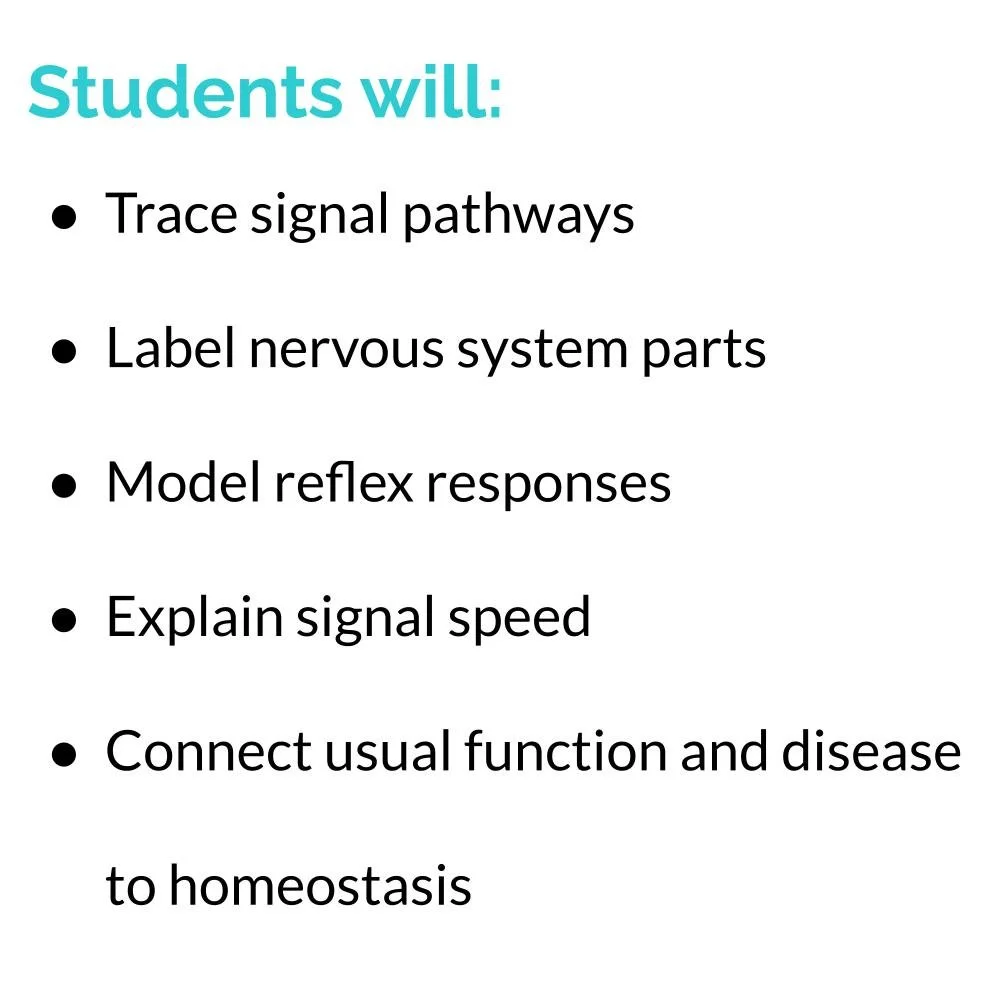 Image 2 of 4
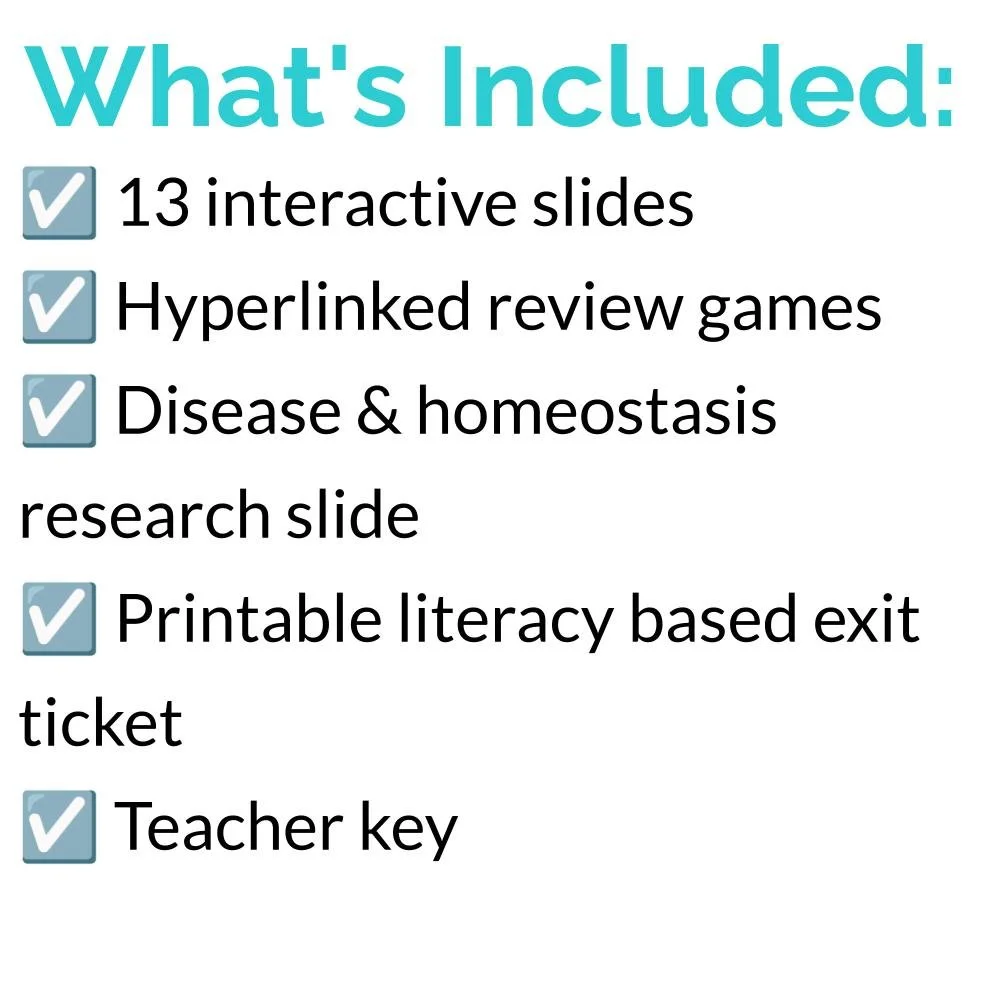 Image 3 of 4
 Image 4 of 4
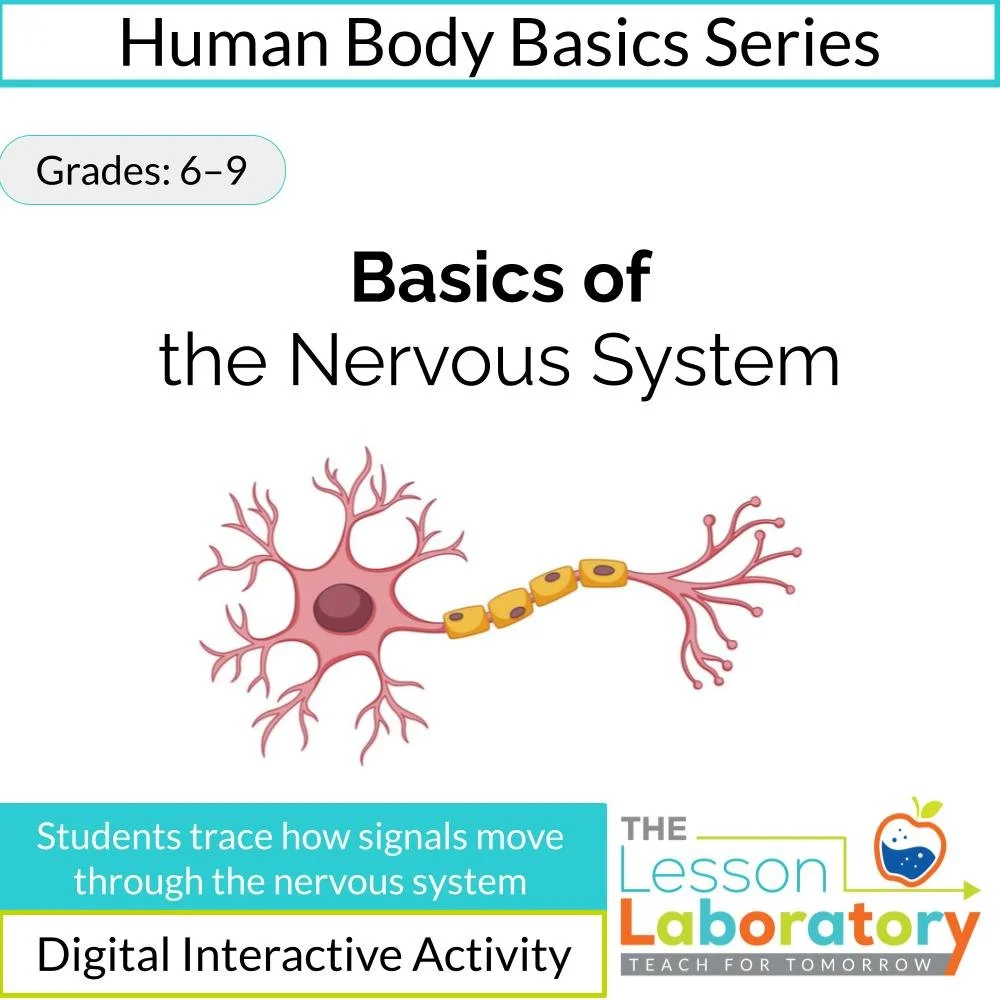
Student-Centered Nervous System Lesson with Drag & Drop Activities, Reflex Arc Practice, and Real-World Connections to Homeostasis.
Help students build a clear, functional understanding of the nervous system without overwhelming them.
This student-centered lesson introduces the basic structure and function of the nervous system through visual models, scaffolded activities, and repeated opportunities to trace how signals move through the body. Students move beyond memorization to understand how the nervous system helps organisms respond to stimuli and maintain homeostasis.
Designed for grades 6–9 and remedial learners, this lesson emphasizes clarity, coherence, and accessibility while still requiring meaningful thinking.
Define the function of the nervous system and its role in maintaining homeostasis
Identify and organize the central and peripheral nervous systems
Label and explore the structure of a neuron
Connect neuron structure to its function in transmitting signals
Trace the pathway of a signal through the body (stimulus → response)
Analyze why speed of signaling is critical for survival and homeostasis
Model and explain a spinal reflex arc
Compare reflexes to conscious responses
Predict what happens when signaling is disrupted
Investigate a nervous system disorder and connect it to homeostasis
This lesson is built to reduce cognitive overload while maintaining rigor. Concepts are introduced visually and revisited through multiple formats, allowing students to build understanding over time.
Drag-and-drop and labeling activities reinforce key structures
Visual signal pathways support cause-and-effect reasoning
Scaffolded questions guide students from observation to explanation
Repeated exposure to core ideas (signal flow, response, homeostasis) builds retention
Optional supports allow for differentiation without disrupting lesson flow
1 full lesson (designed for a single class period)
Student-facing Google Slides
Built-in interactive activities
Linked practice opportunities
Exit ticket (printable or digital, depending on your format)
Grades: 6–9
Course: Intro Biology, General Science, Human Body Systems
Ideal for:
Remedial or support classes
First exposure to the nervous system
Review before more advanced instruction
To see a preview of this lesson, click here.
NGSS Alignment (Middle School):
None- This lesson focuses on foundational understanding and skill-building appropriate for introductory and remedial contexts.
Science & Engineering Practices (SEPs):
Developing and Using Models
Constructing Explanations
Obtaining, Evaluating, and Communicating Information
Crosscutting Concepts (CCCs):
Structure and Function
Cause and Effect
Systems and System Models
Common Core (Literacy in Science):
CCSS.ELA-LITERACY.RST.6-8.4; CCSS.ELA-LITERACY.WHST.6-8.2
Student-Centered Nervous System Lesson with Drag & Drop Activities, Reflex Arc Practice, and Real-World Connections to Homeostasis.
Help students build a clear, functional understanding of the nervous system without overwhelming them.
This student-centered lesson introduces the basic structure and function of the nervous system through visual models, scaffolded activities, and repeated opportunities to trace how signals move through the body. Students move beyond memorization to understand how the nervous system helps organisms respond to stimuli and maintain homeostasis.
Designed for grades 6–9 and remedial learners, this lesson emphasizes clarity, coherence, and accessibility while still requiring meaningful thinking.
Define the function of the nervous system and its role in maintaining homeostasis
Identify and organize the central and peripheral nervous systems
Label and explore the structure of a neuron
Connect neuron structure to its function in transmitting signals
Trace the pathway of a signal through the body (stimulus → response)
Analyze why speed of signaling is critical for survival and homeostasis
Model and explain a spinal reflex arc
Compare reflexes to conscious responses
Predict what happens when signaling is disrupted
Investigate a nervous system disorder and connect it to homeostasis
This lesson is built to reduce cognitive overload while maintaining rigor. Concepts are introduced visually and revisited through multiple formats, allowing students to build understanding over time.
Drag-and-drop and labeling activities reinforce key structures
Visual signal pathways support cause-and-effect reasoning
Scaffolded questions guide students from observation to explanation
Repeated exposure to core ideas (signal flow, response, homeostasis) builds retention
Optional supports allow for differentiation without disrupting lesson flow
1 full lesson (designed for a single class period)
Student-facing Google Slides
Built-in interactive activities
Linked practice opportunities
Exit ticket (printable or digital, depending on your format)
Grades: 6–9
Course: Intro Biology, General Science, Human Body Systems
Ideal for:
Remedial or support classes
First exposure to the nervous system
Review before more advanced instruction
To see a preview of this lesson, click here.
NGSS Alignment (Middle School):
None- This lesson focuses on foundational understanding and skill-building appropriate for introductory and remedial contexts.
Science & Engineering Practices (SEPs):
Developing and Using Models
Constructing Explanations
Obtaining, Evaluating, and Communicating Information
Crosscutting Concepts (CCCs):
Structure and Function
Cause and Effect
Systems and System Models
Common Core (Literacy in Science):
CCSS.ELA-LITERACY.RST.6-8.4; CCSS.ELA-LITERACY.WHST.6-8.2