 Image 1 of 4
 Image 2 of 4
 Image 3 of 4
 Image 4 of 4
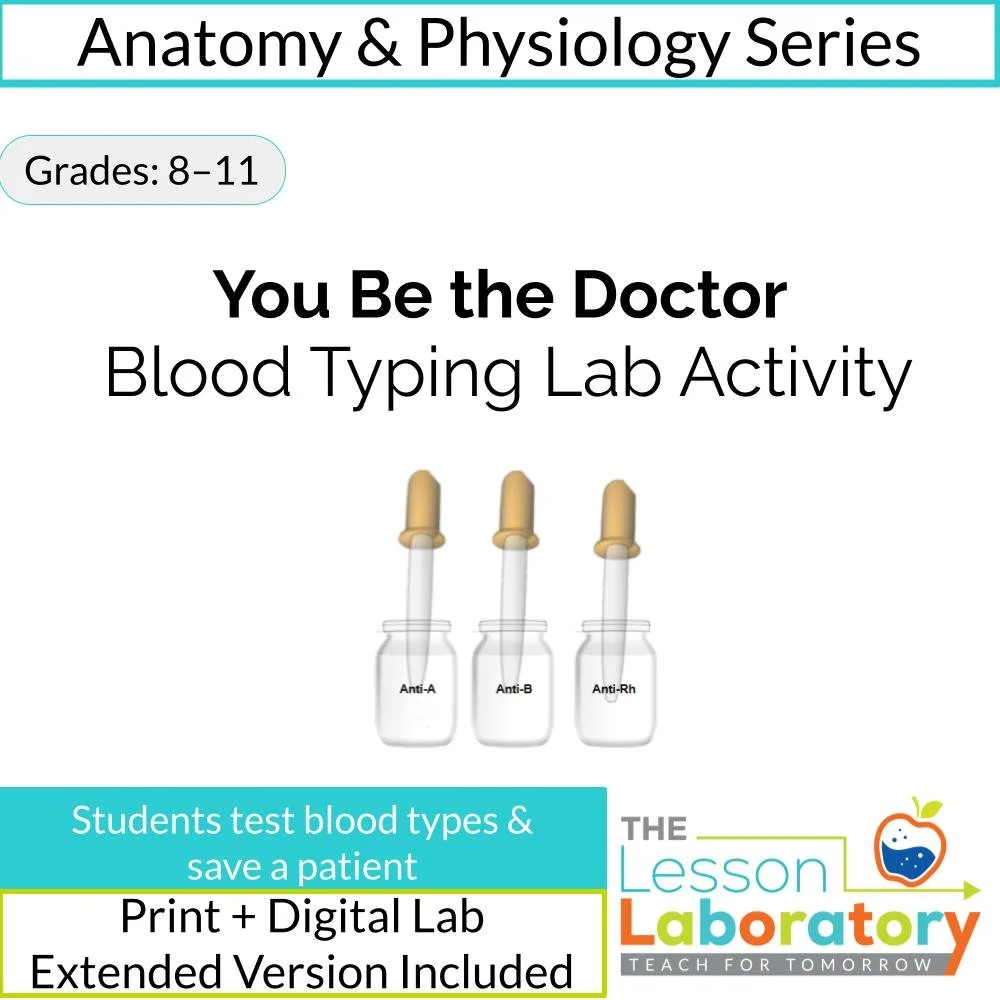
Students act as doctors to determine blood types, identify safe transfusions, and analyze Rh incompatibility using hands-on or digital testing.
In this inquiry-based lab, students take on the role of doctors in an emergency medical scenario as they determine a patient’s blood type and identify safe blood transfusions.
Students begin by testing simulated blood samples using Anti-A, Anti-B, and Anti-Rh sera to determine the blood type of an injured child involved in a car accident. They then analyze the blood types of family members to determine who can safely donate blood and whether a medical risk exists for a future pregnancy.
As the investigation progresses, students apply their understanding of ABO blood groups, the Rh factor, and inheritance patterns to explain their conclusions using scientific evidence.
This activity combines hands-on investigation, genetics analysis, and real-world medical applications, making blood typing concepts both concrete and meaningful for students.
Students work through a three-part medical case study:
1️⃣ Determine a patient’s blood type
Students test simulated blood samples using Anti-A, Anti-B, and Anti-Rh sera to determine the patient’s blood type.
2️⃣ Identify a compatible blood donor
Students analyze the blood types of the patient’s parents to determine which family member can safely donate blood.
3️⃣ Investigate Rh incompatibility in pregnancy
Students evaluate whether testing a fetus is necessary and explain the medical reasoning behind Rh incompatibility during pregnancy.
In the extended version of the activity, students also:
• Analyze mixed blood evidence in a forensic case
• Apply Punnett squares and inheritance patterns to blood types
• Explain why DNA evidence is more reliable than blood typing in criminal investigations
Throughout the activity, students use claim–evidence–reasoning (CER) to support their conclusions.
This resource includes three versions of the lab to support different classroom needs.
Print Lab (Short Version)
• Student lab sheets
• Blood typing investigation
• Data tables and conclusions
Print Lab (Extended Version)
Includes everything above plus:
• Genetics and Punnett square analysis
• Blood type inheritance questions
• Forensic blood evidence investigation
• Extended written responses
Digital Version
• Designed for remote learning, absent students, or review
• Students analyze digital blood test results and record conclusions
Also included:
• Teacher instructions
• Setup guide for the simulated blood typing lab
• Anti-serum preparation chart
• Complete answer key
This lab uses an inexpensive simulation that mimics blood typing reactions.
Blood samples can be created using milk and food coloring, while “anti-sera” are simulated with water or vinegar to produce visible clotting reactions.
This setup allows students to observe realistic reactions without specialized lab materials.
This activity includes multiple entry points for different classrooms:
• Short version for introductory genetics lessons
• Extended version for deeper analysis and inheritance patterns
• Digital version for remote learning or make-up work
Teachers can easily adjust the depth of the activity depending on class level and available time.
• Interpreting blood typing reactions
• Determining compatible blood transfusions
• Applying ABO and Rh genetics
• Using Punnett squares to analyze inheritance
• Claim–Evidence–Reasoning scientific writing
• Evaluating evidence in medical and forensic contexts
Preparation for this lab is minimal.
Teachers can set up the simulated blood typing station using common classroom materials. Students rotate through stations to test each sample and record their results.
A digital version is included for classes without lab access or for absent students.
Best suited for:
• High School Biology
• Genetics Units
• Human Body Systems
• Introductory Forensics
The extended version provides additional challenge for honors or advanced biology classes.
Teachers appreciate that this activity:
• Connects genetics to real medical decisions
• Provides both hands-on and digital options
• Includes differentiated versions for different classes
• Encourages scientific reasoning rather than memorization
• Integrates genetics, medicine, and forensics in one lesson
To preview this lab, click here.
NGSS Alignment (High School):
HS-LS1-2
HS-LS3-1
NGSS Alignment (Middle School):
MS-LS1-2
MS-LS3-2
Science & Engineering Practices (SEPs):
Developing and Using Models; Analyzing and Interpreting Data; Constructing Explanations; Engaging in Argument from Evidence
Crosscutting Concepts (CCCs):
Structure and Function; Cause and Effect; Systems and System Models
Common Core (Literacy in Science):
RST.6-8.3, RST.9-10.3
RST.6-8.7, RST.9-10.7
WHST.9-10.2
Students act as doctors to determine blood types, identify safe transfusions, and analyze Rh incompatibility using hands-on or digital testing.
In this inquiry-based lab, students take on the role of doctors in an emergency medical scenario as they determine a patient’s blood type and identify safe blood transfusions.
Students begin by testing simulated blood samples using Anti-A, Anti-B, and Anti-Rh sera to determine the blood type of an injured child involved in a car accident. They then analyze the blood types of family members to determine who can safely donate blood and whether a medical risk exists for a future pregnancy.
As the investigation progresses, students apply their understanding of ABO blood groups, the Rh factor, and inheritance patterns to explain their conclusions using scientific evidence.
This activity combines hands-on investigation, genetics analysis, and real-world medical applications, making blood typing concepts both concrete and meaningful for students.
Students work through a three-part medical case study:
1️⃣ Determine a patient’s blood type
Students test simulated blood samples using Anti-A, Anti-B, and Anti-Rh sera to determine the patient’s blood type.
2️⃣ Identify a compatible blood donor
Students analyze the blood types of the patient’s parents to determine which family member can safely donate blood.
3️⃣ Investigate Rh incompatibility in pregnancy
Students evaluate whether testing a fetus is necessary and explain the medical reasoning behind Rh incompatibility during pregnancy.
In the extended version of the activity, students also:
• Analyze mixed blood evidence in a forensic case
• Apply Punnett squares and inheritance patterns to blood types
• Explain why DNA evidence is more reliable than blood typing in criminal investigations
Throughout the activity, students use claim–evidence–reasoning (CER) to support their conclusions.
This resource includes three versions of the lab to support different classroom needs.
Print Lab (Short Version)
• Student lab sheets
• Blood typing investigation
• Data tables and conclusions
Print Lab (Extended Version)
Includes everything above plus:
• Genetics and Punnett square analysis
• Blood type inheritance questions
• Forensic blood evidence investigation
• Extended written responses
Digital Version
• Designed for remote learning, absent students, or review
• Students analyze digital blood test results and record conclusions
Also included:
• Teacher instructions
• Setup guide for the simulated blood typing lab
• Anti-serum preparation chart
• Complete answer key
This lab uses an inexpensive simulation that mimics blood typing reactions.
Blood samples can be created using milk and food coloring, while “anti-sera” are simulated with water or vinegar to produce visible clotting reactions.
This setup allows students to observe realistic reactions without specialized lab materials.
This activity includes multiple entry points for different classrooms:
• Short version for introductory genetics lessons
• Extended version for deeper analysis and inheritance patterns
• Digital version for remote learning or make-up work
Teachers can easily adjust the depth of the activity depending on class level and available time.
• Interpreting blood typing reactions
• Determining compatible blood transfusions
• Applying ABO and Rh genetics
• Using Punnett squares to analyze inheritance
• Claim–Evidence–Reasoning scientific writing
• Evaluating evidence in medical and forensic contexts
Preparation for this lab is minimal.
Teachers can set up the simulated blood typing station using common classroom materials. Students rotate through stations to test each sample and record their results.
A digital version is included for classes without lab access or for absent students.
Best suited for:
• High School Biology
• Genetics Units
• Human Body Systems
• Introductory Forensics
The extended version provides additional challenge for honors or advanced biology classes.
Teachers appreciate that this activity:
• Connects genetics to real medical decisions
• Provides both hands-on and digital options
• Includes differentiated versions for different classes
• Encourages scientific reasoning rather than memorization
• Integrates genetics, medicine, and forensics in one lesson
To preview this lab, click here.
NGSS Alignment (High School):
HS-LS1-2
HS-LS3-1
NGSS Alignment (Middle School):
MS-LS1-2
MS-LS3-2
Science & Engineering Practices (SEPs):
Developing and Using Models; Analyzing and Interpreting Data; Constructing Explanations; Engaging in Argument from Evidence
Crosscutting Concepts (CCCs):
Structure and Function; Cause and Effect; Systems and System Models
Common Core (Literacy in Science):
RST.6-8.3, RST.9-10.3
RST.6-8.7, RST.9-10.7
WHST.9-10.2