 Image 1 of 4
 Image 2 of 4
 Image 3 of 4
 Image 4 of 4
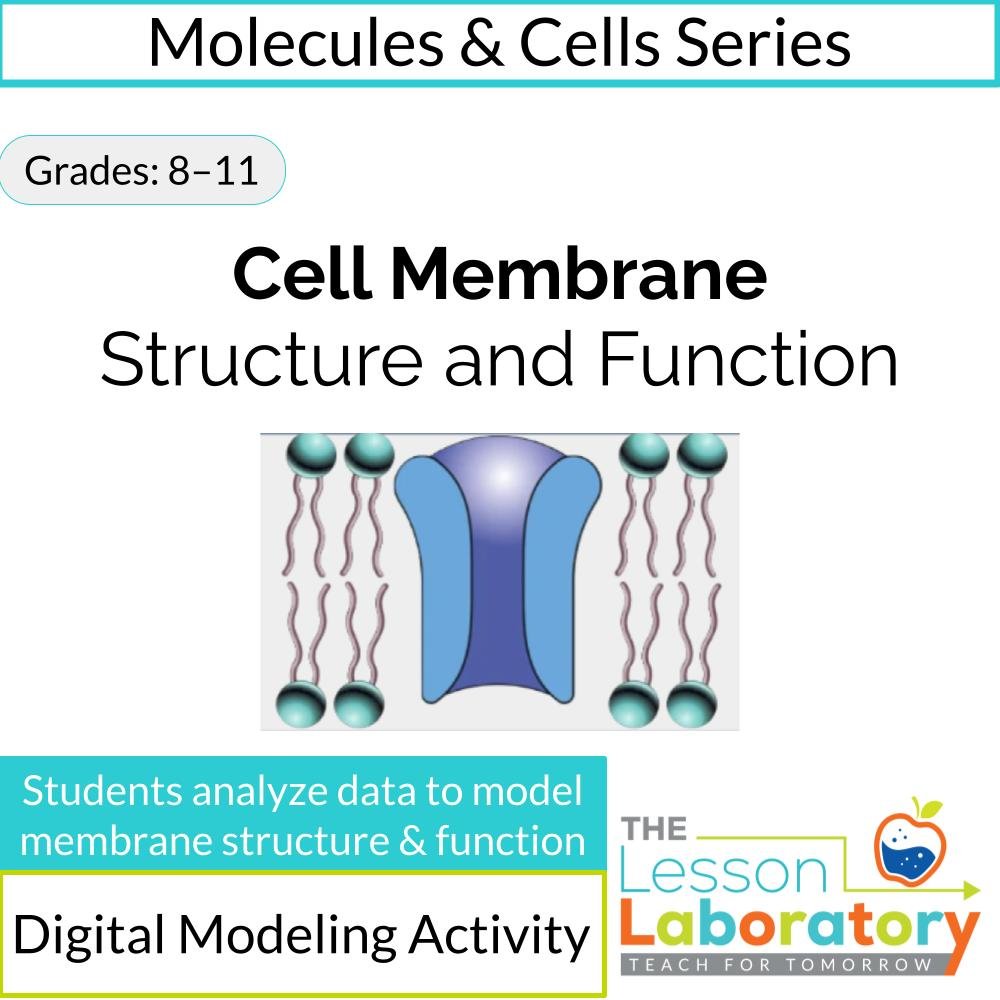
Students analyze data, model membrane structure, and explain how phospholipid properties determine selective permeability.
This lesson introduces the structure and function of the cell membrane through a modeling-based, evidence-driven approach. Rather than receiving the membrane model directly, students analyze data, identify patterns, and construct their own explanation for how membrane structure determines function.
Students begin by examining the structure of a phospholipid and using its properties to predict how it interacts with water. They then apply this understanding to determine how phospholipids organize into a bilayer. From there, students analyze experimental data (including classic membrane surface area investigations) to refine their model and support their conclusions with evidence.
Throughout the lesson, students are asked to make claims, cite evidence, and explain their reasoning, building a mechanistic understanding of selective permeability rather than memorizing membrane components.
What Students Do
Analyze the structure of a phospholipid to determine hydrophilic and hydrophobic regions
Construct and revise a model of the phospholipid bilayer
Interpret experimental data related to membrane surface area
Use evidence to determine the primary structure of the cell membrane
Apply structure → function reasoning to explain selective permeability
Complete scaffolded CER-style reasoning tasks
Instructional Design
This lesson is built using a modeling-style progression:
Observation – Students examine molecular structure and properties
Pattern Identification – Students determine how phospholipids behave in water
Model Construction – Students build an initial membrane model
Evidence Analysis – Students analyze data to revise and support their model
Explanation – Students connect structure to function using scientific reasoning
This structure supports both conceptual understanding and scientific thinking, making it appropriate for NGSS-aligned classrooms.
Differentiation & Scaffolding
This lesson includes built-in, student-controlled scaffolding :
Optional visual supports embedded directly in slides
Layered task difficulty (students can reveal more guided versions as needed)
Structured data tables with varying levels of support
Multiple scenario choices for final application questions
Students can independently adjust the level of support without disrupting the flow of the lesson.
What’s Included
16 student-facing Google Slides
Built-in modeling tasks and data analysis activities
Scaffolded versions of key tasks for differentiation
Teacher answer key
Printable, literacy-based exit ticket
Grade Level
Designed for Grades 8–11 biology, with scaffolds supporting access for younger students and sufficient rigor for high school courses.
Where This Fits
This lesson works well:
As an introduction to cell membrane structure and function
Before teaching diffusion, osmosis, and active transport
As part of a Molecules & Cells unit focused on structure → function relationships
Why Teachers Use This Lesson
Moves beyond memorization to mechanistic understanding
Requires students to think, not copy notes
Structured enough to be no-prep and classroom-ready
Flexible scaffolding supports a wide range of learners
To see a preview of this lesson, click here.
HS-LS1-2
MS-LS1-2
Developing and Using Models
Analyzing and Interpreting Data
Constructing Explanations
Engaging in Argument from Evidence
Structure and Function
Cause and Effect
Systems and System Models
RST.6-8.1 / RST.9-10.1
RST.6-8.7 / RST.9-10.7
WHST.6-8.1 / WHST.9-10.1
WHST.6-8.2 / WHST.9-10.2
Bundle Upgrade Policy
This lesson is included in one or more bundles. To support flexible purchasing and long-term use of our curriculum, Lesson Laboratory offers a bundle upgrade policy.
If you purchase this lesson and decide at a later date that you would like to upgrade to a bundle, you may request a store credit equal to the total amount paid for duplicate items.
To request an upgrade credit, please email thelessonlaboratory@gmail.com and include:
Your username
The order numbers for both the original purchase(s) and the bundle
The names of the duplicate resources
Requests must be submitted within 30 days of the bundle purchase. Credits are issued as store credit for future Lesson Laboratory purchases and are not provided as cash refunds.
This policy applies only to purchases of resources that are later included in a Lesson Laboratory bundle and is limited to one adjustment per upgrade pathway.
Students analyze data, model membrane structure, and explain how phospholipid properties determine selective permeability.
This lesson introduces the structure and function of the cell membrane through a modeling-based, evidence-driven approach. Rather than receiving the membrane model directly, students analyze data, identify patterns, and construct their own explanation for how membrane structure determines function.
Students begin by examining the structure of a phospholipid and using its properties to predict how it interacts with water. They then apply this understanding to determine how phospholipids organize into a bilayer. From there, students analyze experimental data (including classic membrane surface area investigations) to refine their model and support their conclusions with evidence.
Throughout the lesson, students are asked to make claims, cite evidence, and explain their reasoning, building a mechanistic understanding of selective permeability rather than memorizing membrane components.
What Students Do
Analyze the structure of a phospholipid to determine hydrophilic and hydrophobic regions
Construct and revise a model of the phospholipid bilayer
Interpret experimental data related to membrane surface area
Use evidence to determine the primary structure of the cell membrane
Apply structure → function reasoning to explain selective permeability
Complete scaffolded CER-style reasoning tasks
Instructional Design
This lesson is built using a modeling-style progression:
Observation – Students examine molecular structure and properties
Pattern Identification – Students determine how phospholipids behave in water
Model Construction – Students build an initial membrane model
Evidence Analysis – Students analyze data to revise and support their model
Explanation – Students connect structure to function using scientific reasoning
This structure supports both conceptual understanding and scientific thinking, making it appropriate for NGSS-aligned classrooms.
Differentiation & Scaffolding
This lesson includes built-in, student-controlled scaffolding :
Optional visual supports embedded directly in slides
Layered task difficulty (students can reveal more guided versions as needed)
Structured data tables with varying levels of support
Multiple scenario choices for final application questions
Students can independently adjust the level of support without disrupting the flow of the lesson.
What’s Included
16 student-facing Google Slides
Built-in modeling tasks and data analysis activities
Scaffolded versions of key tasks for differentiation
Teacher answer key
Printable, literacy-based exit ticket
Grade Level
Designed for Grades 8–11 biology, with scaffolds supporting access for younger students and sufficient rigor for high school courses.
Where This Fits
This lesson works well:
As an introduction to cell membrane structure and function
Before teaching diffusion, osmosis, and active transport
As part of a Molecules & Cells unit focused on structure → function relationships
Why Teachers Use This Lesson
Moves beyond memorization to mechanistic understanding
Requires students to think, not copy notes
Structured enough to be no-prep and classroom-ready
Flexible scaffolding supports a wide range of learners
To see a preview of this lesson, click here.
HS-LS1-2
MS-LS1-2
Developing and Using Models
Analyzing and Interpreting Data
Constructing Explanations
Engaging in Argument from Evidence
Structure and Function
Cause and Effect
Systems and System Models
RST.6-8.1 / RST.9-10.1
RST.6-8.7 / RST.9-10.7
WHST.6-8.1 / WHST.9-10.1
WHST.6-8.2 / WHST.9-10.2
Bundle Upgrade Policy
This lesson is included in one or more bundles. To support flexible purchasing and long-term use of our curriculum, Lesson Laboratory offers a bundle upgrade policy.
If you purchase this lesson and decide at a later date that you would like to upgrade to a bundle, you may request a store credit equal to the total amount paid for duplicate items.
To request an upgrade credit, please email thelessonlaboratory@gmail.com and include:
Your username
The order numbers for both the original purchase(s) and the bundle
The names of the duplicate resources
Requests must be submitted within 30 days of the bundle purchase. Credits are issued as store credit for future Lesson Laboratory purchases and are not provided as cash refunds.
This policy applies only to purchases of resources that are later included in a Lesson Laboratory bundle and is limited to one adjustment per upgrade pathway.