 Image 1 of 4
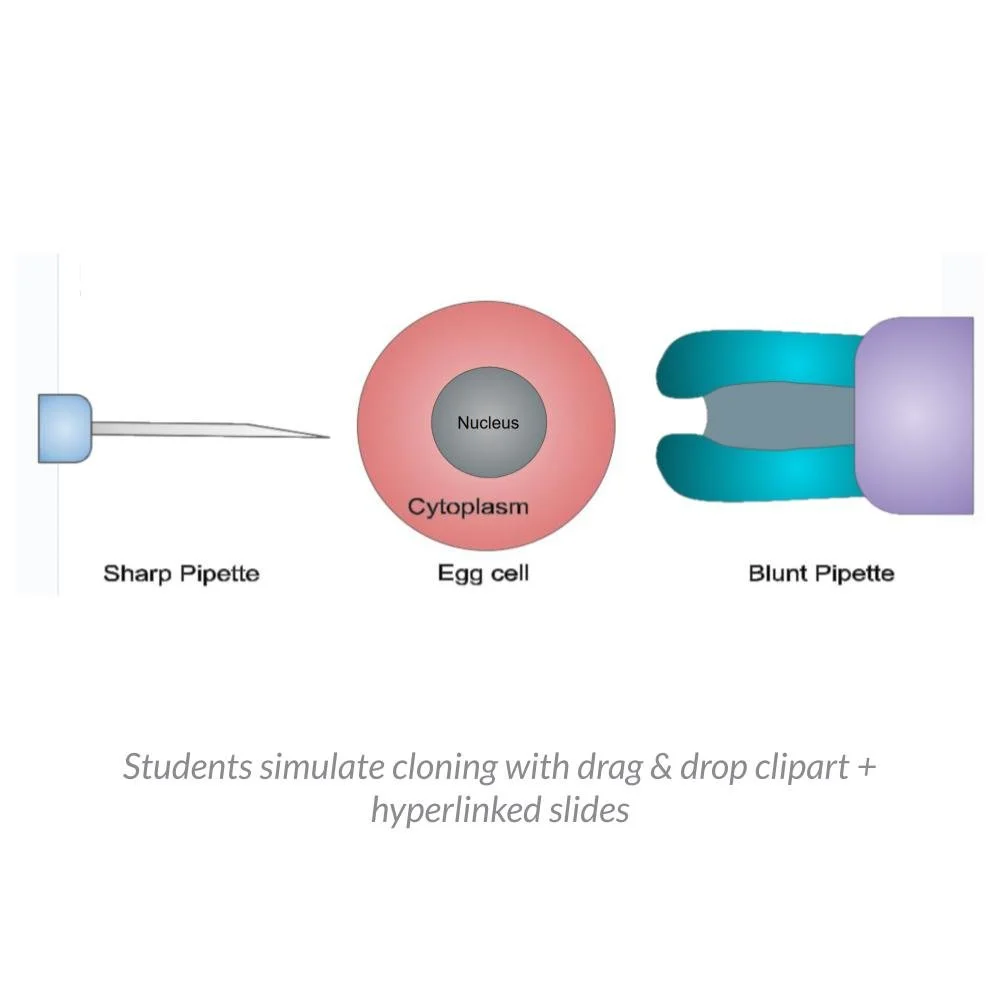 Image 2 of 4
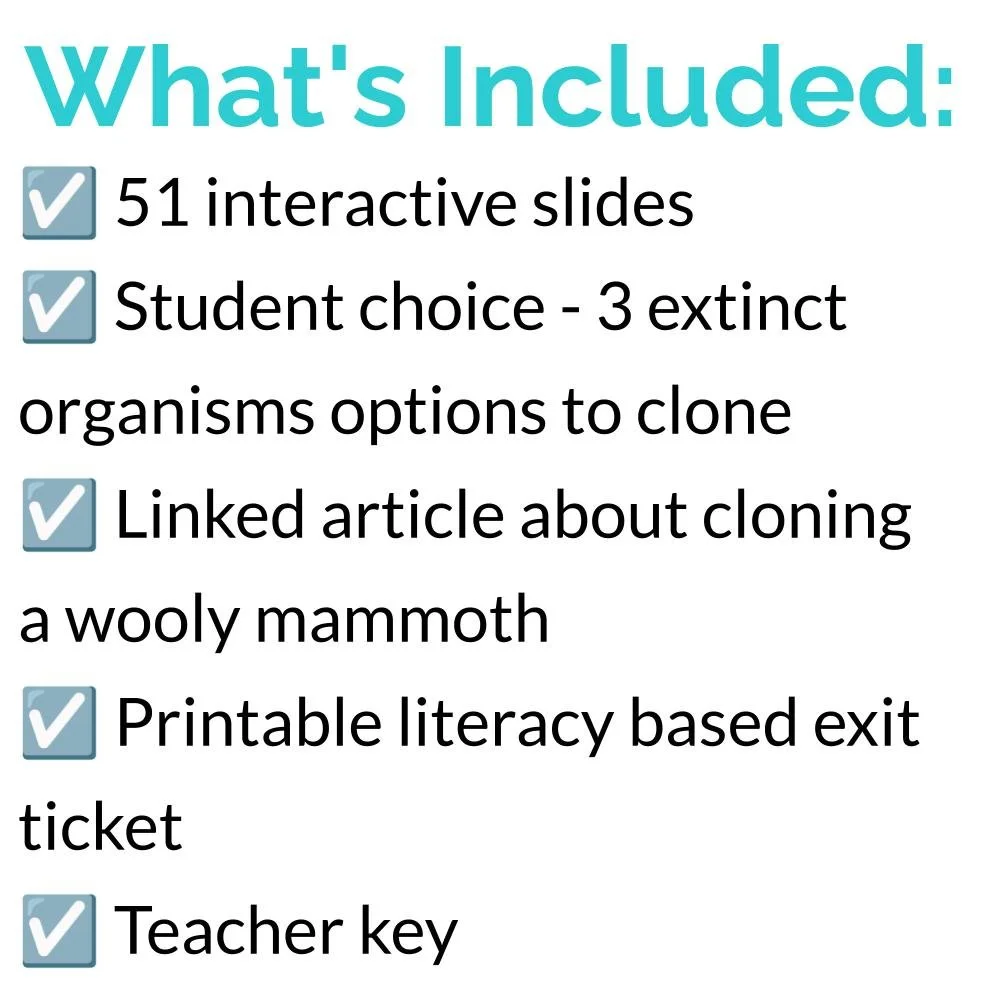 Image 3 of 4
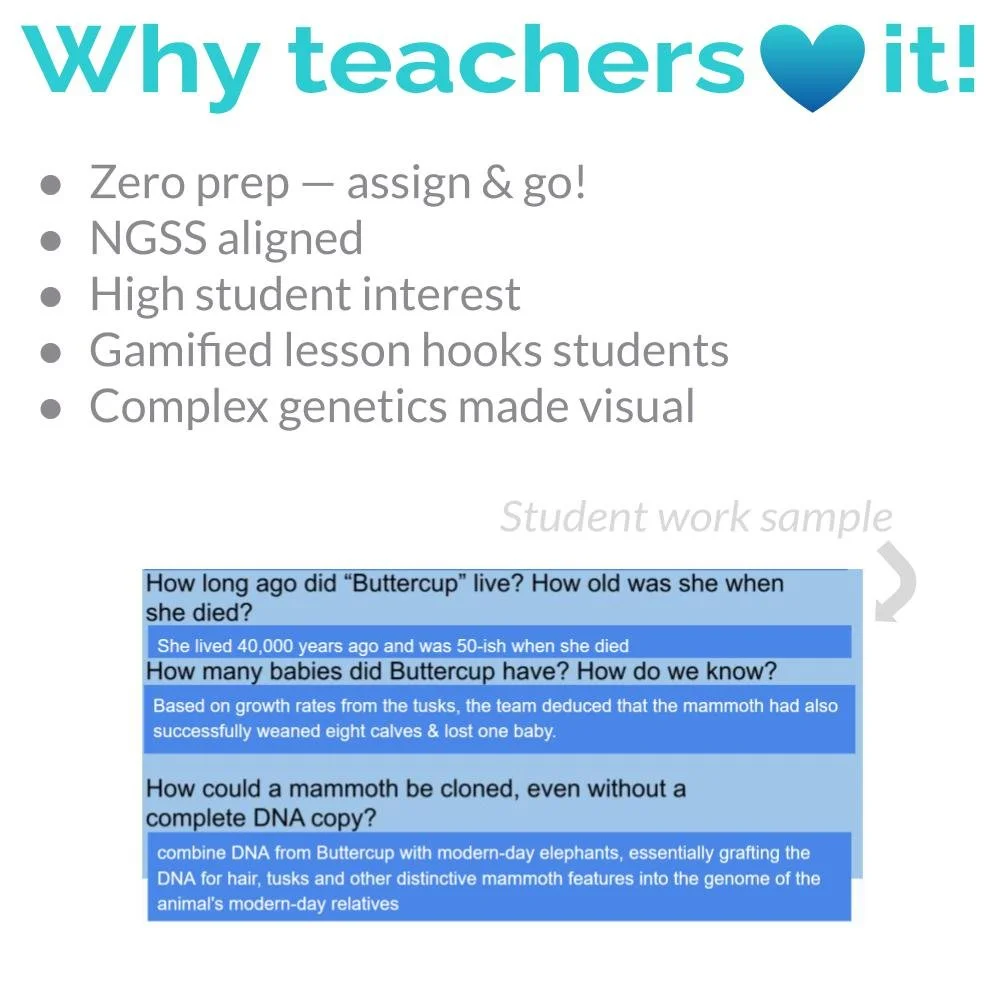 Image 4 of 4
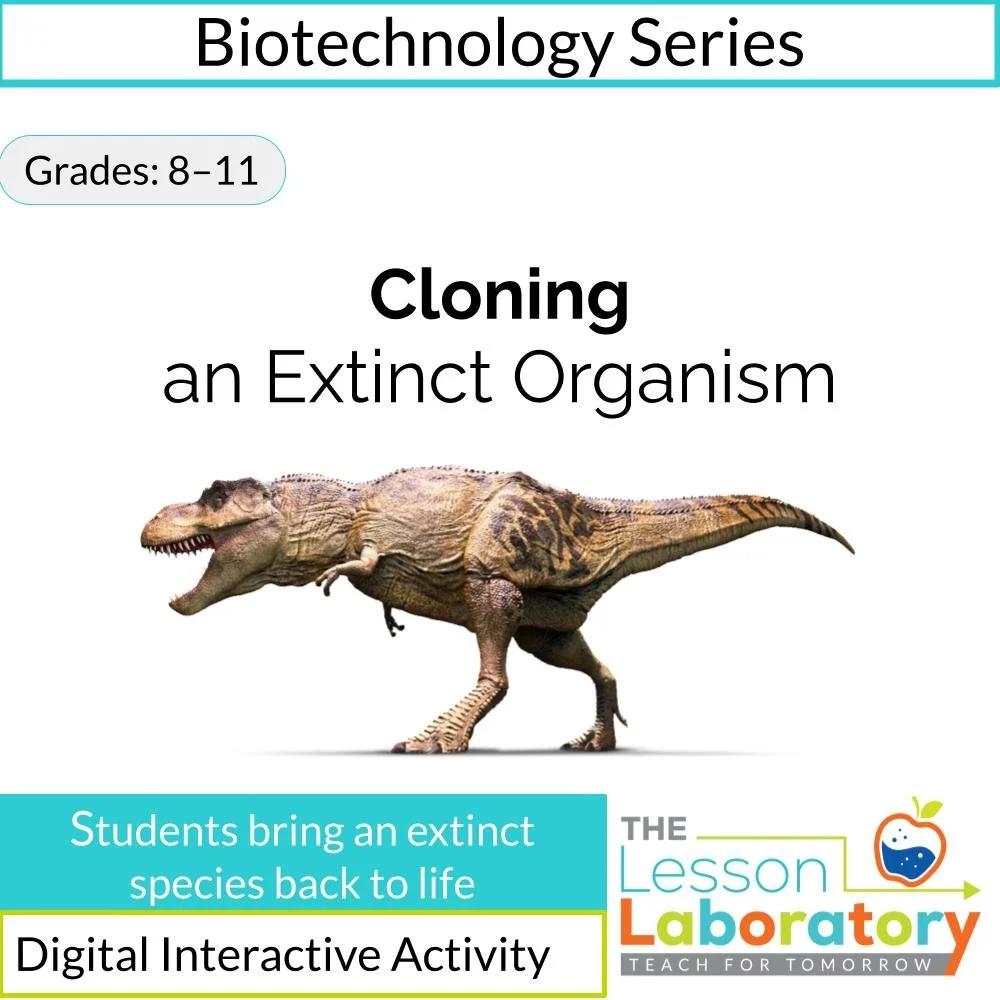
Students simulate cloning extinct species using DNA, surrogates, and scientific reasoning.
This digital genetics lesson introduces students to cloning through a structured scientific simulation that combines history, molecular biology, and ethical reasoning. Students work through a guided scenario in which they analyze DNA from extinct organisms, identify modern relatives, and model the process of somatic cell nuclear transfer.
Rather than treating cloning as a purely theoretical topic, this lesson requires students to apply genetics concepts in a realistic problem-solving context.
Students begin by reviewing natural cloning through identical twins and asexual reproduction to establish foundational ideas.
They then progress through a multi-step scientific scenario:
• read about real efforts to clone extinct species (e.g., woolly mammoths)
• select equipment for a simulated time-travel expedition
• choose an extinct organism (e.g., Indricotherium, Tyrannosaurus rex, or Arthropleura)
• collect genetic material from the organism
• analyze DNA using gel electrophoresis
• identify the closest living relative
• model somatic cell nuclear transfer
• evaluate the feasibility and ethics of cloning extinct species
Students receive immediate feedback during key steps of the process, reinforcing correct reasoning and correcting misconceptions.
• Natural cloning and asexual reproduction
• DNA and genetic similarity
• Gel electrophoresis interpretation
• Somatic cell nuclear transfer
• Species relationships
• Ethical considerations in biotechnology
• Makes cloning concrete and visual
• Integrates genetics with real scientific methods
• Encourages scientific decision-making
• Includes structured feedback
• Builds ethical reasoning alongside content knowledge
• Works for guided instruction or independent work
• Minimal prep required
This resource is a digital interactive lesson (Google Slides compatible).
Includes:
✔ Student lesson slides
✔ Teacher answer key
✔ Exit ticket
✔ Ethical discussion prompts
• High school biology
• Genetics units
• Biotechnology instruction
• Bioethics discussions
• Enrichment or review
• Sub plans or digital learning days
This lesson includes teacher bitmoji placeholders on several slides for scale reference. Teachers may replace these with their own image or leave them as is.
To see a preview of this lesson, click here.
NGSS Alignment:
HS-LS3-2, HS-LS3-3
Science & Engineering Practices (SEPs):
Engaging in Argument from Evidence; Constructing Explanations; Evaluating Solutions
Crosscutting Concepts (CCCs):
Cause and Effect; Stability and Change; Systems and System Models
Common Core (Literacy in Science):
RST.9-10.1 / RST.11-12.1
RST.9-10.8 / RST.11-12.8
WHST.9-12.1
Students simulate cloning extinct species using DNA, surrogates, and scientific reasoning.
This digital genetics lesson introduces students to cloning through a structured scientific simulation that combines history, molecular biology, and ethical reasoning. Students work through a guided scenario in which they analyze DNA from extinct organisms, identify modern relatives, and model the process of somatic cell nuclear transfer.
Rather than treating cloning as a purely theoretical topic, this lesson requires students to apply genetics concepts in a realistic problem-solving context.
Students begin by reviewing natural cloning through identical twins and asexual reproduction to establish foundational ideas.
They then progress through a multi-step scientific scenario:
• read about real efforts to clone extinct species (e.g., woolly mammoths)
• select equipment for a simulated time-travel expedition
• choose an extinct organism (e.g., Indricotherium, Tyrannosaurus rex, or Arthropleura)
• collect genetic material from the organism
• analyze DNA using gel electrophoresis
• identify the closest living relative
• model somatic cell nuclear transfer
• evaluate the feasibility and ethics of cloning extinct species
Students receive immediate feedback during key steps of the process, reinforcing correct reasoning and correcting misconceptions.
• Natural cloning and asexual reproduction
• DNA and genetic similarity
• Gel electrophoresis interpretation
• Somatic cell nuclear transfer
• Species relationships
• Ethical considerations in biotechnology
• Makes cloning concrete and visual
• Integrates genetics with real scientific methods
• Encourages scientific decision-making
• Includes structured feedback
• Builds ethical reasoning alongside content knowledge
• Works for guided instruction or independent work
• Minimal prep required
This resource is a digital interactive lesson (Google Slides compatible).
Includes:
✔ Student lesson slides
✔ Teacher answer key
✔ Exit ticket
✔ Ethical discussion prompts
• High school biology
• Genetics units
• Biotechnology instruction
• Bioethics discussions
• Enrichment or review
• Sub plans or digital learning days
This lesson includes teacher bitmoji placeholders on several slides for scale reference. Teachers may replace these with their own image or leave them as is.
To see a preview of this lesson, click here.
NGSS Alignment:
HS-LS3-2, HS-LS3-3
Science & Engineering Practices (SEPs):
Engaging in Argument from Evidence; Constructing Explanations; Evaluating Solutions
Crosscutting Concepts (CCCs):
Cause and Effect; Stability and Change; Systems and System Models
Common Core (Literacy in Science):
RST.9-10.1 / RST.11-12.1
RST.9-10.8 / RST.11-12.8
WHST.9-12.1