 Image 1 of 4
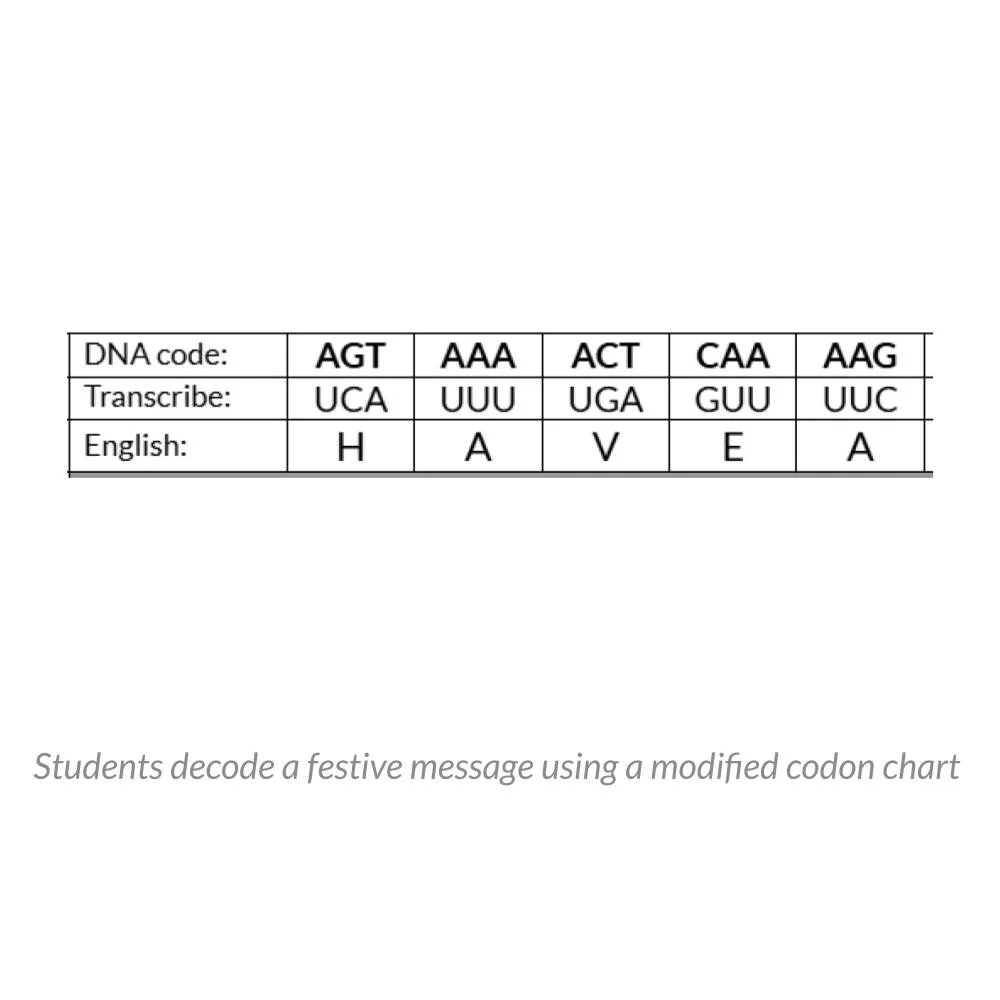 Image 2 of 4
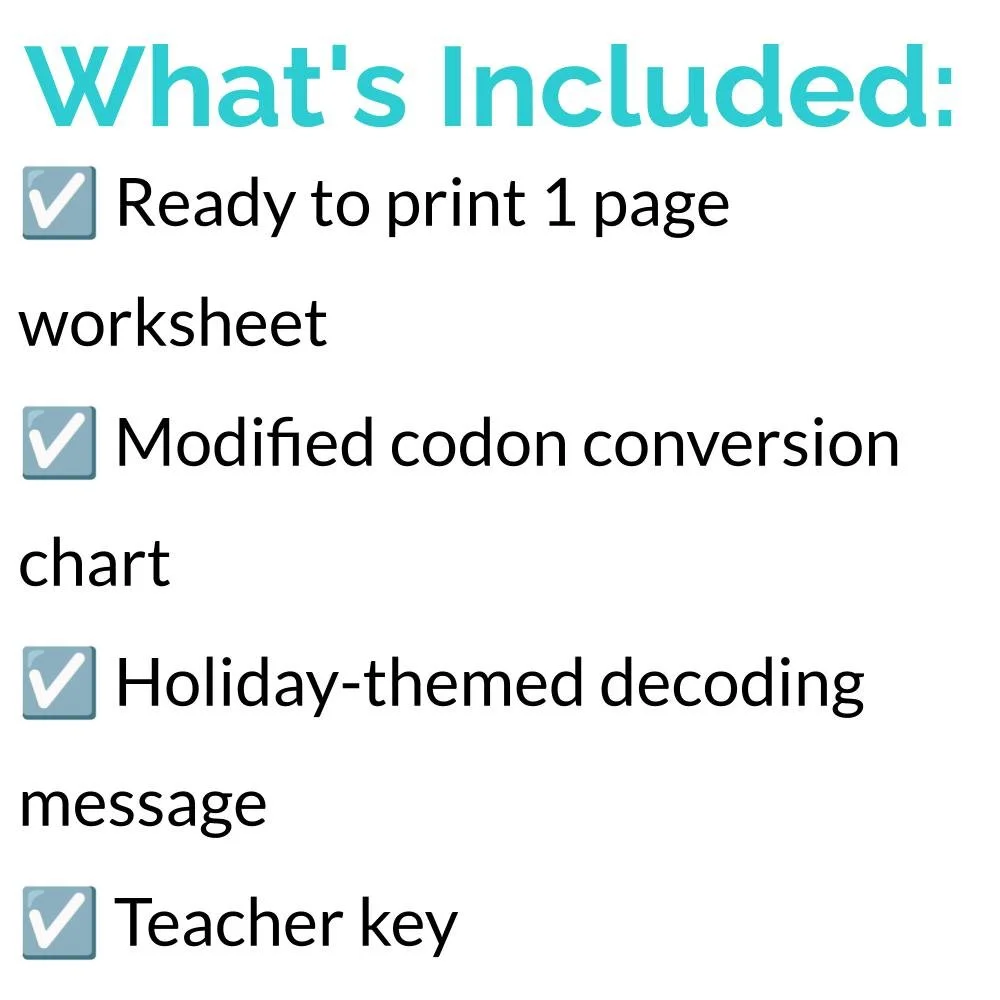 Image 3 of 4
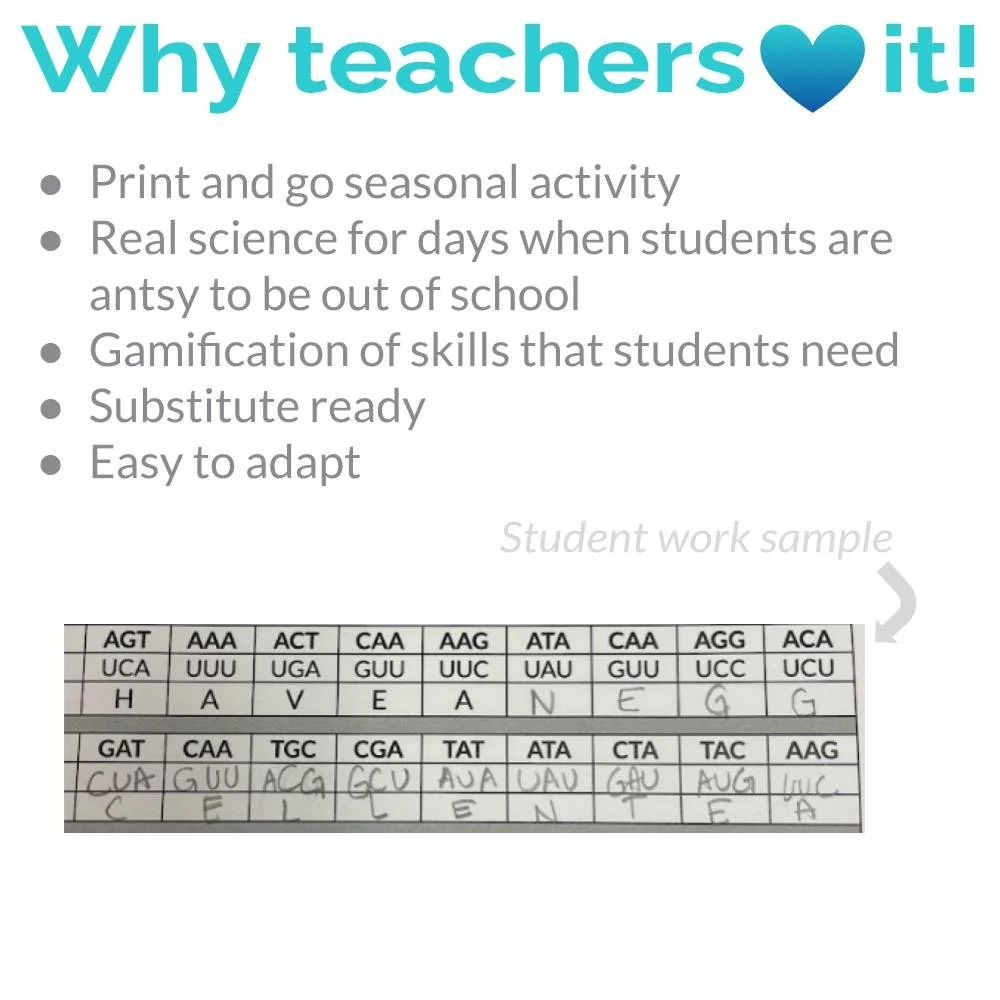 Image 4 of 4
Holiday-themed transcription and translation decoding activity.
This short activity provides structured practice with transcription and translation through a seasonal decoding task. Students use base-pairing rules and the genetic code to convert a DNA sequence into an mRNA strand and then translate it into a protein message.
Students apply their existing understanding of protein synthesis to:
transcribe a DNA sequence into mRNA
translate codons using a codon chart
determine the hidden message produced by the sequence
The task is designed for students who already have introductory instruction in transcription and translation and functions as a brief reinforcement or review activity. An answer key is included to support efficient implementation.
This activity is best used as:
a holiday-themed practice task
a warm-up or station activity
a short reinforcement assignment within a genetics unit
The format keeps the focus on accuracy of transcription and translation, while the seasonal context provides light engagement without changing the cognitive demand of the task.
To preview this activity, click here.
NGSS Alignment (High School):
HS-LS1-1
HS-LS3-1
NGSS Alignment (Middle School):
MS-LS3-1, MS-LS3-2
Science & Engineering Practices (SEPs):
Developing and Using Models; Analyzing and Interpreting Data; Constructing Explanations
Crosscutting Concepts (CCCs):
Structure and Function; Patterns; Information Processing
Common Core (Literacy in Science):
RST.6-8.4, RST.9-10.4
RST.6-8.7, RST.9-10.7
WHST.6-8.2, WHST.9-10.2
Bundle Upgrade Policy
This lesson is included in one or more bundles. To support flexible purchasing and long-term use of our curriculum, Lesson Laboratory offers a bundle upgrade policy.
If you purchase this lesson and decide at a later date that you would like to upgrade to a bundle, you may request a store credit equal to the total amount paid for duplicate items.
To request an upgrade credit, please email thelessonlaboratory@gmail.com and include:
Your username
The order numbers for both the original purchase(s) and the bundle
The names of the duplicate resources
Requests must be submitted within 30 days of the bundle purchase. Credits are issued as store credit for future Lesson Laboratory purchases and are not provided as cash refunds.
This policy applies only to purchases of resources that are later included in a Lesson Laboratory bundle and is limited to one adjustment per upgrade pathway.
Holiday-themed transcription and translation decoding activity.
This short activity provides structured practice with transcription and translation through a seasonal decoding task. Students use base-pairing rules and the genetic code to convert a DNA sequence into an mRNA strand and then translate it into a protein message.
Students apply their existing understanding of protein synthesis to:
transcribe a DNA sequence into mRNA
translate codons using a codon chart
determine the hidden message produced by the sequence
The task is designed for students who already have introductory instruction in transcription and translation and functions as a brief reinforcement or review activity. An answer key is included to support efficient implementation.
This activity is best used as:
a holiday-themed practice task
a warm-up or station activity
a short reinforcement assignment within a genetics unit
The format keeps the focus on accuracy of transcription and translation, while the seasonal context provides light engagement without changing the cognitive demand of the task.
To preview this activity, click here.
NGSS Alignment (High School):
HS-LS1-1
HS-LS3-1
NGSS Alignment (Middle School):
MS-LS3-1, MS-LS3-2
Science & Engineering Practices (SEPs):
Developing and Using Models; Analyzing and Interpreting Data; Constructing Explanations
Crosscutting Concepts (CCCs):
Structure and Function; Patterns; Information Processing
Common Core (Literacy in Science):
RST.6-8.4, RST.9-10.4
RST.6-8.7, RST.9-10.7
WHST.6-8.2, WHST.9-10.2
Bundle Upgrade Policy
This lesson is included in one or more bundles. To support flexible purchasing and long-term use of our curriculum, Lesson Laboratory offers a bundle upgrade policy.
If you purchase this lesson and decide at a later date that you would like to upgrade to a bundle, you may request a store credit equal to the total amount paid for duplicate items.
To request an upgrade credit, please email thelessonlaboratory@gmail.com and include:
Your username
The order numbers for both the original purchase(s) and the bundle
The names of the duplicate resources
Requests must be submitted within 30 days of the bundle purchase. Credits are issued as store credit for future Lesson Laboratory purchases and are not provided as cash refunds.
This policy applies only to purchases of resources that are later included in a Lesson Laboratory bundle and is limited to one adjustment per upgrade pathway.