 Image 1 of 4
 Image 2 of 4
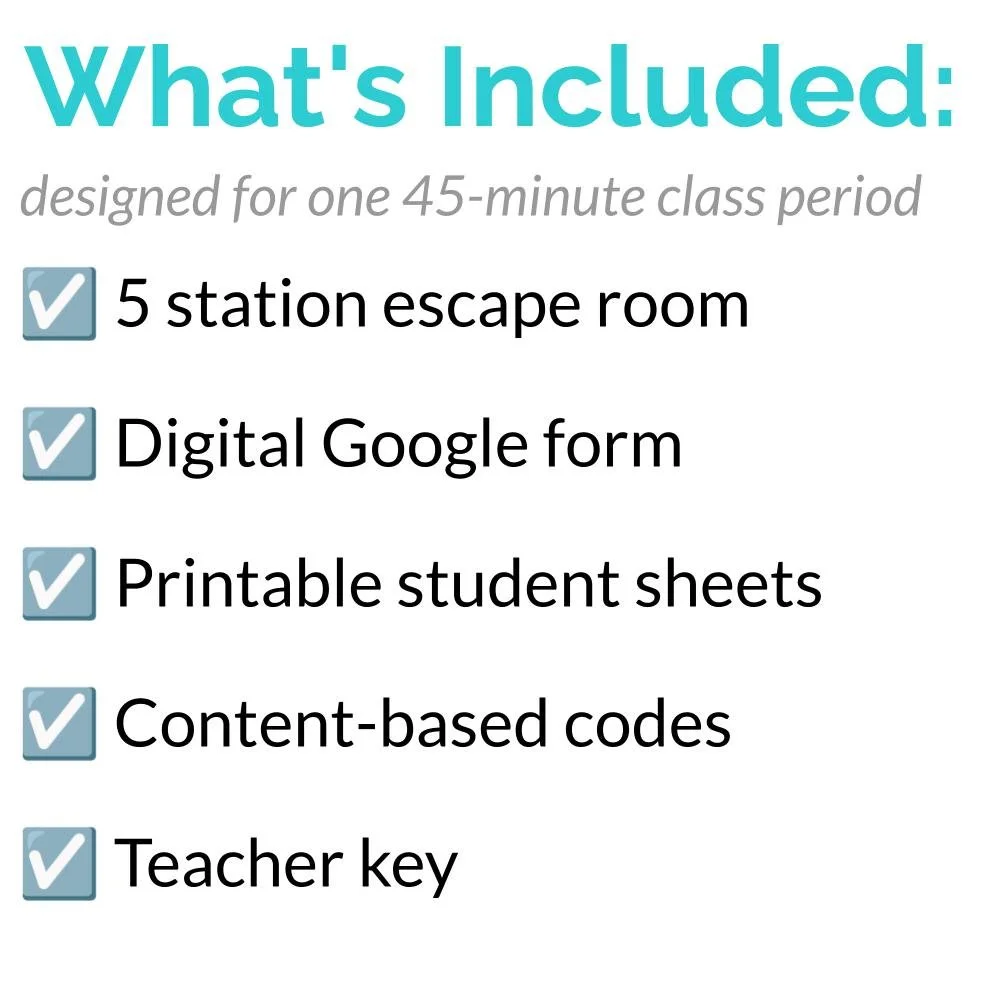 Image 3 of 4
 Image 4 of 4
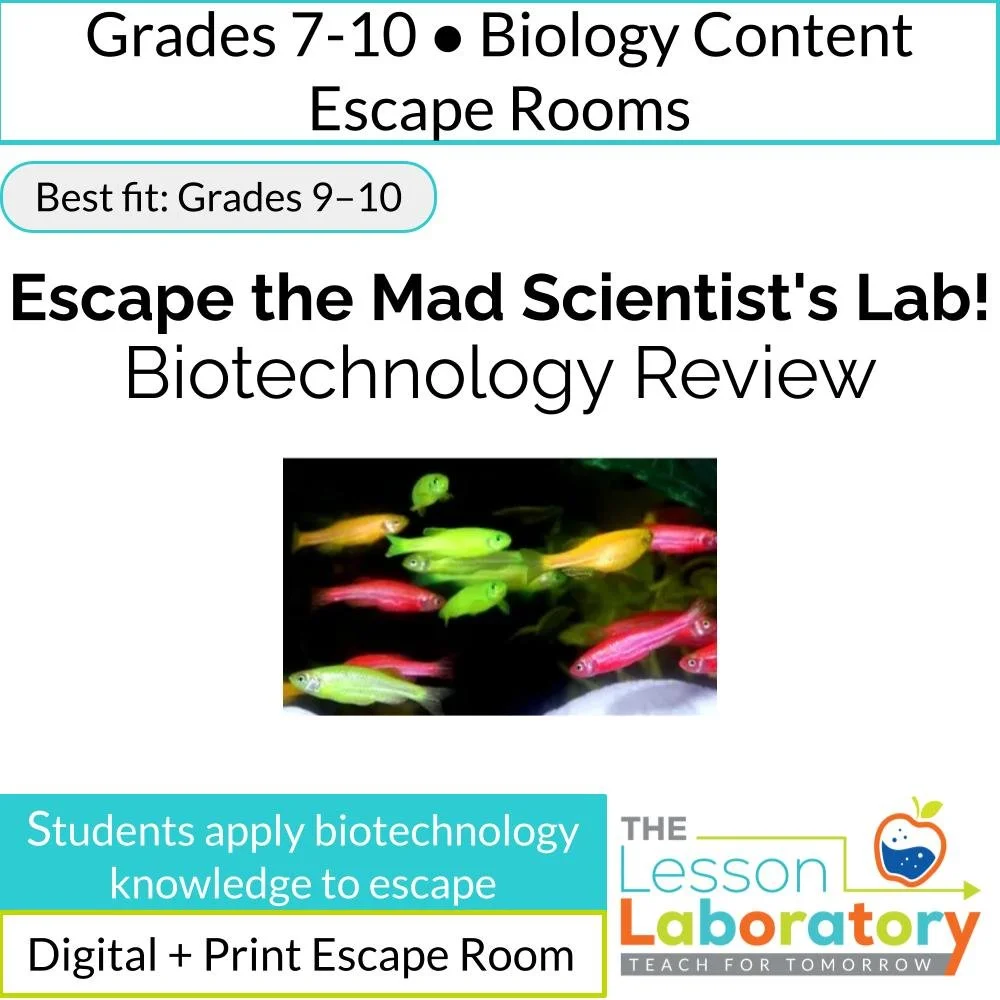
Biotech review escape room with decoding ciphers + Google Form.
In a race against time, students find themselves trapped in Dr. Znorgberg's diabolical laboratory, armed only with their acquired biotechnology prowess. The fate of the world hangs in the balance as they strive to outsmart the nefarious scientist and his impending clone army.
This dynamic review activity seamlessly combines rigor with excitement, taking a page from the popular "escape the room" trend to create an immersive online experience. Designed to cap off a comprehensive biotechnology unit, students will put their knowledge to the test in five thrilling stations:
Gel Electrophoresis Challenge (Station One): Unravel the mysteries of gel electrophoresis results to unveil a crucial shape. Armed with a decoder ring, students decode the escape sequence, setting the stage for their ultimate breakout.
Artificial Selection Maze (Station Two): Navigate through a maze of choices by answering multiple-choice questions on artificial selection. Each correct answer leads them closer to freedom, as they decipher the escape path to victory.
Cloning Conundrum (Station Three): Distinguish between examples of cloning and non-cloning scenarios. As students make their choices, they compile a binary code that will serve as their key to liberation.
Recombinant DNA Quest (Station Four): Tackle questions about recombinant DNA, unlocking vital pieces of the escape code as they progress.
GMO Cipher Challenge (Station Five): Armed with newfound knowledge of GMOs, students merge two sections of code using a cunning "zig-zag cipher." The decoded solution guides them to the final step: deciphering their escape code with the help of an alphabet grid.
This biotechnology escape activity is more than a review—it's an adrenaline-pumping journey that empowers students to apply their knowledge in a thrilling race against time. Unleash their inner biotechnologists and lead them to victory in this high-stakes adventure! Don't wait, for every second counts in this battle against Dr. Znorgberg!
This file includes a teacher key. Please remind your students that their codes will have to be in all capital letters without spaces, or else they won't be able to escape!
To preview this escape room, click here.
NGSS Alignment (High School):
HS-LS1-1
HS-LS3-1, HS-LS3-2
HS-LS4-5
NGSS Alignment (Middle School):
MS-LS3-1
Science & Engineering Practices (SEPs):
Developing and Using Models; Analyzing and Interpreting Data; Constructing Explanations; Engaging in Argument from Evidence
Crosscutting Concepts (CCCs):
Structure and Function; Cause and Effect; Patterns; Systems and System Models
Common Core (Literacy in Science):
RST.9-10.3
RST.9-10.7
RST.9-10.9
WHST.9-10.1
Common Core (Mathematics):
MP.2
Bundle Upgrade Policy
This lesson is included in one or more bundles. To support flexible purchasing and long-term use of our curriculum, Lesson Laboratory offers a bundle upgrade policy.
If you purchase this lesson and decide at a later date that you would like to upgrade to a bundle, you may request a store credit equal to the total amount paid for duplicate items.
To request an upgrade credit, please email thelessonlaboratory@gmail.com and include:
Your username
The order numbers for both the original purchase(s) and the bundle
The names of the duplicate resources
Requests must be submitted within 30 days of the bundle purchase. Credits are issued as store credit for future Lesson Laboratory purchases and are not provided as cash refunds.
This policy applies only to purchases of resources that are later included in a Lesson Laboratory bundle and is limited to one adjustment per upgrade pathway.
Biotech review escape room with decoding ciphers + Google Form.
In a race against time, students find themselves trapped in Dr. Znorgberg's diabolical laboratory, armed only with their acquired biotechnology prowess. The fate of the world hangs in the balance as they strive to outsmart the nefarious scientist and his impending clone army.
This dynamic review activity seamlessly combines rigor with excitement, taking a page from the popular "escape the room" trend to create an immersive online experience. Designed to cap off a comprehensive biotechnology unit, students will put their knowledge to the test in five thrilling stations:
Gel Electrophoresis Challenge (Station One): Unravel the mysteries of gel electrophoresis results to unveil a crucial shape. Armed with a decoder ring, students decode the escape sequence, setting the stage for their ultimate breakout.
Artificial Selection Maze (Station Two): Navigate through a maze of choices by answering multiple-choice questions on artificial selection. Each correct answer leads them closer to freedom, as they decipher the escape path to victory.
Cloning Conundrum (Station Three): Distinguish between examples of cloning and non-cloning scenarios. As students make their choices, they compile a binary code that will serve as their key to liberation.
Recombinant DNA Quest (Station Four): Tackle questions about recombinant DNA, unlocking vital pieces of the escape code as they progress.
GMO Cipher Challenge (Station Five): Armed with newfound knowledge of GMOs, students merge two sections of code using a cunning "zig-zag cipher." The decoded solution guides them to the final step: deciphering their escape code with the help of an alphabet grid.
This biotechnology escape activity is more than a review—it's an adrenaline-pumping journey that empowers students to apply their knowledge in a thrilling race against time. Unleash their inner biotechnologists and lead them to victory in this high-stakes adventure! Don't wait, for every second counts in this battle against Dr. Znorgberg!
This file includes a teacher key. Please remind your students that their codes will have to be in all capital letters without spaces, or else they won't be able to escape!
To preview this escape room, click here.
NGSS Alignment (High School):
HS-LS1-1
HS-LS3-1, HS-LS3-2
HS-LS4-5
NGSS Alignment (Middle School):
MS-LS3-1
Science & Engineering Practices (SEPs):
Developing and Using Models; Analyzing and Interpreting Data; Constructing Explanations; Engaging in Argument from Evidence
Crosscutting Concepts (CCCs):
Structure and Function; Cause and Effect; Patterns; Systems and System Models
Common Core (Literacy in Science):
RST.9-10.3
RST.9-10.7
RST.9-10.9
WHST.9-10.1
Common Core (Mathematics):
MP.2
Bundle Upgrade Policy
This lesson is included in one or more bundles. To support flexible purchasing and long-term use of our curriculum, Lesson Laboratory offers a bundle upgrade policy.
If you purchase this lesson and decide at a later date that you would like to upgrade to a bundle, you may request a store credit equal to the total amount paid for duplicate items.
To request an upgrade credit, please email thelessonlaboratory@gmail.com and include:
Your username
The order numbers for both the original purchase(s) and the bundle
The names of the duplicate resources
Requests must be submitted within 30 days of the bundle purchase. Credits are issued as store credit for future Lesson Laboratory purchases and are not provided as cash refunds.
This policy applies only to purchases of resources that are later included in a Lesson Laboratory bundle and is limited to one adjustment per upgrade pathway.