Fact Checking Media Sources

$4.75

Embark on an Epic Quest: Unmasking the Wild West of the Internet!

Introducing an electrifying assignment designed to equip students with the skills to navigate the digital frontier. This dynamic adventure tackles disinformation, misinformation, and trolls head-on, ensuring a powerful start to the academic year.

Thrilling Assignment Highlights:

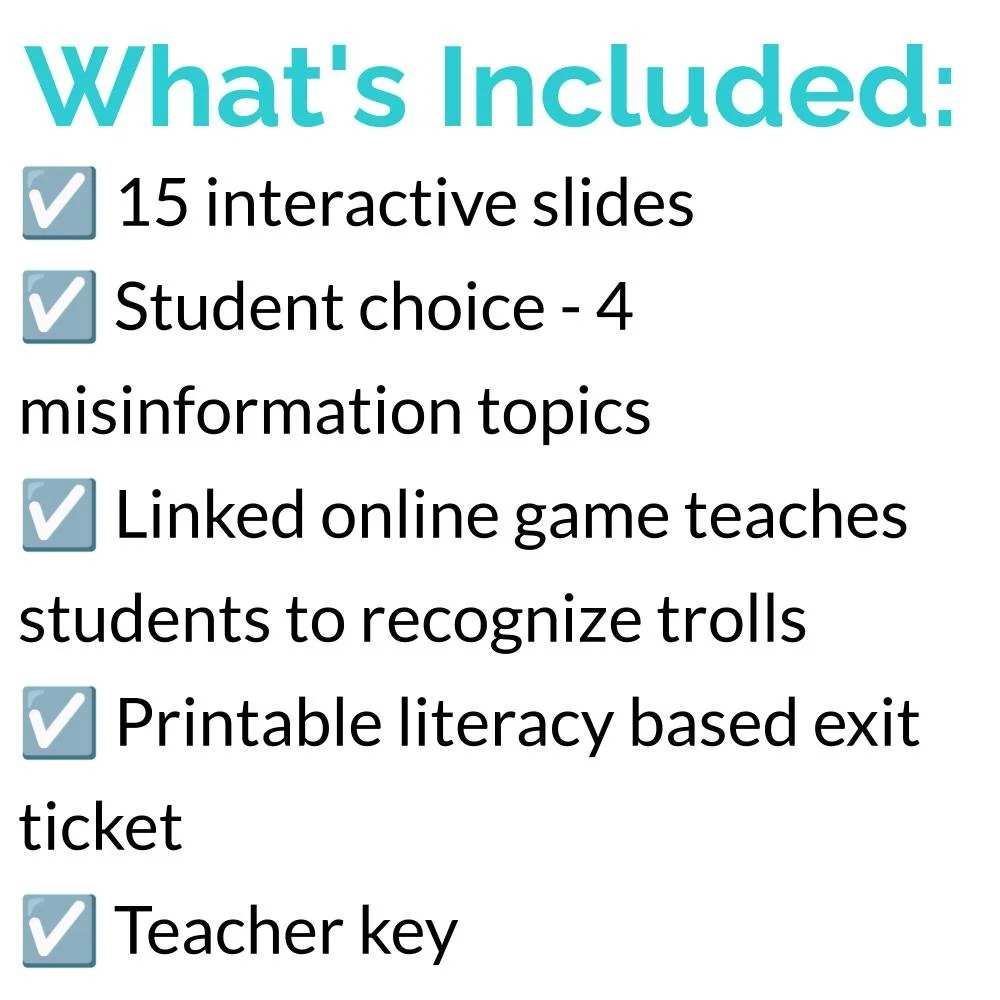
Wild West Showdown: Students step into the shoes of digital pioneers, exploring the untamed expanse of the internet. They'll define crucial vocabulary, setting the stage for an exhilarating journey.

Vertical vs. Lateral Reading: A riveting video reveals the secrets of vertical and lateral reading techniques. Students acquire the skills to discern credible sources from dubious ones, arming them against misinformation.

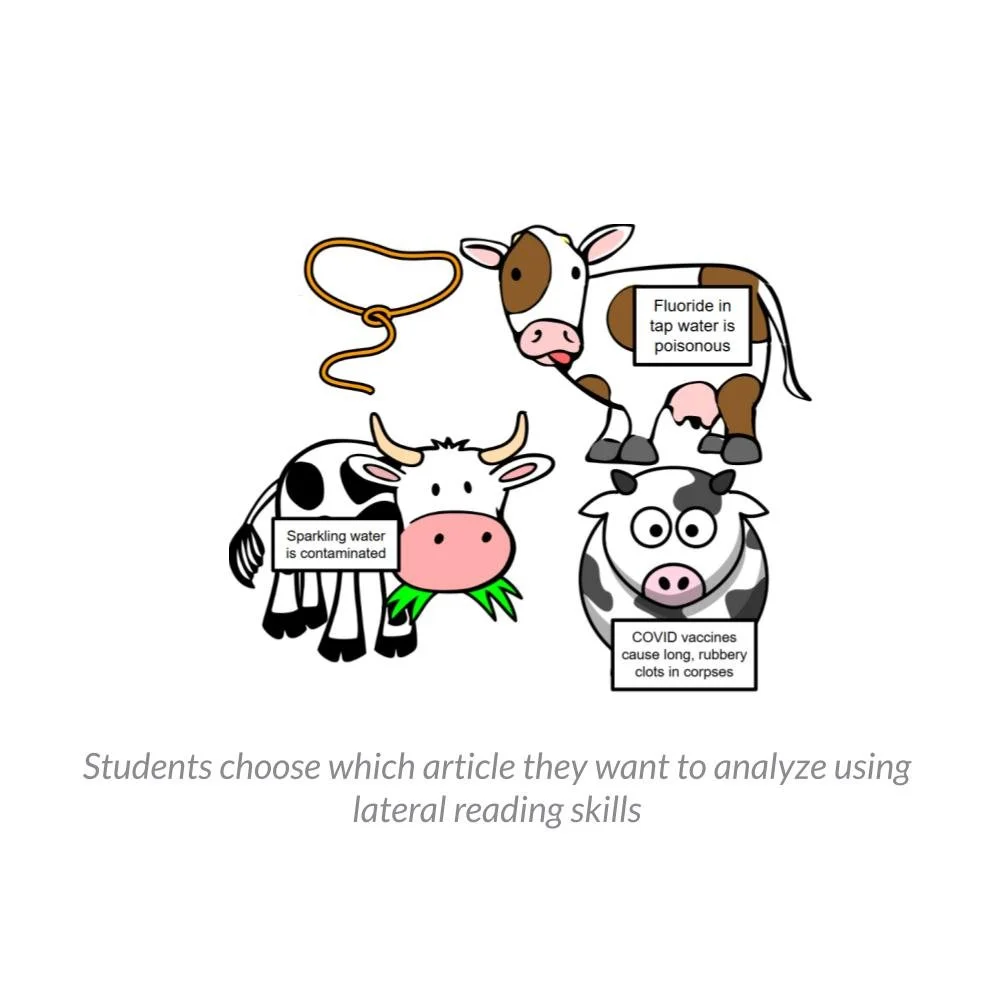
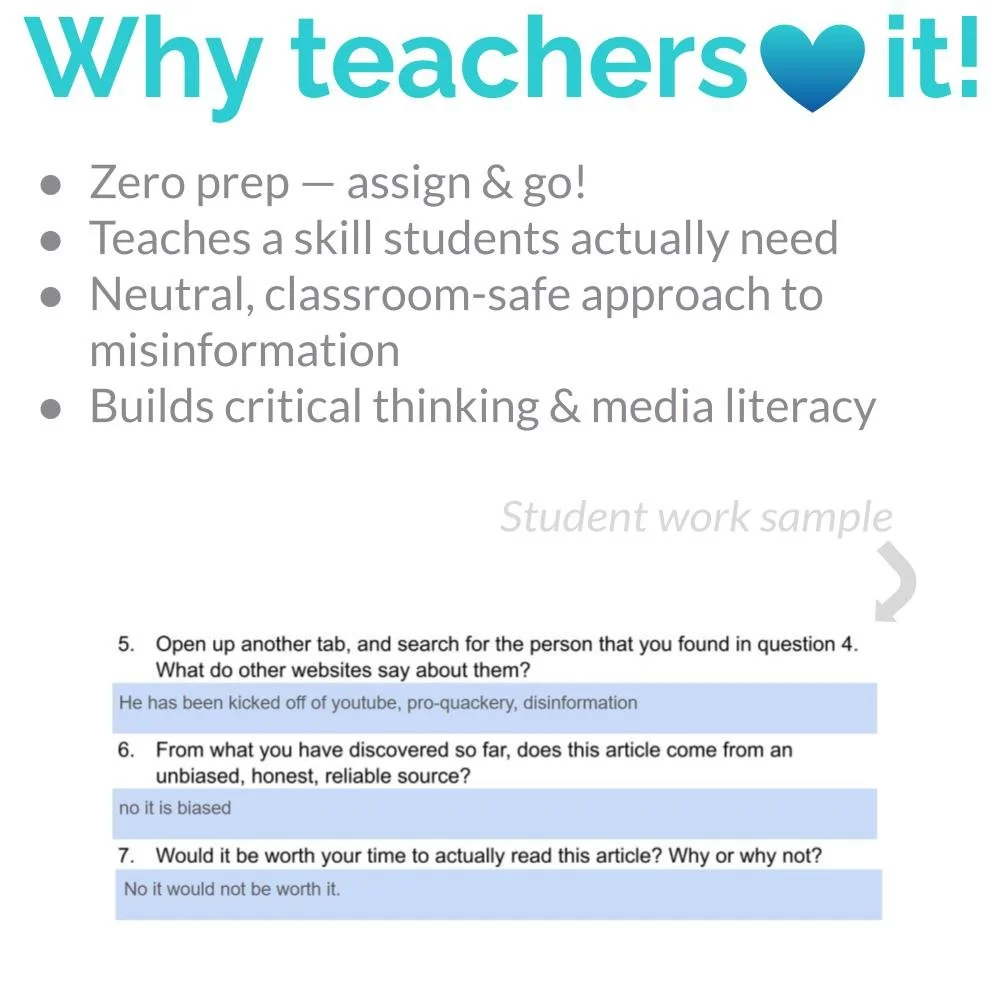
Lasso the "Cowspiracy": Students embark on a mission to wrangle a "cowspiracy" by dissecting an article from a pseudo-scientific source. But before they dive in, they're equipped with essential background research skills. Who's behind the organization? What's their agenda? Is the article worth their attention at all?

Unmasking the Trolls: The adventure culminates in an interactive online game, "Spot the Troll." Students hone their ability to identify deceptive online personas, fortifying their digital resilience.

Set the stage for a year of critical thinking and digital empowerment. This assignment promises an immersive experience that challenges students to become savvy navigators of the vast digital landscape. Equip them with the skills to discern truth from fiction and outsmart the trolls. Seize this opportunity to kickstart the year with a thrilling exploration into the heart of the internet's Wild West. Get the assignment now and embark on an unforgettable educational journey!

To preview this product, highlight the link below and paste the address into your web browser.
https://docs.google.com/presentation/d/1F8DKBuvRdgoNzjQQgHRF45_P3SesSHEcedPrLdjBIEM/edit?usp=sharing

Grade Recommendation

  • Middle School: Grades 7–8 (as part of science literacy, media literacy, or digital citizenship units)

  • High School: Grades 9–11 (especially Living Environment, Biology, or general science courses that involve data interpretation, science communication, or health topics)

Rationale:
This lesson helps students strengthen critical evaluation of scientific claims — an essential skill for both middle and high schoolers engaging with online science and health content.

Cross-Curricular Connections and/or Extensions

  • ELA: Evaluating author bias, perspective, and evidence in informational text.
    Social Studies / Civics: Understanding misinformation, disinformation, and their impact on public health.

  • Media Literacy: Practicing lateral reading and source verification through activities like “Spot the Troll.”

  • Extension Idea:
    Students can independently analyze a trending science claim, apply lateral reading, and create a short presentation summarizing their findings and reliability assessment.

Daily slide + literacy - based exit ticket included with purchase

Join the Lesson Laboratory and Teach for Tomorrow!

NGSS Standards (Including CCCs and SEPs)

Middle School

  • MS-LS1-3: Use argument supported by evidence for how the body is a system of interacting subsystems.
    (Applied when examining health-related misinformation, e.g., vaccines or fluoride.)

  • MS-LS1-8: Gather and synthesize information that sensory receptors respond to stimuli and send signals to the brain.
    (If extended to neuroscience-based misinformation.)

  • Science and Engineering Practices (SEPs):

    • Analyzing and Interpreting Data: Students assess accuracy and evidence across multiple sources.

    • Engaging in Argument from Evidence: Evaluate claims and justify which sources are trustworthy.

    • Obtaining, Evaluating, and Communicating Information: Use lateral reading to cross-check and present findings.

High School

  • HS-LS2-8: Evaluate the evidence for the role of group behavior on individual and species’ chances to survive and reproduce.
    (Social amplification of misinformation could connect to behavioral responses.)

  • HS-LS4-6: Create or revise simulations to test solutions for mitigating human impacts on biodiversity.
    (Media literacy applied to climate misinformation extensions.)

  • HS-ETS1-3: Evaluate a solution to a complex real-world problem based on prioritized criteria and trade-offs.
    (Critical evaluation of information sources and evidence mirrors this practice.)

Crosscutting Concepts (CCCs):

  • Cause and Effect: Understanding how misinformation leads to societal consequences.

  • Systems and System Models: Evaluating how media ecosystems amplify or filter scientific information.

  • Stability and Change: Considering how scientific understanding evolves as evidence accumulates.

Common Core Standards

  • CCSS.ELA-LITERACY.RST.9-10.8: Assess the extent to which reasoning and evidence support a claim in a text.

  • CCSS.ELA-LITERACY.RST.9-10.9: Compare and contrast findings presented in multiple sources.

  • CCSS.ELA-LITERACY.WHST.9-10.1: Write arguments focused on discipline-specific content.

  • CCSS.ELA-LITERACY.SL.9-10.1: Engage effectively in a range of collaborative discussions.

Embark on an Epic Quest: Unmasking the Wild West of the Internet!

Introducing an electrifying assignment designed to equip students with the skills to navigate the digital frontier. This dynamic adventure tackles disinformation, misinformation, and trolls head-on, ensuring a powerful start to the academic year.

Thrilling Assignment Highlights:

Wild West Showdown: Students step into the shoes of digital pioneers, exploring the untamed expanse of the internet. They'll define crucial vocabulary, setting the stage for an exhilarating journey.

Vertical vs. Lateral Reading: A riveting video reveals the secrets of vertical and lateral reading techniques. Students acquire the skills to discern credible sources from dubious ones, arming them against misinformation.

Lasso the "Cowspiracy": Students embark on a mission to wrangle a "cowspiracy" by dissecting an article from a pseudo-scientific source. But before they dive in, they're equipped with essential background research skills. Who's behind the organization? What's their agenda? Is the article worth their attention at all?

Unmasking the Trolls: The adventure culminates in an interactive online game, "Spot the Troll." Students hone their ability to identify deceptive online personas, fortifying their digital resilience.

Set the stage for a year of critical thinking and digital empowerment. This assignment promises an immersive experience that challenges students to become savvy navigators of the vast digital landscape. Equip them with the skills to discern truth from fiction and outsmart the trolls. Seize this opportunity to kickstart the year with a thrilling exploration into the heart of the internet's Wild West. Get the assignment now and embark on an unforgettable educational journey!

To preview this product, highlight the link below and paste the address into your web browser.
https://docs.google.com/presentation/d/1F8DKBuvRdgoNzjQQgHRF45_P3SesSHEcedPrLdjBIEM/edit?usp=sharing

Grade Recommendation

  • Middle School: Grades 7–8 (as part of science literacy, media literacy, or digital citizenship units)

  • High School: Grades 9–11 (especially Living Environment, Biology, or general science courses that involve data interpretation, science communication, or health topics)

Rationale:
This lesson helps students strengthen critical evaluation of scientific claims — an essential skill for both middle and high schoolers engaging with online science and health content.

Cross-Curricular Connections and/or Extensions

  • ELA: Evaluating author bias, perspective, and evidence in informational text.
    Social Studies / Civics: Understanding misinformation, disinformation, and their impact on public health.

  • Media Literacy: Practicing lateral reading and source verification through activities like “Spot the Troll.”

  • Extension Idea:
    Students can independently analyze a trending science claim, apply lateral reading, and create a short presentation summarizing their findings and reliability assessment.

Daily slide + literacy - based exit ticket included with purchase

Join the Lesson Laboratory and Teach for Tomorrow!

NGSS Standards (Including CCCs and SEPs)

Middle School

  • MS-LS1-3: Use argument supported by evidence for how the body is a system of interacting subsystems.
    (Applied when examining health-related misinformation, e.g., vaccines or fluoride.)

  • MS-LS1-8: Gather and synthesize information that sensory receptors respond to stimuli and send signals to the brain.
    (If extended to neuroscience-based misinformation.)

  • Science and Engineering Practices (SEPs):

    • Analyzing and Interpreting Data: Students assess accuracy and evidence across multiple sources.

    • Engaging in Argument from Evidence: Evaluate claims and justify which sources are trustworthy.

    • Obtaining, Evaluating, and Communicating Information: Use lateral reading to cross-check and present findings.

High School

  • HS-LS2-8: Evaluate the evidence for the role of group behavior on individual and species’ chances to survive and reproduce.
    (Social amplification of misinformation could connect to behavioral responses.)

  • HS-LS4-6: Create or revise simulations to test solutions for mitigating human impacts on biodiversity.
    (Media literacy applied to climate misinformation extensions.)

  • HS-ETS1-3: Evaluate a solution to a complex real-world problem based on prioritized criteria and trade-offs.
    (Critical evaluation of information sources and evidence mirrors this practice.)

Crosscutting Concepts (CCCs):

  • Cause and Effect: Understanding how misinformation leads to societal consequences.

  • Systems and System Models: Evaluating how media ecosystems amplify or filter scientific information.

  • Stability and Change: Considering how scientific understanding evolves as evidence accumulates.

Common Core Standards

  • CCSS.ELA-LITERACY.RST.9-10.8: Assess the extent to which reasoning and evidence support a claim in a text.

  • CCSS.ELA-LITERACY.RST.9-10.9: Compare and contrast findings presented in multiple sources.

  • CCSS.ELA-LITERACY.WHST.9-10.1: Write arguments focused on discipline-specific content.

  • CCSS.ELA-LITERACY.SL.9-10.1: Engage effectively in a range of collaborative discussions.