 Image 1 of 4
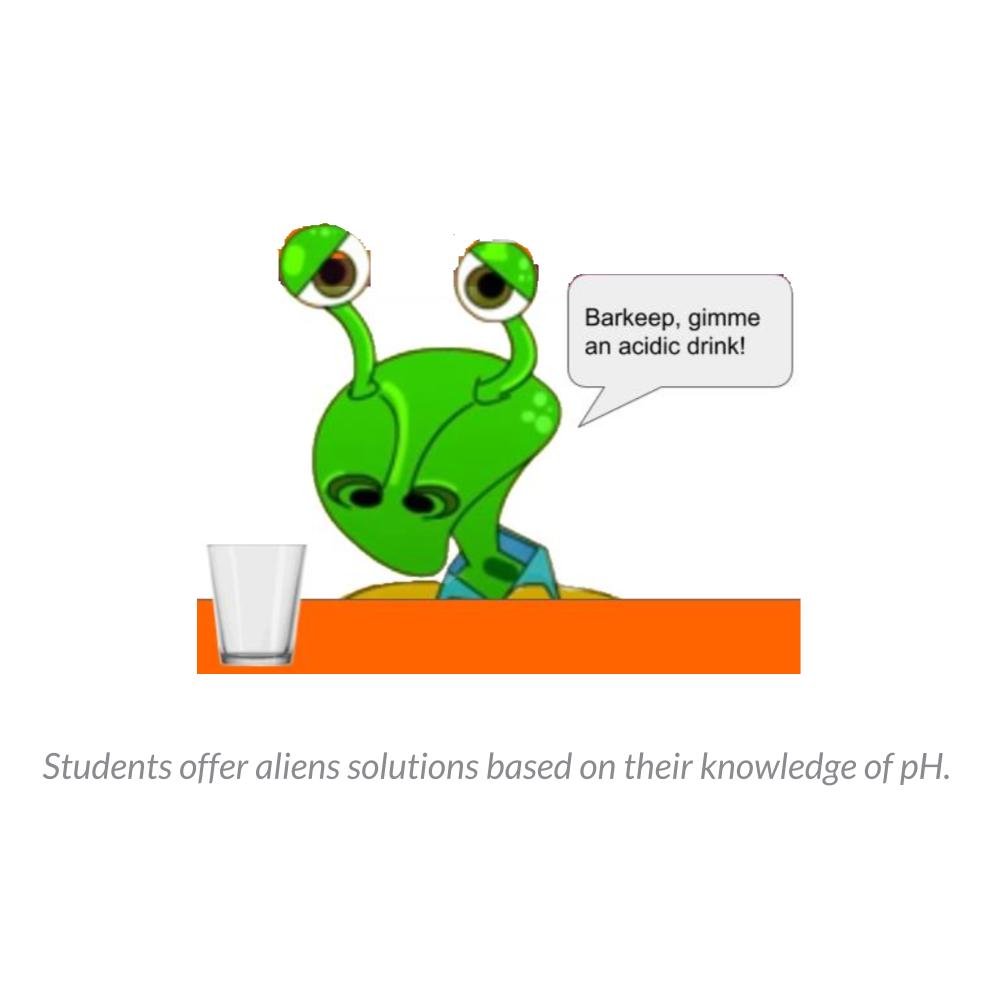 Image 2 of 4
 Image 3 of 4
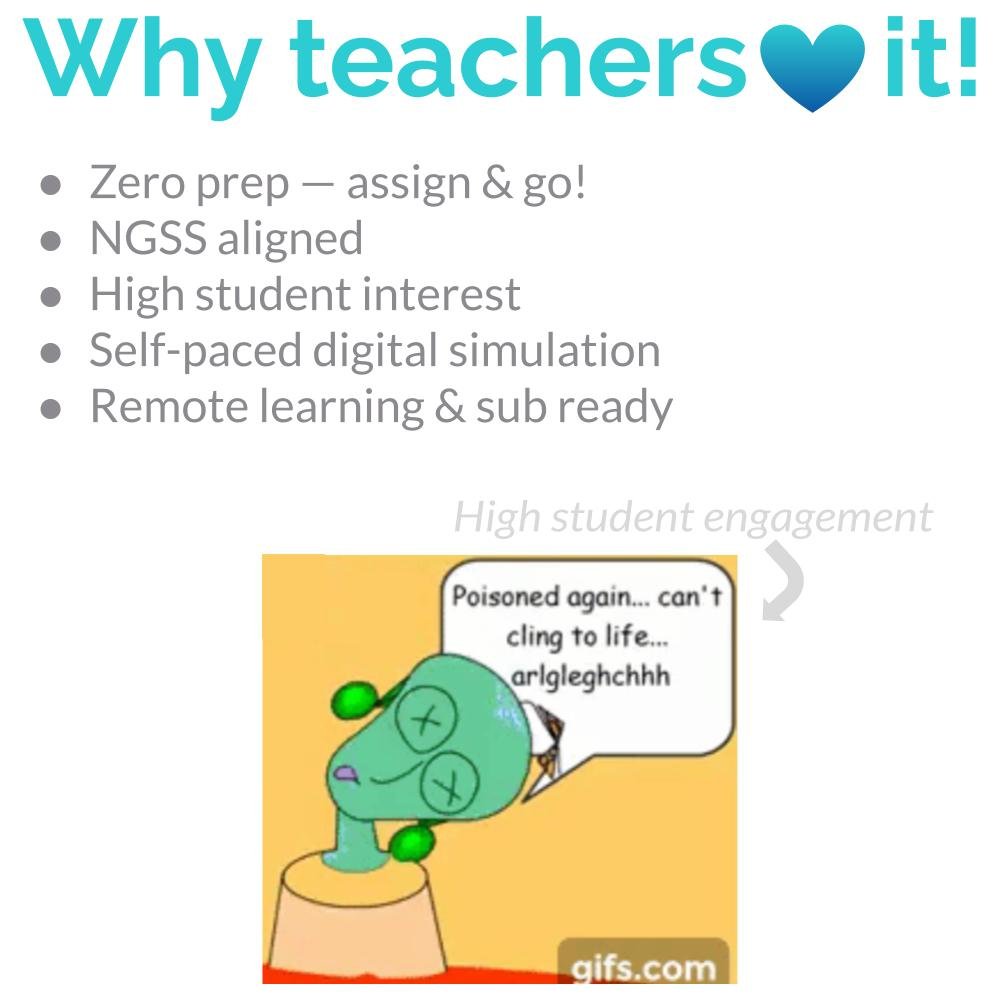 Image 4 of 4
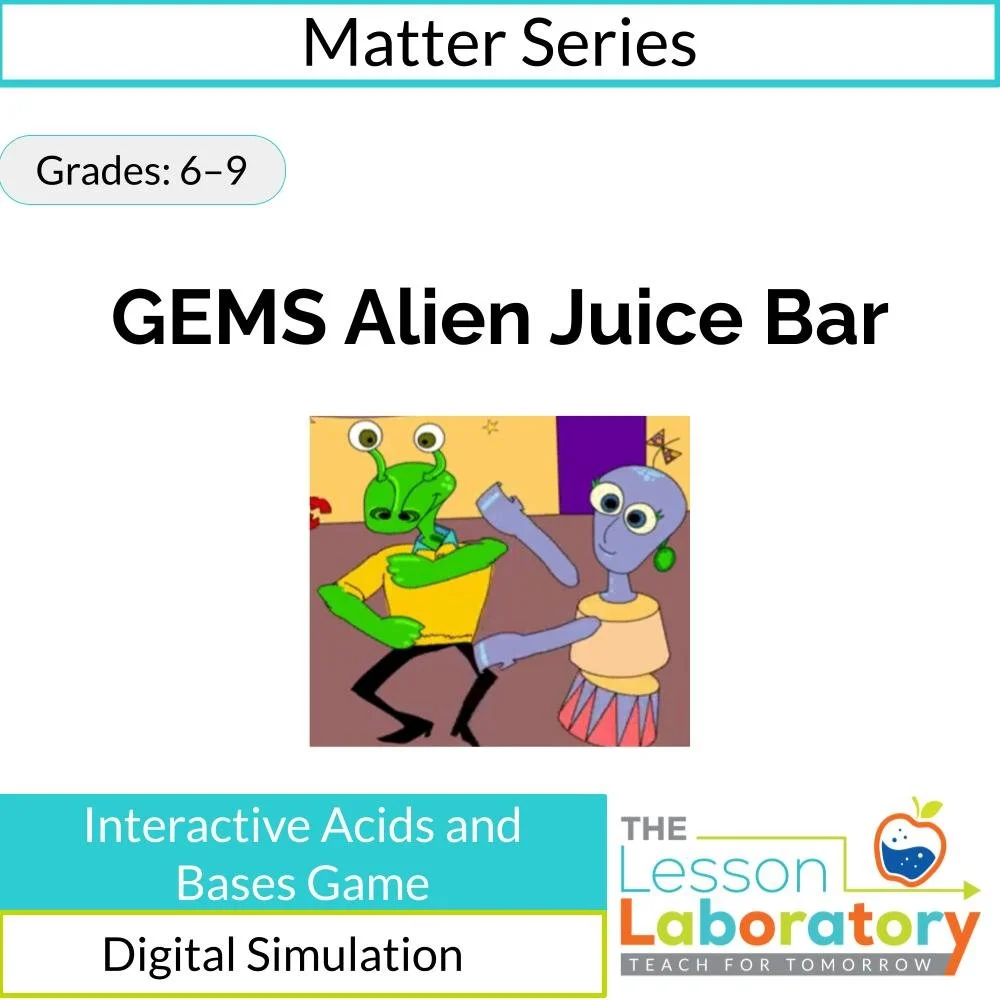
A self-paced, clickable simulation for identifying acids, bases, and neutral solutions.
This digital simulation recreates the core instructional function of the original Alien Juice Bar activity in a modern, interactive Google Slides format. Students investigate acids and bases by making choices, observing outcomes, and applying pH concepts to determine whether mixtures are safe or harmful.
Students interact with a nonlinear, clickable environment in which:
different liquids are combined and tested
pH changes are observed and interpreted
incorrect decisions produce visible consequences
correct decisions allow progression through the activity
The structure mirrors a cause-and-effect model rather than a worksheet. Students must use their understanding of acid–base properties and pH to make decisions, rather than simply identifying definitions.
This lesson is designed to support:
conceptual understanding of acids and bases
interpretation of pH-related outcomes
application of chemistry concepts in a simulated environment
engagement through interactive decision-making
It functions well as:
an introductory exploration of acids and bases
a practice activity after direct instruction
a conceptual reinforcement tool within a chemistry unit
The digital format allows each student to work independently through the simulation with minimal teacher setup. The activity preserves the instructional value of the original Alien Juice Bar while adapting it for current classroom technology.
This resource is free because it recreates a beloved classroom activity that was originally available at no cost.
NGSS Alignment (Middle School):
MS-PS1-2
Science & Engineering Practices (SEPs):
Planning and Carrying Out Investigations; Analyzing and Interpreting Data
Crosscutting Concepts (CCCs):
Cause and Effect; Patterns; Structure and Properties of Matter
Common Core (Literacy in Science):
RST.9-10.3
RST.9-10.4
RST.9-10.7
A self-paced, clickable simulation for identifying acids, bases, and neutral solutions.
This digital simulation recreates the core instructional function of the original Alien Juice Bar activity in a modern, interactive Google Slides format. Students investigate acids and bases by making choices, observing outcomes, and applying pH concepts to determine whether mixtures are safe or harmful.
Students interact with a nonlinear, clickable environment in which:
different liquids are combined and tested
pH changes are observed and interpreted
incorrect decisions produce visible consequences
correct decisions allow progression through the activity
The structure mirrors a cause-and-effect model rather than a worksheet. Students must use their understanding of acid–base properties and pH to make decisions, rather than simply identifying definitions.
This lesson is designed to support:
conceptual understanding of acids and bases
interpretation of pH-related outcomes
application of chemistry concepts in a simulated environment
engagement through interactive decision-making
It functions well as:
an introductory exploration of acids and bases
a practice activity after direct instruction
a conceptual reinforcement tool within a chemistry unit
The digital format allows each student to work independently through the simulation with minimal teacher setup. The activity preserves the instructional value of the original Alien Juice Bar while adapting it for current classroom technology.
This resource is free because it recreates a beloved classroom activity that was originally available at no cost.
NGSS Alignment (Middle School):
MS-PS1-2
Science & Engineering Practices (SEPs):
Planning and Carrying Out Investigations; Analyzing and Interpreting Data
Crosscutting Concepts (CCCs):
Cause and Effect; Patterns; Structure and Properties of Matter
Common Core (Literacy in Science):
RST.9-10.3
RST.9-10.4
RST.9-10.7