 Image 1 of 4
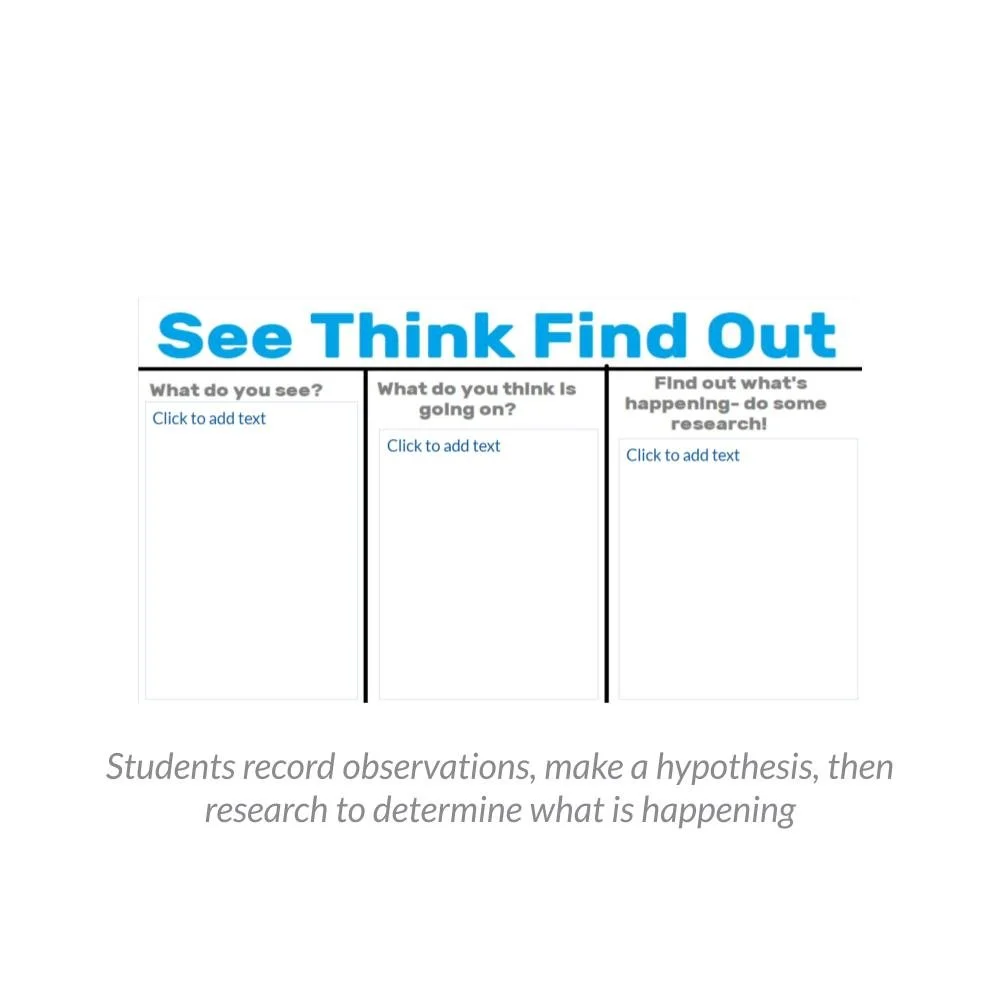 Image 2 of 4
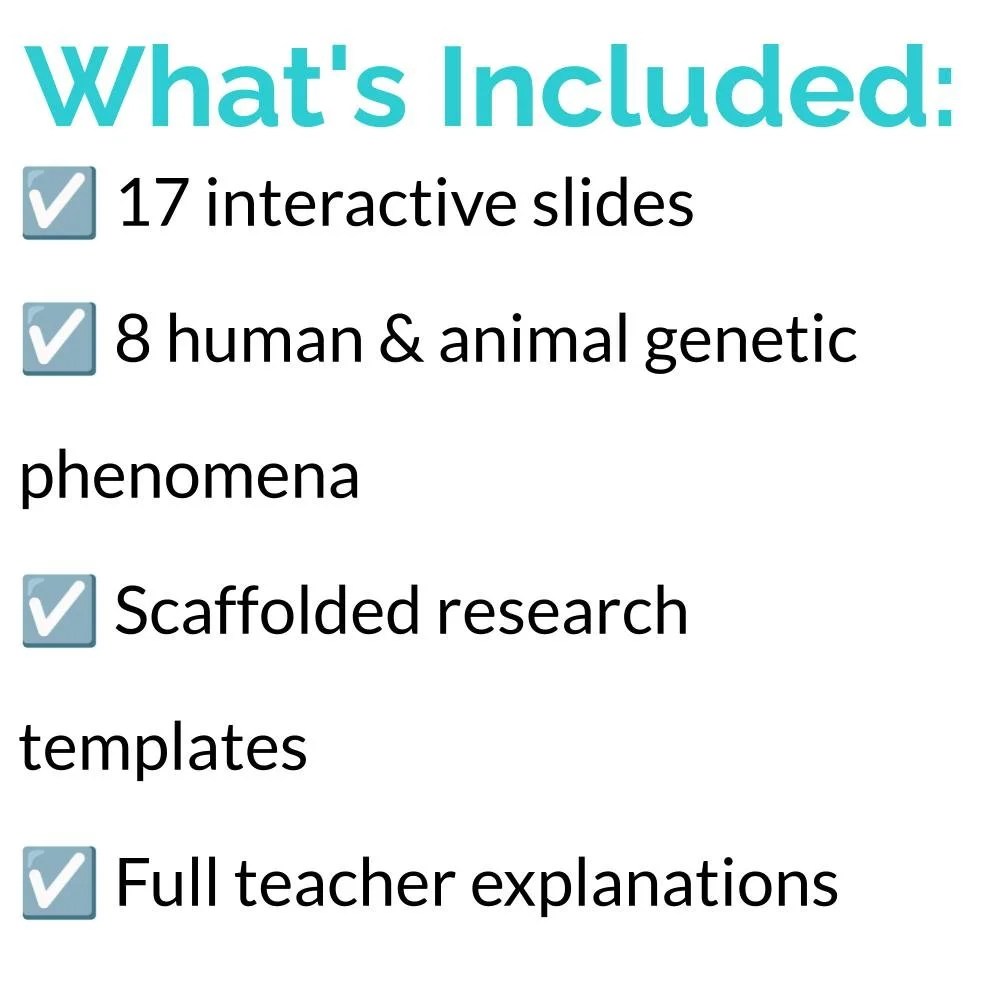 Image 3 of 4
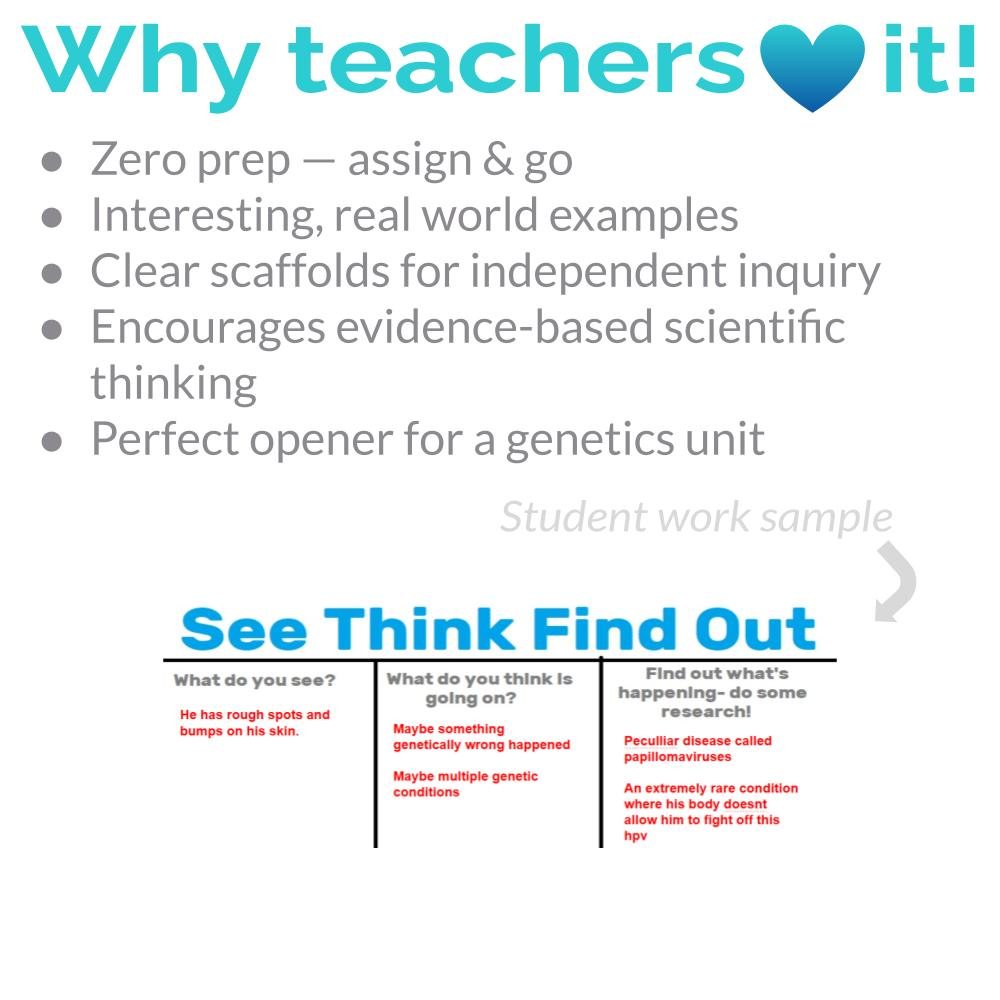 Image 4 of 4
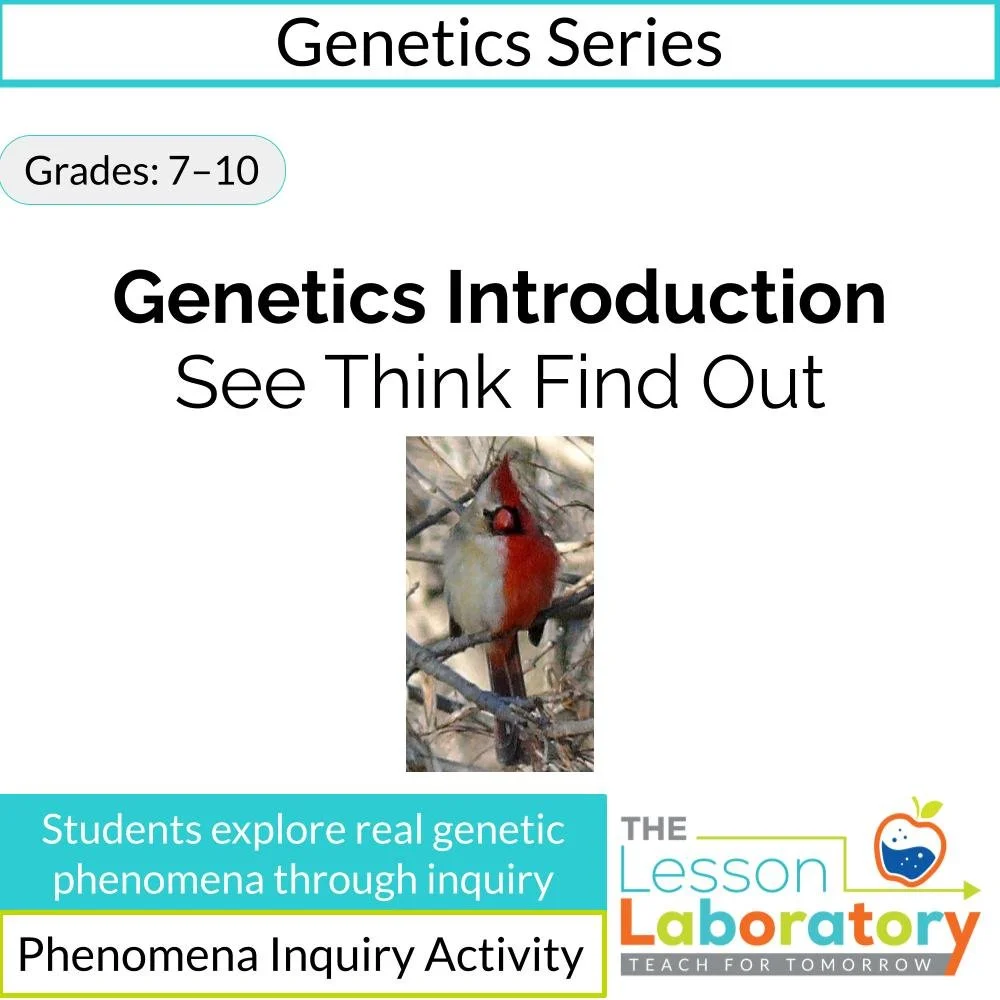
A visual inquiry lesson on mutations, traits, and genetic conditions.
This introductory genetics activity is designed to engage students in observation, hypothesis formation, and evidence-based reasoning using real examples of genetic conditions. Students begin by examining visual cases and generating initial explanations before researching the underlying genetic causes.
Students work through a structured process in which they:
reveal examples of individuals or organisms with genetic conditions
record observable traits and propose initial hypotheses
participate in whole-class discussion to compare interpretations
research the actual condition to test their ideas
The lesson emphasizes scientific thinking before terminology. Students practice distinguishing observation from inference and experience how scientific explanations are refined through evidence.
A detailed teacher key is included with:
background information for each condition
links to supporting resources
guidance for discussion and clarification
The editable format allows teachers to customize examples or substitute cases as needed.
This lesson is designed to support:
early engagement in a genetics unit
practice with observation and hypothesis skills
introduction to genetic variation and genetic disorders
classroom discussion grounded in evidence
It functions well as a first-day genetics activity or as a bridge into more formal instruction on inheritance and mutation.
To see a preview of this lesson, click here.
NGSS Alignment (High School):
HS-LS3-1
HS-LS3-2
Science & Engineering Practices (SEPs):
Asking Questions, Analyzing and Interpreting Data; Constructing Explanations; Engaging in Argument from Evidence; Obtaining, Evaluating, and Communicating Information
Crosscutting Concepts (CCCs):
Cause and Effect; Structure and Function; Patterns
Common Core (Literacy in Science):
RST.9-10.1
RST.9-10.4
RST.9-10.7
WHST.9-10.2
Bundle Upgrade Policy
This lesson is included in one or more bundles. To support flexible purchasing and long-term use of our curriculum, Lesson Laboratory offers a bundle upgrade policy.
If you purchase this lesson and decide at a later date that you would like to upgrade to a bundle, you may request a store credit equal to the total amount paid for duplicate items.
To request an upgrade credit, please email thelessonlaboratory@gmail.com and include:
Your username
The order numbers for both the original purchase(s) and the bundle
The names of the duplicate resources
Requests must be submitted within 30 days of the bundle purchase. Credits are issued as store credit for future Lesson Laboratory purchases and are not provided as cash refunds.
This policy applies only to purchases of resources that are later included in a Lesson Laboratory bundle and is limited to one adjustment per upgrade pathway.
A visual inquiry lesson on mutations, traits, and genetic conditions.
This introductory genetics activity is designed to engage students in observation, hypothesis formation, and evidence-based reasoning using real examples of genetic conditions. Students begin by examining visual cases and generating initial explanations before researching the underlying genetic causes.
Students work through a structured process in which they:
reveal examples of individuals or organisms with genetic conditions
record observable traits and propose initial hypotheses
participate in whole-class discussion to compare interpretations
research the actual condition to test their ideas
The lesson emphasizes scientific thinking before terminology. Students practice distinguishing observation from inference and experience how scientific explanations are refined through evidence.
A detailed teacher key is included with:
background information for each condition
links to supporting resources
guidance for discussion and clarification
The editable format allows teachers to customize examples or substitute cases as needed.
This lesson is designed to support:
early engagement in a genetics unit
practice with observation and hypothesis skills
introduction to genetic variation and genetic disorders
classroom discussion grounded in evidence
It functions well as a first-day genetics activity or as a bridge into more formal instruction on inheritance and mutation.
To see a preview of this lesson, click here.
NGSS Alignment (High School):
HS-LS3-1
HS-LS3-2
Science & Engineering Practices (SEPs):
Asking Questions, Analyzing and Interpreting Data; Constructing Explanations; Engaging in Argument from Evidence; Obtaining, Evaluating, and Communicating Information
Crosscutting Concepts (CCCs):
Cause and Effect; Structure and Function; Patterns
Common Core (Literacy in Science):
RST.9-10.1
RST.9-10.4
RST.9-10.7
WHST.9-10.2
Bundle Upgrade Policy
This lesson is included in one or more bundles. To support flexible purchasing and long-term use of our curriculum, Lesson Laboratory offers a bundle upgrade policy.
If you purchase this lesson and decide at a later date that you would like to upgrade to a bundle, you may request a store credit equal to the total amount paid for duplicate items.
To request an upgrade credit, please email thelessonlaboratory@gmail.com and include:
Your username
The order numbers for both the original purchase(s) and the bundle
The names of the duplicate resources
Requests must be submitted within 30 days of the bundle purchase. Credits are issued as store credit for future Lesson Laboratory purchases and are not provided as cash refunds.
This policy applies only to purchases of resources that are later included in a Lesson Laboratory bundle and is limited to one adjustment per upgrade pathway.