How can ecosystems survive without sunlight? (Hydrothermal vents)

$4.75

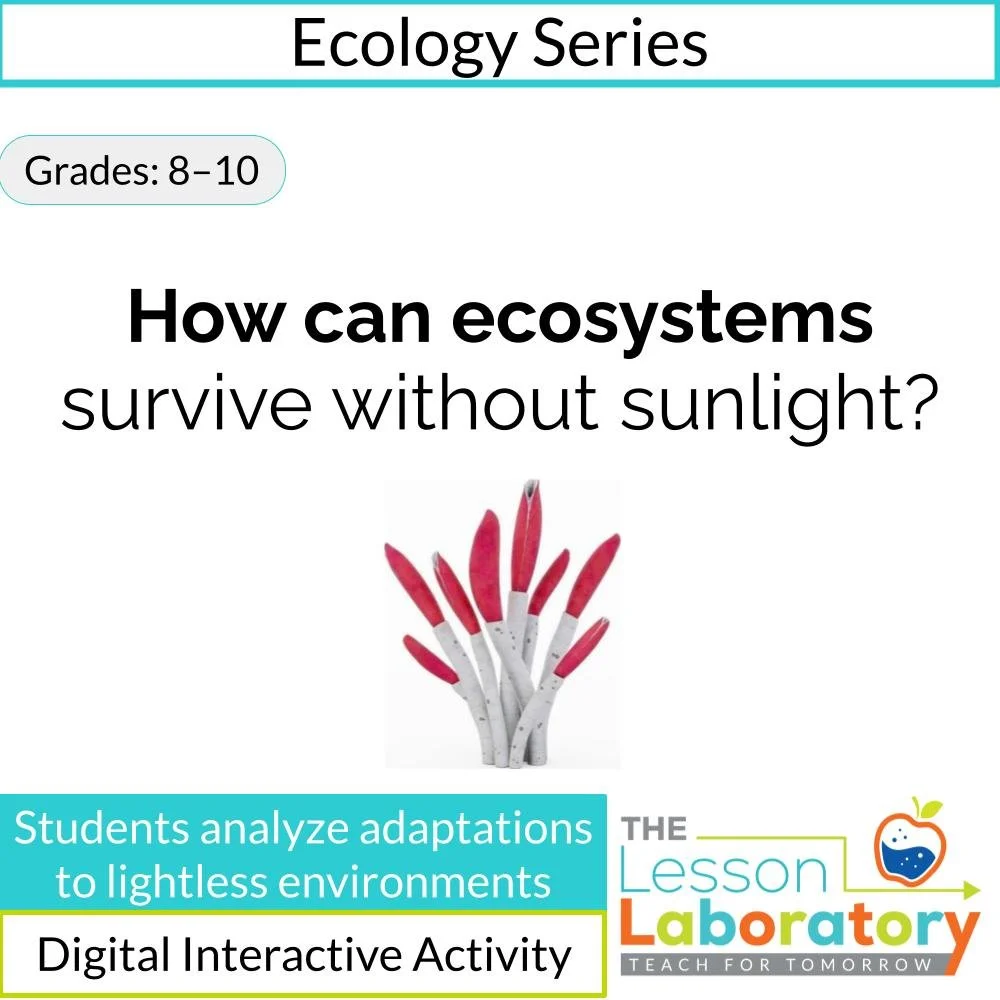
Hydrothermal Vents: How Can Ecosystems Survive Without Sunlight?

๐ŸŒŠ Embark on a Deep-Sea Expedition: Life, Light, and Survival Beneath the Waves

Descend into the uncharted depths of Earthโ€™s oceans, where sunlight never reaches โ€” yet life thrives in brilliant and unexpected ways. In this interactive Google Slides lesson, students uncover the extraordinary ecosystems surrounding hydrothermal vents, where heat, minerals, and chemistry replace sunlight as the driving force of life.

Through hands-on simulations, captivating visuals, and real-world connections, learners explore how energy flows, how organisms adapt, and how bioluminescence paints light into the darkest depths.

๐Ÿงฌ Interactive Experiences that Spark Wonder

๐ŸŒ‹ Journey Beneath the Sea:
Students explore the unique environment of hydrothermal vents through dynamic visuals and a guided investigation into how life can survive without sunlight.

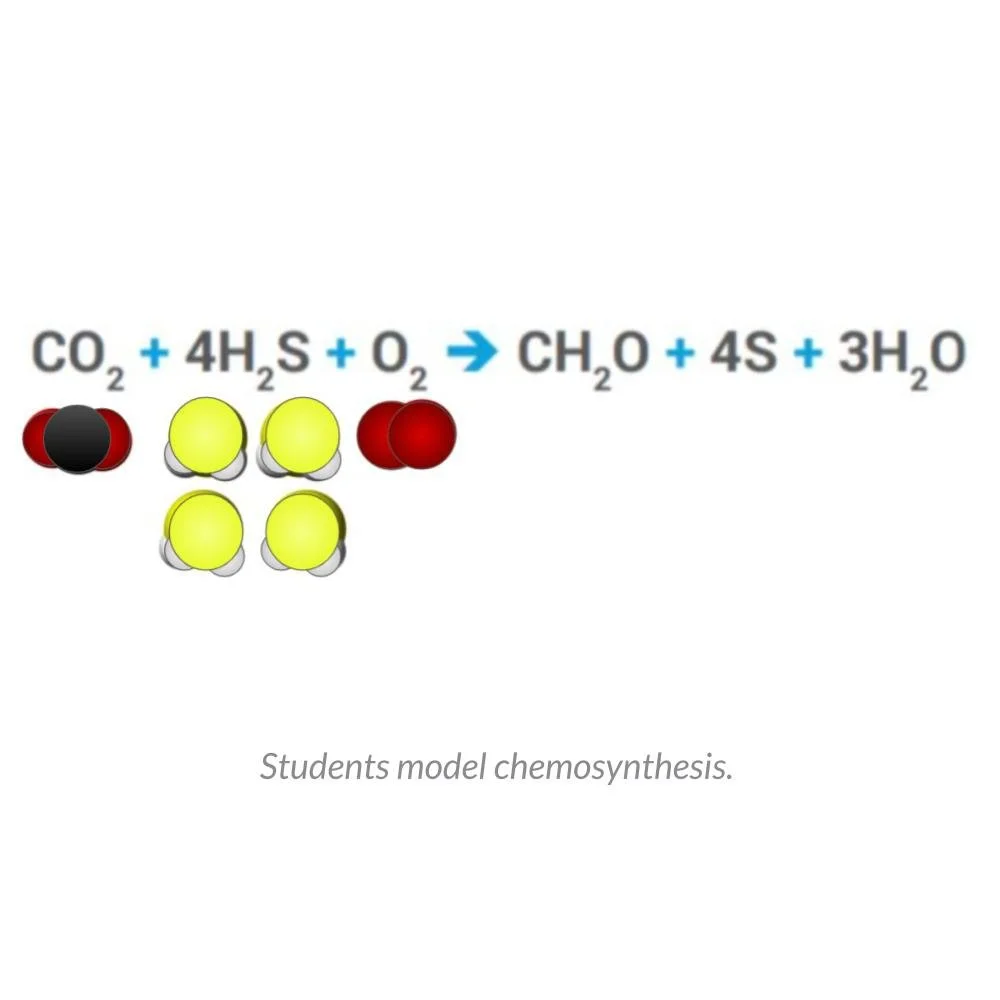
๐Ÿงช From Photosynthesis to Chemosynthesis:
By comparing and manipulating equations, students discover how some organisms harness chemical energy instead of solar energy โ€” and visualize matter transforming at the molecular level.

๐Ÿ› Symbiosis at Work:
Students explore the fascinating partnership between giant tubeworms and chemosynthetic bacteria, modeling how cooperation sustains life in extreme conditions.

๐Ÿ’ก The Science of Bioluminescence:
Students are introduced to the chemistry and biological functions of bioluminescence โ€” from predator evasion to communication and feeding โ€” using real examples from deep-sea organisms.

๐ŸŒ Food Web Engineering:
Through drag-and-drop activities, students construct and analyze a vent ecosystem food web, tracing energy flow from the tiniest microbes to the largest predators.

๐Ÿš€ From Deep Sea to Deep Space:
Students extend their learning beyond Earth by evaluating which of our solar systemโ€™s moons could host life powered by chemosynthesis โ€” linking biology, chemistry, and astrobiology in one powerful concept.

๐Ÿ” Why Teachers Love It

  • Integrates biology, chemistry, and Earth science seamlessly.

  • Encourages critical thinking through modeling and evidence-based explanation.

  • Perfect for phenomena-based instruction and NGSS-aligned lessons on energy and matter.

  • Works beautifully for both in-person and digital instruction.

๐ŸŒŸ Bring Light to the Darkest Places

This immersive, discovery-based lesson turns the unknown world of hydrothermal vents into an unforgettable classroom experience. Students wonโ€™t just learn about life in the dark โ€” theyโ€™ll illuminate it.

Grade Recommendation

  • Middle School: Grades 7โ€“8 (Earth Science or Life Science units on ecosystems, energy flow, or extremophiles).

  • High School: Grades 9โ€“10 (Living Environment or Biology โ€” particularly during units on ecology, energy transfer, or the origins of life).

Use Context: This lesson fits beautifully as an application or phenomenon-based mini-lesson following instruction on photosynthesis or energy flow in ecosystems. It can also serve as a bridge to discuss astrobiology or the origins of life.

Cross-Curricular Connections and Extensions

  • ELA: Students interpret informational text, multimedia (Bill Nye and National Geographic clips), and explanatory writing in exit tickets.

  • Technology: Integrates digital literacy through embedded YouTube clips and a linked Google Doc exit ticket.

  • Earth & Space Science: Ties to geological processes (hydrothermal vents, plate tectonics) and how energy from Earthโ€™s interior supports life.

  • Extension Ideas:

    • Connect to NASAโ€™s research on Europa and Enceladus, exploring life beyond Earth.

    • Students could research other chemosynthetic ecosystems and present a digital model or infographic.

Daily slide + literacy - based exit ticket included with purchase

Join the Lesson Laboratory and Teach for Tomorrow!

NGSS Standards (Including CCCs and SEPs)

Middle School Performance Expectations

  • MS-LS2-3 โ€“ Develop a model to describe the cycling of matter and flow of energy among living and nonliving parts of an ecosystem.

  • MS-LS1-6 โ€“ Construct a scientific explanation based on evidence for the role of photosynthesis (and, in this case, chemosynthesis) in the cycling of matter and flow of energy.

  • MS-ESS2-2 โ€“ Construct an explanation based on evidence for how geoscience processes have changed Earthโ€™s surface at varying time and spatial scales.

High School Performance Expectations

  • HS-LS2-3 โ€“ Construct and revise an explanation for the cycling of matter and flow of energy in aerobic and anaerobic conditions.

  • HS-LS2-5 โ€“ Develop a model to illustrate the role of photosynthesis and cellular respiration (including chemosynthesis) in the carbon cycle.

  • HS-ESS2-7 โ€“ Construct an argument based on evidence about the role of energy in Earthโ€™s interior processes.

  • HS-LS4-1 โ€“ Communicate scientific information that common ancestry and biological evolution are supported by multiple lines of empirical evidence.

Science & Engineering Practices (SEPs)

  • Analyzing and Interpreting Data: Students interpret images and video clips to identify vent organisms and symbiotic relationships.

  • Developing and Using Models: Students construct or visualize hydrothermal vent food webs to show matter and energy flow.

  • Constructing Explanations: Students explain how chemosynthesis replaces photosynthesis as the primary energy source.

  • Engaging in Argument from Evidence: Students justify claims in their exit ticket responses using evidence from the video and food web model.

Crosscutting Concepts (CCCs)

  • Energy and Matter: Flows, Cycles, and Conservation โ€“ Students trace the flow of chemical energy from inorganic compounds to living organisms.

  • Cause and Effect โ€“ Examine how the absence of sunlight drives adaptations and unique symbiotic relationships.

  • Structure and Function โ€“ Tubeworm-bacteria symbiosis illustrates how biological structures are adapted to extreme environments.

  • Stability and Change โ€“ Discussion of vent dynamics and succession following eruptions highlights changing ecosystems.

Common Core Standards (if applicable)

  • CCSS.ELA-LITERACY.RST.6-8.2 / RST.9-10.2: Determine the central ideas or conclusions of a text; summarize complex scientific concepts.

  • CCSS.ELA-LITERACY.RST.9-10.7: Translate information expressed visually or through multimedia into words.

  • CCSS.ELA-LITERACY.WHST.9-10.2: Write informative texts to examine a topic and convey ideas clearly (exit ticket response).

Hydrothermal Vents: How Can Ecosystems Survive Without Sunlight?

๐ŸŒŠ Embark on a Deep-Sea Expedition: Life, Light, and Survival Beneath the Waves

Descend into the uncharted depths of Earthโ€™s oceans, where sunlight never reaches โ€” yet life thrives in brilliant and unexpected ways. In this interactive Google Slides lesson, students uncover the extraordinary ecosystems surrounding hydrothermal vents, where heat, minerals, and chemistry replace sunlight as the driving force of life.

Through hands-on simulations, captivating visuals, and real-world connections, learners explore how energy flows, how organisms adapt, and how bioluminescence paints light into the darkest depths.

๐Ÿงฌ Interactive Experiences that Spark Wonder

๐ŸŒ‹ Journey Beneath the Sea:
Students explore the unique environment of hydrothermal vents through dynamic visuals and a guided investigation into how life can survive without sunlight.

๐Ÿงช From Photosynthesis to Chemosynthesis:
By comparing and manipulating equations, students discover how some organisms harness chemical energy instead of solar energy โ€” and visualize matter transforming at the molecular level.

๐Ÿ› Symbiosis at Work:
Students explore the fascinating partnership between giant tubeworms and chemosynthetic bacteria, modeling how cooperation sustains life in extreme conditions.

๐Ÿ’ก The Science of Bioluminescence:
Students are introduced to the chemistry and biological functions of bioluminescence โ€” from predator evasion to communication and feeding โ€” using real examples from deep-sea organisms.

๐ŸŒ Food Web Engineering:
Through drag-and-drop activities, students construct and analyze a vent ecosystem food web, tracing energy flow from the tiniest microbes to the largest predators.

๐Ÿš€ From Deep Sea to Deep Space:
Students extend their learning beyond Earth by evaluating which of our solar systemโ€™s moons could host life powered by chemosynthesis โ€” linking biology, chemistry, and astrobiology in one powerful concept.

๐Ÿ” Why Teachers Love It

  • Integrates biology, chemistry, and Earth science seamlessly.

  • Encourages critical thinking through modeling and evidence-based explanation.

  • Perfect for phenomena-based instruction and NGSS-aligned lessons on energy and matter.

  • Works beautifully for both in-person and digital instruction.

๐ŸŒŸ Bring Light to the Darkest Places

This immersive, discovery-based lesson turns the unknown world of hydrothermal vents into an unforgettable classroom experience. Students wonโ€™t just learn about life in the dark โ€” theyโ€™ll illuminate it.

Grade Recommendation

  • Middle School: Grades 7โ€“8 (Earth Science or Life Science units on ecosystems, energy flow, or extremophiles).

  • High School: Grades 9โ€“10 (Living Environment or Biology โ€” particularly during units on ecology, energy transfer, or the origins of life).

Use Context: This lesson fits beautifully as an application or phenomenon-based mini-lesson following instruction on photosynthesis or energy flow in ecosystems. It can also serve as a bridge to discuss astrobiology or the origins of life.

Cross-Curricular Connections and Extensions

  • ELA: Students interpret informational text, multimedia (Bill Nye and National Geographic clips), and explanatory writing in exit tickets.

  • Technology: Integrates digital literacy through embedded YouTube clips and a linked Google Doc exit ticket.

  • Earth & Space Science: Ties to geological processes (hydrothermal vents, plate tectonics) and how energy from Earthโ€™s interior supports life.

  • Extension Ideas:

    • Connect to NASAโ€™s research on Europa and Enceladus, exploring life beyond Earth.

    • Students could research other chemosynthetic ecosystems and present a digital model or infographic.

Daily slide + literacy - based exit ticket included with purchase

Join the Lesson Laboratory and Teach for Tomorrow!

NGSS Standards (Including CCCs and SEPs)

Middle School Performance Expectations

  • MS-LS2-3 โ€“ Develop a model to describe the cycling of matter and flow of energy among living and nonliving parts of an ecosystem.

  • MS-LS1-6 โ€“ Construct a scientific explanation based on evidence for the role of photosynthesis (and, in this case, chemosynthesis) in the cycling of matter and flow of energy.

  • MS-ESS2-2 โ€“ Construct an explanation based on evidence for how geoscience processes have changed Earthโ€™s surface at varying time and spatial scales.

High School Performance Expectations

  • HS-LS2-3 โ€“ Construct and revise an explanation for the cycling of matter and flow of energy in aerobic and anaerobic conditions.

  • HS-LS2-5 โ€“ Develop a model to illustrate the role of photosynthesis and cellular respiration (including chemosynthesis) in the carbon cycle.

  • HS-ESS2-7 โ€“ Construct an argument based on evidence about the role of energy in Earthโ€™s interior processes.

  • HS-LS4-1 โ€“ Communicate scientific information that common ancestry and biological evolution are supported by multiple lines of empirical evidence.

Science & Engineering Practices (SEPs)

  • Analyzing and Interpreting Data: Students interpret images and video clips to identify vent organisms and symbiotic relationships.

  • Developing and Using Models: Students construct or visualize hydrothermal vent food webs to show matter and energy flow.

  • Constructing Explanations: Students explain how chemosynthesis replaces photosynthesis as the primary energy source.

  • Engaging in Argument from Evidence: Students justify claims in their exit ticket responses using evidence from the video and food web model.

Crosscutting Concepts (CCCs)

  • Energy and Matter: Flows, Cycles, and Conservation โ€“ Students trace the flow of chemical energy from inorganic compounds to living organisms.

  • Cause and Effect โ€“ Examine how the absence of sunlight drives adaptations and unique symbiotic relationships.

  • Structure and Function โ€“ Tubeworm-bacteria symbiosis illustrates how biological structures are adapted to extreme environments.

  • Stability and Change โ€“ Discussion of vent dynamics and succession following eruptions highlights changing ecosystems.

Common Core Standards (if applicable)

  • CCSS.ELA-LITERACY.RST.6-8.2 / RST.9-10.2: Determine the central ideas or conclusions of a text; summarize complex scientific concepts.

  • CCSS.ELA-LITERACY.RST.9-10.7: Translate information expressed visually or through multimedia into words.

  • CCSS.ELA-LITERACY.WHST.9-10.2: Write informative texts to examine a topic and convey ideas clearly (exit ticket response).