 Image 1 of 4
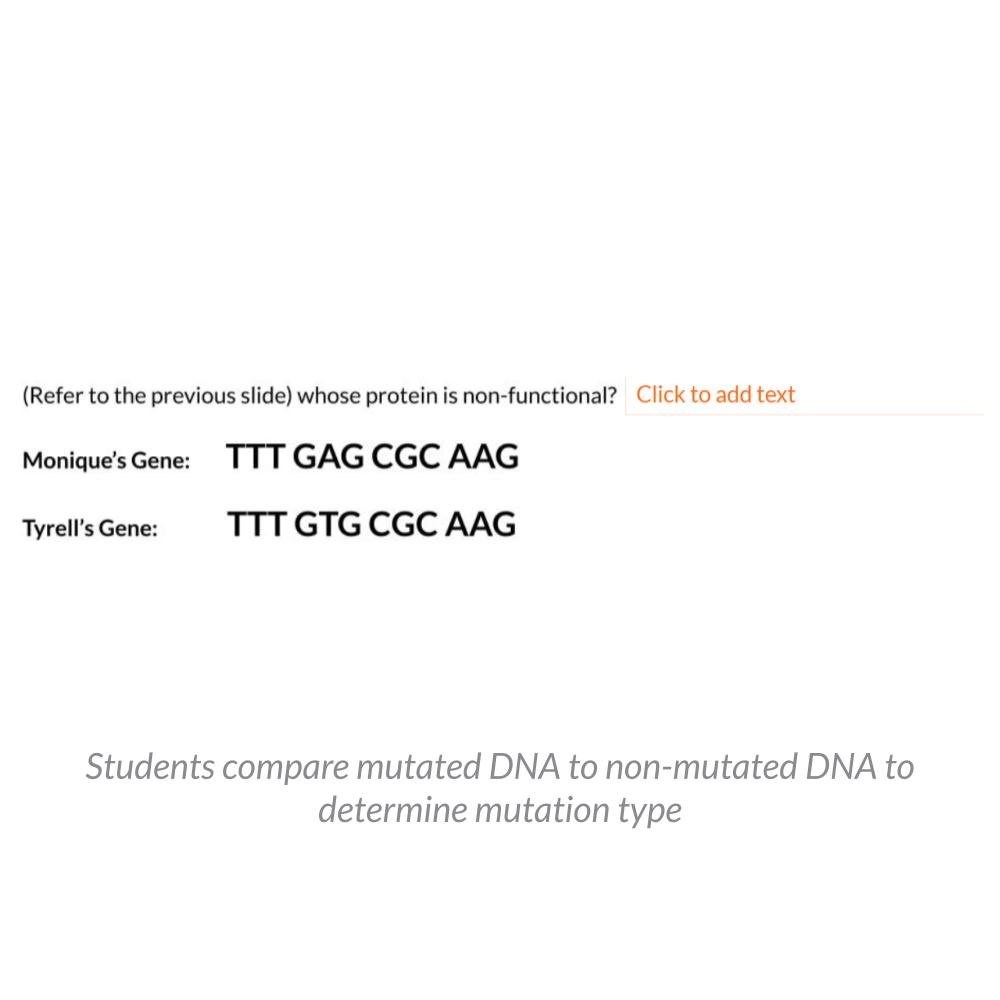 Image 2 of 4
 Image 3 of 4
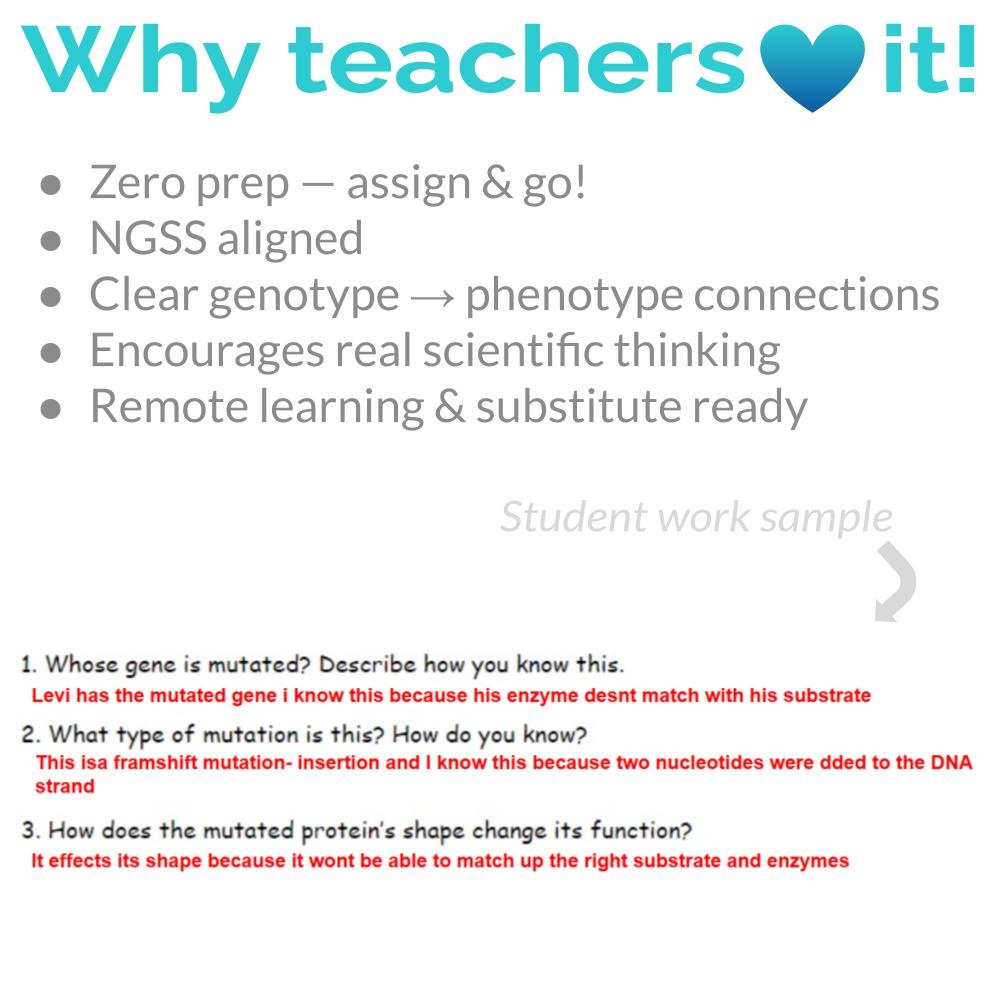 Image 4 of 4
Interactive Genetic Disorders & Mutation Analysis Lesson.
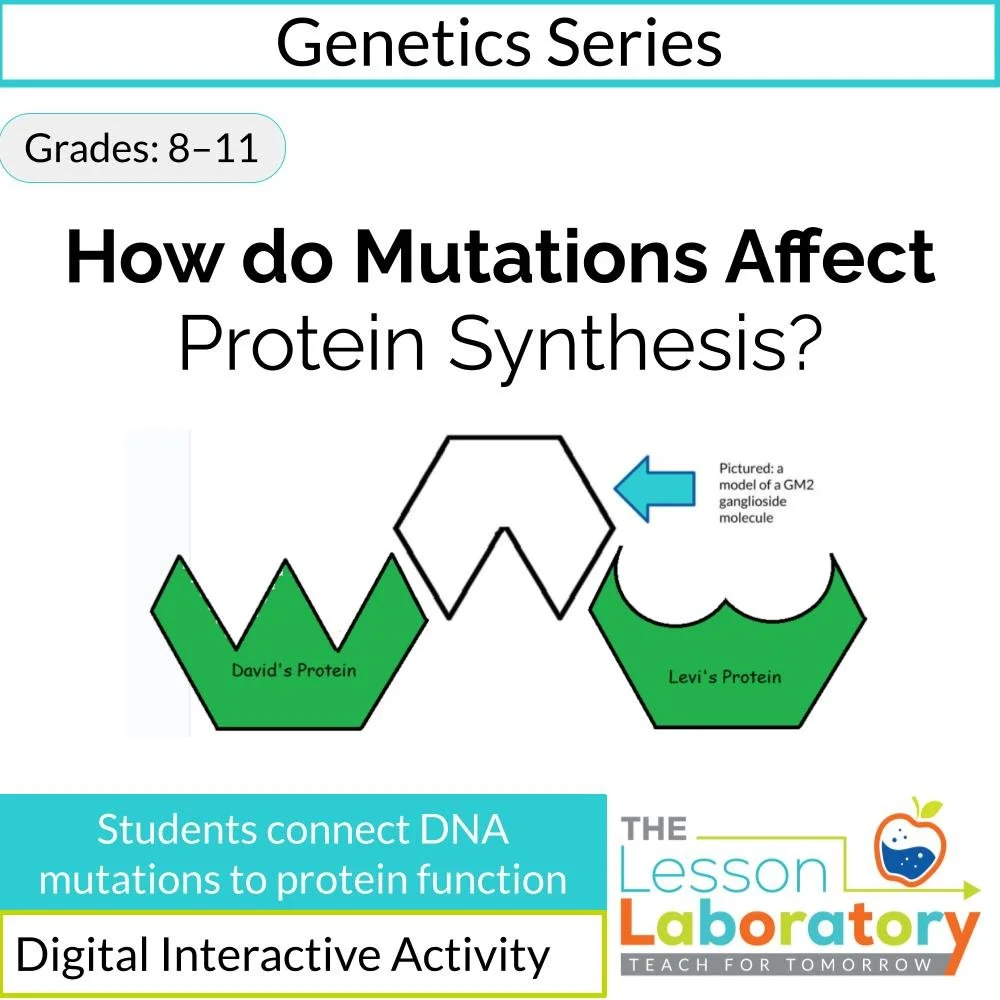
This lesson examines how DNA mutations alter proteins and lead to genetic disease. Students analyze real examples of inherited disorders and connect changes at the molecular level to functional and physiological outcomes.
Students focus on four genetic diseases:
Tay-Sachs
Sickle cell anemia
Hemophilia
Cystic fibrosis
For each case, students:
compare the normal and altered proteins
determine which protein is missing or nonfunctional
analyze the corresponding DNA sequences
identify the mutation type responsible
explain how the altered protein structure leads to disease symptoms
The mutations used in the lesson are based on real genetic changes associated with each disorder, allowing students to work with biologically accurate examples.
The lesson emphasizes structure–function relationships and requires students to reason from DNA sequence to protein function to organism-level effects. Rather than memorizing disease facts, students analyze how specific molecular changes produce specific outcomes.
This lesson is designed to support:
application of mutation and protein synthesis concepts
interpretation of molecular-level data
explanation of genotype–phenotype relationships
synthesis of genetics and human biology
It functions well as an applied genetics lesson or as an extension after instruction on mutation and protein synthesis.
To preview this lesson, click here.
NGSS Alignment (High School):
HS-LS3-1, HS-LS3-2, HS-LS3-3
NGSS Alignment (Middle School):
MS-LS3-1, MS-LS3-2
Science & Engineering Practices (SEPs):
Developing and Using Models; Analyzing and Interpreting Data; Constructing Explanations
Crosscutting Concepts (CCCs):
Patterns; Cause and Effect; Structure and Function
Common Core (Literacy in Science):
RST.9-10.4, RST.11-12.4
RST.9-10.7, RST.11-12.7
WHST.9-10.2, WHST.11-12.2
Bundle Upgrade Policy
This lesson is included in one or more bundles. To support flexible purchasing and long-term use of our curriculum, Lesson Laboratory offers a bundle upgrade policy.
If you purchase this lesson and decide at a later date that you would like to upgrade to a bundle, you may request a store credit equal to the total amount paid for duplicate items.
To request an upgrade credit, please email thelessonlaboratory@gmail.com and include:
Your username
The order numbers for both the original purchase(s) and the bundle
The names of the duplicate resources
Requests must be submitted within 30 days of the bundle purchase. Credits are issued as store credit for future Lesson Laboratory purchases and are not provided as cash refunds.
This policy applies only to purchases of resources that are later included in a Lesson Laboratory bundle and is limited to one adjustment per upgrade pathway.
Interactive Genetic Disorders & Mutation Analysis Lesson.
This lesson examines how DNA mutations alter proteins and lead to genetic disease. Students analyze real examples of inherited disorders and connect changes at the molecular level to functional and physiological outcomes.
Students focus on four genetic diseases:
Tay-Sachs
Sickle cell anemia
Hemophilia
Cystic fibrosis
For each case, students:
compare the normal and altered proteins
determine which protein is missing or nonfunctional
analyze the corresponding DNA sequences
identify the mutation type responsible
explain how the altered protein structure leads to disease symptoms
The mutations used in the lesson are based on real genetic changes associated with each disorder, allowing students to work with biologically accurate examples.
The lesson emphasizes structure–function relationships and requires students to reason from DNA sequence to protein function to organism-level effects. Rather than memorizing disease facts, students analyze how specific molecular changes produce specific outcomes.
This lesson is designed to support:
application of mutation and protein synthesis concepts
interpretation of molecular-level data
explanation of genotype–phenotype relationships
synthesis of genetics and human biology
It functions well as an applied genetics lesson or as an extension after instruction on mutation and protein synthesis.
To preview this lesson, click here.
NGSS Alignment (High School):
HS-LS3-1, HS-LS3-2, HS-LS3-3
NGSS Alignment (Middle School):
MS-LS3-1, MS-LS3-2
Science & Engineering Practices (SEPs):
Developing and Using Models; Analyzing and Interpreting Data; Constructing Explanations
Crosscutting Concepts (CCCs):
Patterns; Cause and Effect; Structure and Function
Common Core (Literacy in Science):
RST.9-10.4, RST.11-12.4
RST.9-10.7, RST.11-12.7
WHST.9-10.2, WHST.11-12.2
Bundle Upgrade Policy
This lesson is included in one or more bundles. To support flexible purchasing and long-term use of our curriculum, Lesson Laboratory offers a bundle upgrade policy.
If you purchase this lesson and decide at a later date that you would like to upgrade to a bundle, you may request a store credit equal to the total amount paid for duplicate items.
To request an upgrade credit, please email thelessonlaboratory@gmail.com and include:
Your username
The order numbers for both the original purchase(s) and the bundle
The names of the duplicate resources
Requests must be submitted within 30 days of the bundle purchase. Credits are issued as store credit for future Lesson Laboratory purchases and are not provided as cash refunds.
This policy applies only to purchases of resources that are later included in a Lesson Laboratory bundle and is limited to one adjustment per upgrade pathway.