 Image 1 of 4
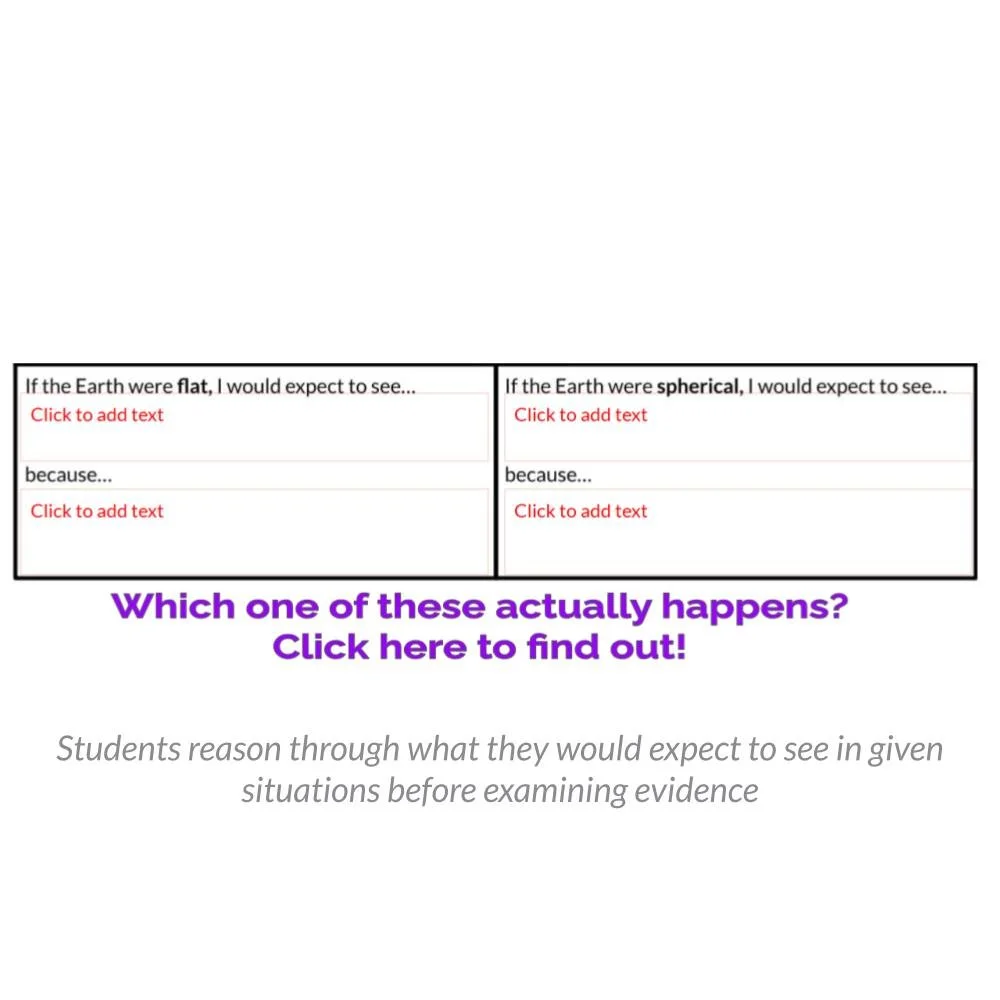 Image 2 of 4
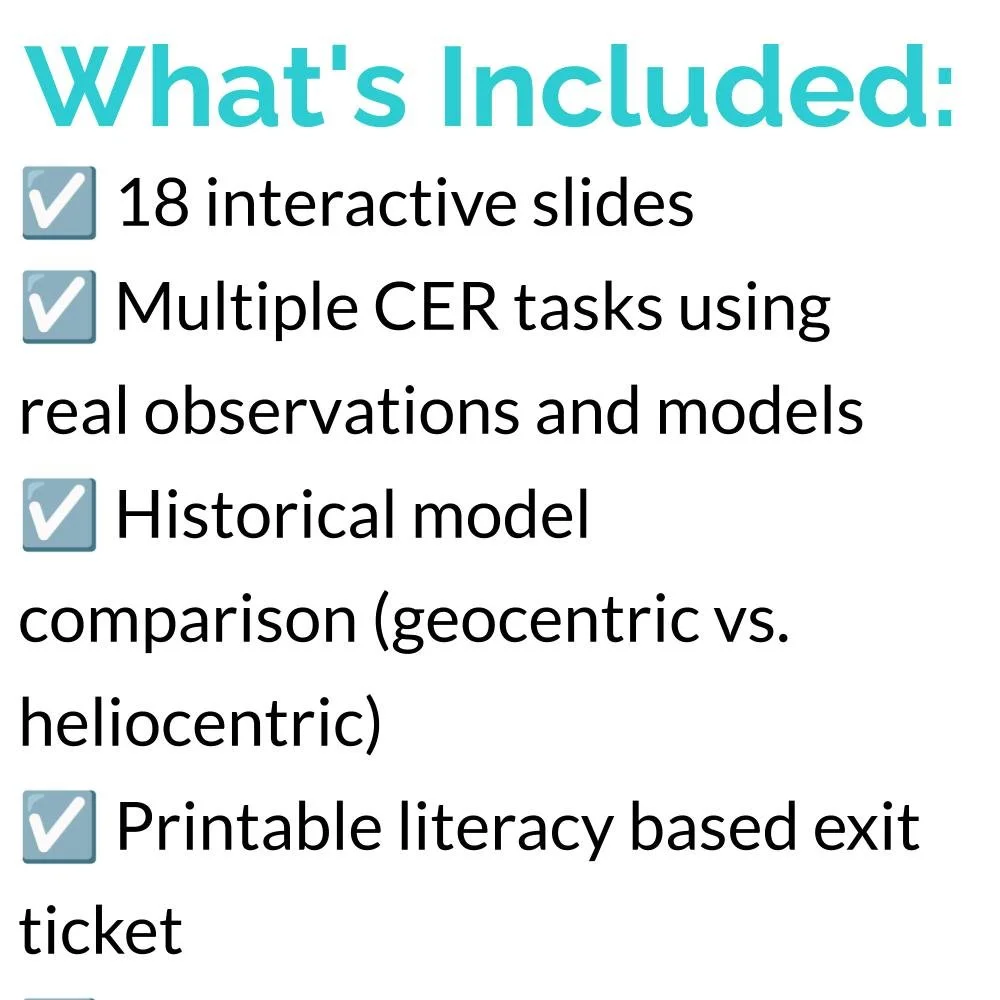 Image 3 of 4
 Image 4 of 4
Phenomena-Driven Earth & Space Science Investigation Using Claims, Evidence & Reasoning.
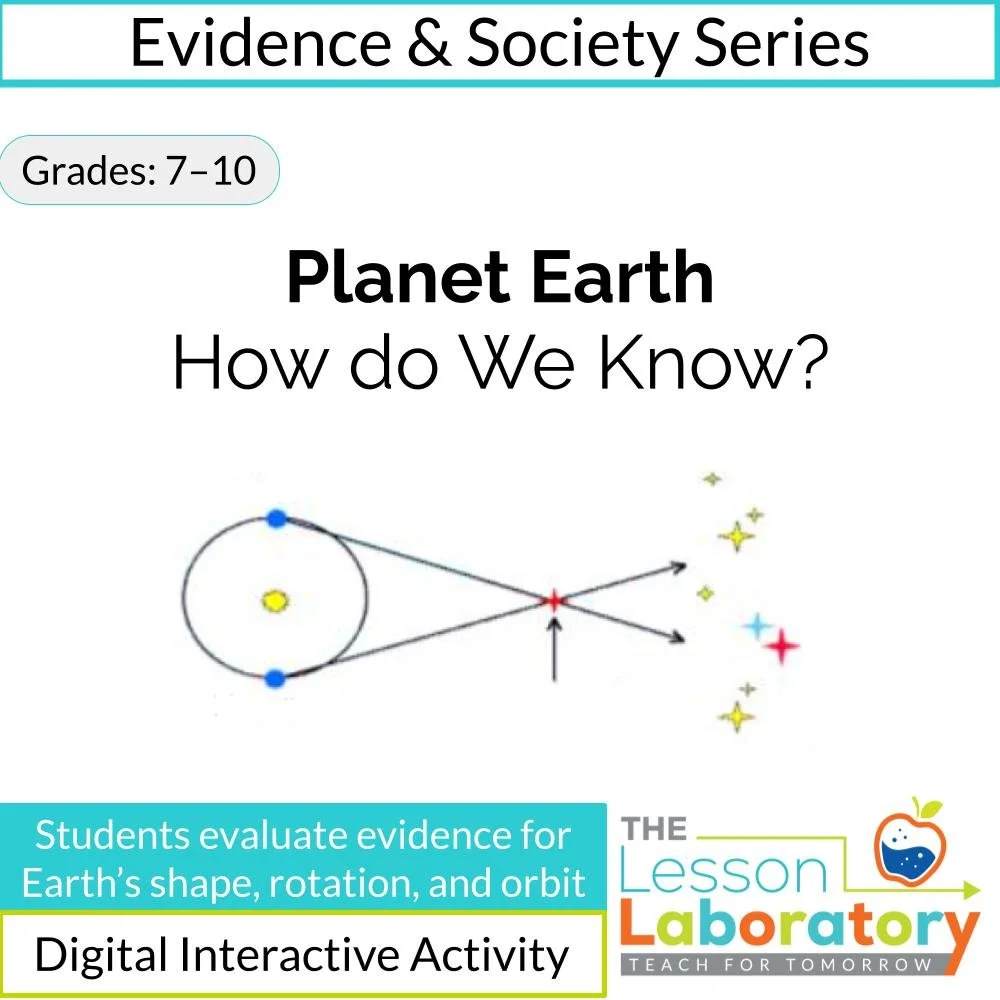
This digital, evidence-based lesson focuses on how scientists know foundational facts about Earth, including its shape, rotation, and motion through space. Rather than presenting these ideas as accepted truths, the lesson asks students to evaluate evidence and construct explanations using structured Claim–Evidence–Reasoning (CER).
Students work through three core investigations:
how we know the Earth is round
how we know the Earth rotates
how we know the Earth revolves around the Sun
Across each investigation, students analyze real observational evidence and use it to support or refute scientific claims. Evidence sources include astronomical observations, physical demonstrations, and predictable patterns in the sky. Students are prompted to compare explanations, identify which claims are best supported by evidence, and justify their reasoning.
The lesson then transitions to a comparison of geocentric and heliocentric models, allowing students to examine how different scientific models accounted for observed planetary motion. Students analyze the strengths and limitations of each model and consider how scientific explanations change as new evidence becomes available. A short historical component situates these ideas within the work of early astronomers, supporting discussion of how science develops over time.
This lesson is fully digital, clearly structured, and designed to function as a core instructional day in Earth science or Nature of Science units. It emphasizes reasoning, evidence evaluation, and scientific argumentation rather than memorization.
Digital Google Slides lesson
Multiple CER tasks and templates
Evidence analysis and model comparison activities
Historical context for geocentric vs. heliocentric models
Teacher key
Optional exit ticket
This lesson works well in:
middle school Earth science
Grade 9 Earth science or astronomy
Nature of Science or scientific reasoning units
literacy-rich science instruction focused on explanation and argumentation
To preview this lesson, click here.
NGSS Alignment (High School):
HS-ESS1-2
NGSS Alignment (Middle School):
MS-ESS1-1; MS-ESS1-2
Science & Engineering Practices (SEPs):
Developing and Using Models
Analyzing and Interpreting Data
Constructing Explanations
Engaging in Argument from Evidence
Crosscutting Concepts (CCCs):
Cause and Effect
Systems and System Models
Patterns
Stability and Change
Common Core (Literacy in Science):
RST.6-8.1/9-10.1; RST.6-8.7/9-10.7; WHST.6-8.1/9-10.1; WHST.6-8.7; WHST.9-10.8
Phenomena-Driven Earth & Space Science Investigation Using Claims, Evidence & Reasoning.
This digital, evidence-based lesson focuses on how scientists know foundational facts about Earth, including its shape, rotation, and motion through space. Rather than presenting these ideas as accepted truths, the lesson asks students to evaluate evidence and construct explanations using structured Claim–Evidence–Reasoning (CER).
Students work through three core investigations:
how we know the Earth is round
how we know the Earth rotates
how we know the Earth revolves around the Sun
Across each investigation, students analyze real observational evidence and use it to support or refute scientific claims. Evidence sources include astronomical observations, physical demonstrations, and predictable patterns in the sky. Students are prompted to compare explanations, identify which claims are best supported by evidence, and justify their reasoning.
The lesson then transitions to a comparison of geocentric and heliocentric models, allowing students to examine how different scientific models accounted for observed planetary motion. Students analyze the strengths and limitations of each model and consider how scientific explanations change as new evidence becomes available. A short historical component situates these ideas within the work of early astronomers, supporting discussion of how science develops over time.
This lesson is fully digital, clearly structured, and designed to function as a core instructional day in Earth science or Nature of Science units. It emphasizes reasoning, evidence evaluation, and scientific argumentation rather than memorization.
Digital Google Slides lesson
Multiple CER tasks and templates
Evidence analysis and model comparison activities
Historical context for geocentric vs. heliocentric models
Teacher key
Optional exit ticket
This lesson works well in:
middle school Earth science
Grade 9 Earth science or astronomy
Nature of Science or scientific reasoning units
literacy-rich science instruction focused on explanation and argumentation
To preview this lesson, click here.
NGSS Alignment (High School):
HS-ESS1-2
NGSS Alignment (Middle School):
MS-ESS1-1; MS-ESS1-2
Science & Engineering Practices (SEPs):
Developing and Using Models
Analyzing and Interpreting Data
Constructing Explanations
Engaging in Argument from Evidence
Crosscutting Concepts (CCCs):
Cause and Effect
Systems and System Models
Patterns
Stability and Change
Common Core (Literacy in Science):
RST.6-8.1/9-10.1; RST.6-8.7/9-10.7; WHST.6-8.1/9-10.1; WHST.6-8.7; WHST.9-10.8