 Image 1 of 4
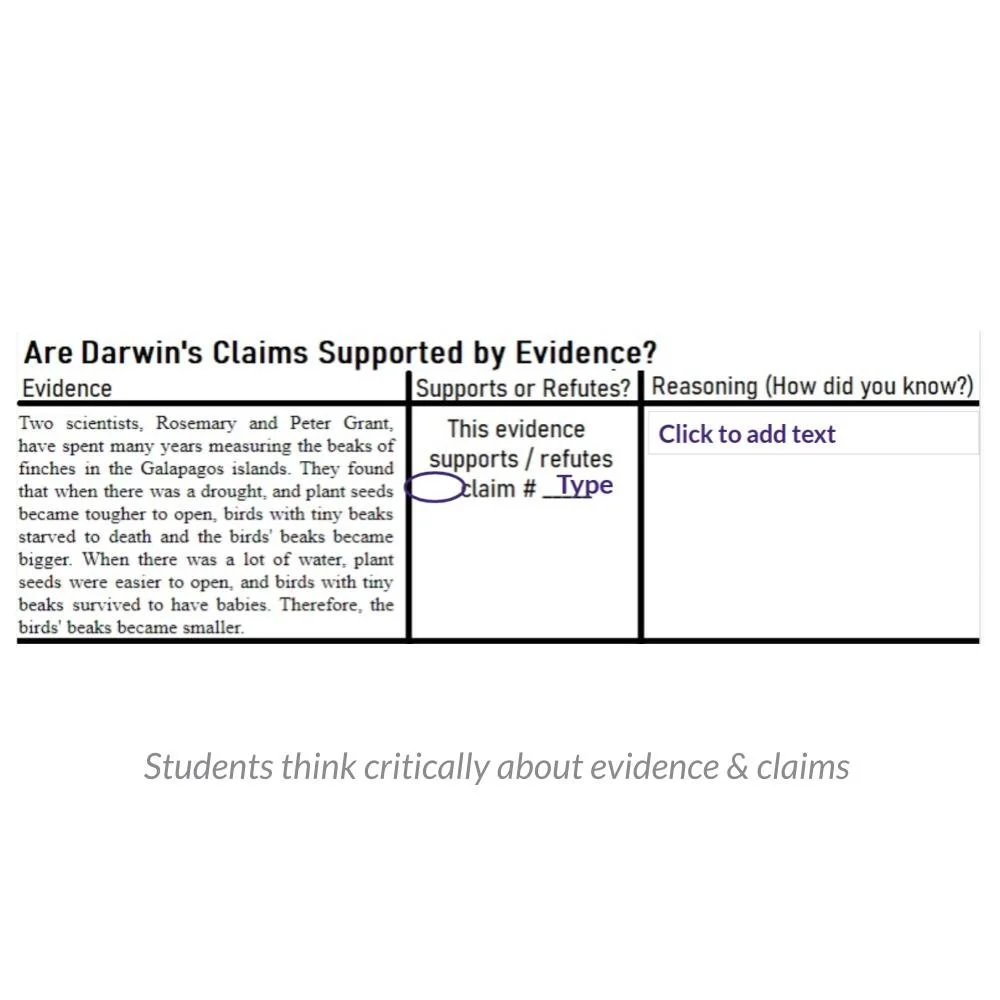 Image 2 of 4
 Image 3 of 4
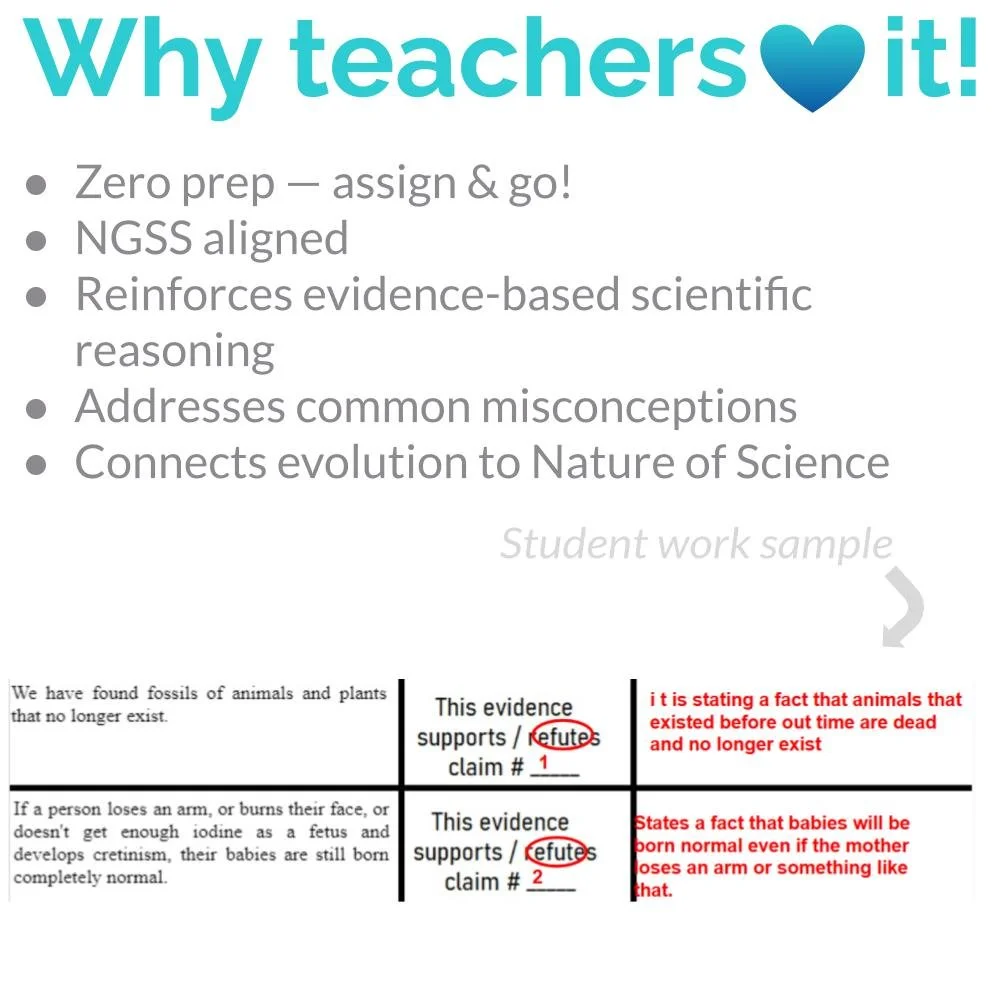 Image 4 of 4
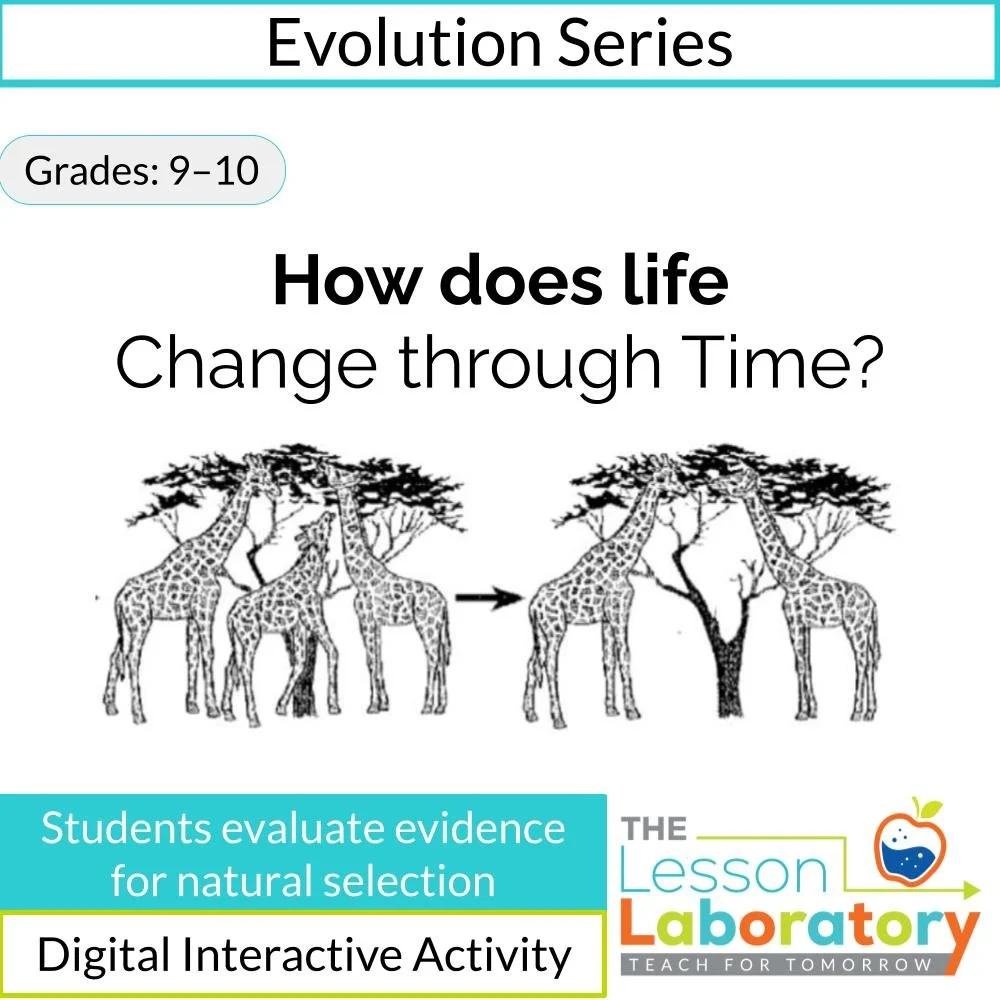
Evaluating Lamarck, Darwin, and Intelligent Design Using Evidence.
This lesson introduces evolution through the lens of the nature of science, asking students to distinguish between scientific explanations and unsupported claims. Students evaluate whether ideas about evolution meet the criteria of testability and evidence and apply those criteria to competing explanations for biological change.
Students begin by examining what qualifies as science by evaluating a set of statements and determining which are testable and evidence-based. They then draw on prior knowledge to identify multiple lines of evidence for evolution as change over time.
Students apply these ideas by comparing three explanations for biological traits:
Lamarck’s inheritance of acquired characteristics
Darwin’s theory of natural selection
Behe’s claims associated with intelligent design
Using examples such as giraffe neck length and other adaptations, students:
determine how each explanation would account for observed traits
evaluate whether available evidence supports or contradicts each explanation
decide whether each explanation meets the standards of scientific inquiry
Students repeat this process across multiple adaptations, strengthening their ability to apply the same evaluative criteria to different biological cases.
The lesson emphasizes:
testability as a defining feature of science
use of evidence to evaluate competing explanations
distinction between scientific theories and non-scientific claims
natural selection as the only explanation among the three that consistently meets scientific standards
This lesson is designed to support:
understanding of evolution as a scientific theory
evaluation of claims using evidence
connection between evolution and the philosophy of science
early framing of evolution as an evidence-based discipline
It functions well as:
an introductory evolution lesson
a bridge between nature of science and evolutionary biology
a foundation for later instruction on mechanisms of evolution
To preview this lesson, click here.
HS-LS4-1
HS-LS4-2
HS-LS4-4
Developing and Using Models; Analyzing and Interpreting Data; Constructing Explanations; Engaging in Argument from Evidence
Cause and Effect; Patterns; Stability and Change
CCSS.ELA-LITERACY.RST.9-10.1
CCSS.ELA-LITERACY.RST.9-10.8
CCSS.ELA-LITERACY.RST.9-10.9
CCSS.ELA-LITERACY.WHST.9-10.1
Bundle Upgrade Policy
This lesson is included in one or more bundles. To support flexible purchasing and long-term use of our curriculum, Lesson Laboratory offers a bundle upgrade policy.
If you purchase this lesson and decide at a later date that you would like to upgrade to a bundle, you may request a store credit equal to the total amount paid for duplicate items.
To request an upgrade credit, please email thelessonlaboratory@gmail.com and include:
Your username
The order numbers for both the original purchase(s) and the bundle
The names of the duplicate resources
Requests must be submitted within 30 days of the bundle purchase. Credits are issued as store credit for future Lesson Laboratory purchases and are not provided as cash refunds.
This policy applies only to purchases of resources that are later included in a Lesson Laboratory bundle and is limited to one adjustment per upgrade pathway.
Evaluating Lamarck, Darwin, and Intelligent Design Using Evidence.
This lesson introduces evolution through the lens of the nature of science, asking students to distinguish between scientific explanations and unsupported claims. Students evaluate whether ideas about evolution meet the criteria of testability and evidence and apply those criteria to competing explanations for biological change.
Students begin by examining what qualifies as science by evaluating a set of statements and determining which are testable and evidence-based. They then draw on prior knowledge to identify multiple lines of evidence for evolution as change over time.
Students apply these ideas by comparing three explanations for biological traits:
Lamarck’s inheritance of acquired characteristics
Darwin’s theory of natural selection
Behe’s claims associated with intelligent design
Using examples such as giraffe neck length and other adaptations, students:
determine how each explanation would account for observed traits
evaluate whether available evidence supports or contradicts each explanation
decide whether each explanation meets the standards of scientific inquiry
Students repeat this process across multiple adaptations, strengthening their ability to apply the same evaluative criteria to different biological cases.
The lesson emphasizes:
testability as a defining feature of science
use of evidence to evaluate competing explanations
distinction between scientific theories and non-scientific claims
natural selection as the only explanation among the three that consistently meets scientific standards
This lesson is designed to support:
understanding of evolution as a scientific theory
evaluation of claims using evidence
connection between evolution and the philosophy of science
early framing of evolution as an evidence-based discipline
It functions well as:
an introductory evolution lesson
a bridge between nature of science and evolutionary biology
a foundation for later instruction on mechanisms of evolution
To preview this lesson, click here.
HS-LS4-1
HS-LS4-2
HS-LS4-4
Developing and Using Models; Analyzing and Interpreting Data; Constructing Explanations; Engaging in Argument from Evidence
Cause and Effect; Patterns; Stability and Change
CCSS.ELA-LITERACY.RST.9-10.1
CCSS.ELA-LITERACY.RST.9-10.8
CCSS.ELA-LITERACY.RST.9-10.9
CCSS.ELA-LITERACY.WHST.9-10.1
Bundle Upgrade Policy
This lesson is included in one or more bundles. To support flexible purchasing and long-term use of our curriculum, Lesson Laboratory offers a bundle upgrade policy.
If you purchase this lesson and decide at a later date that you would like to upgrade to a bundle, you may request a store credit equal to the total amount paid for duplicate items.
To request an upgrade credit, please email thelessonlaboratory@gmail.com and include:
Your username
The order numbers for both the original purchase(s) and the bundle
The names of the duplicate resources
Requests must be submitted within 30 days of the bundle purchase. Credits are issued as store credit for future Lesson Laboratory purchases and are not provided as cash refunds.
This policy applies only to purchases of resources that are later included in a Lesson Laboratory bundle and is limited to one adjustment per upgrade pathway.