 Image 1 of 4
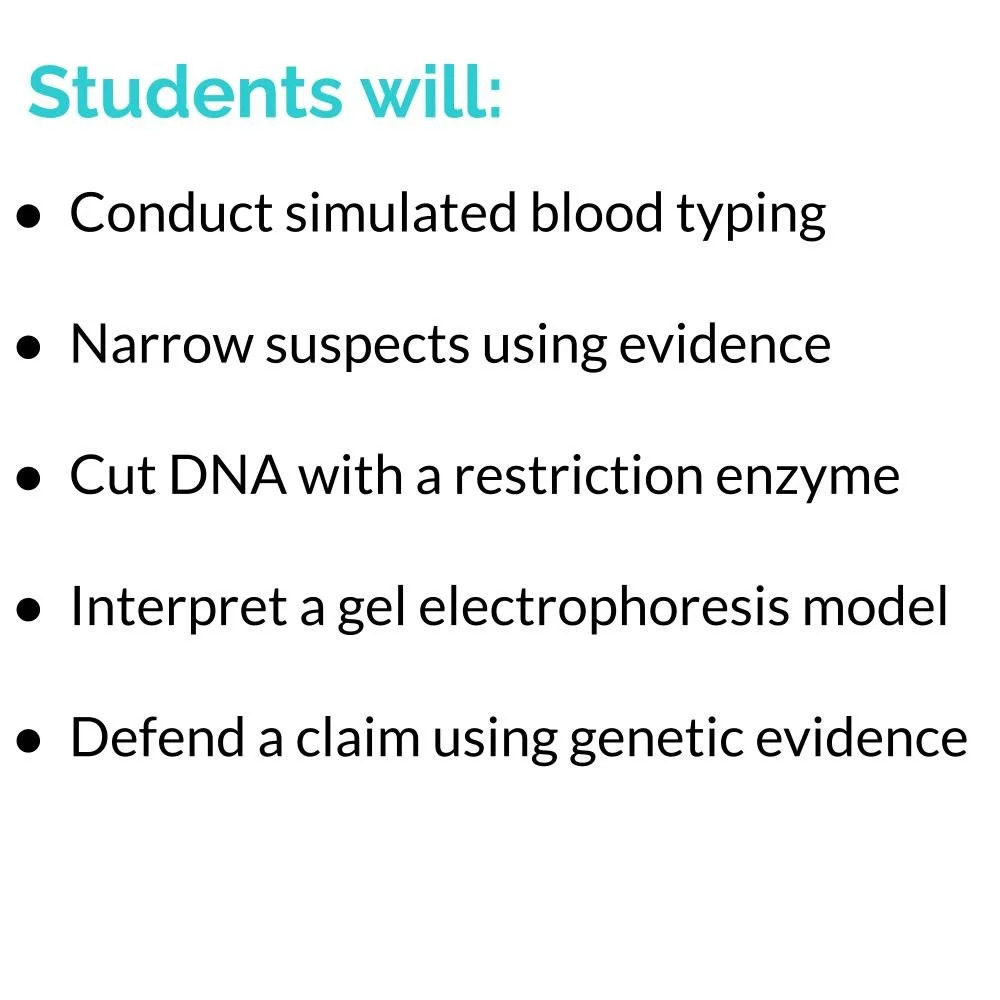 Image 2 of 4
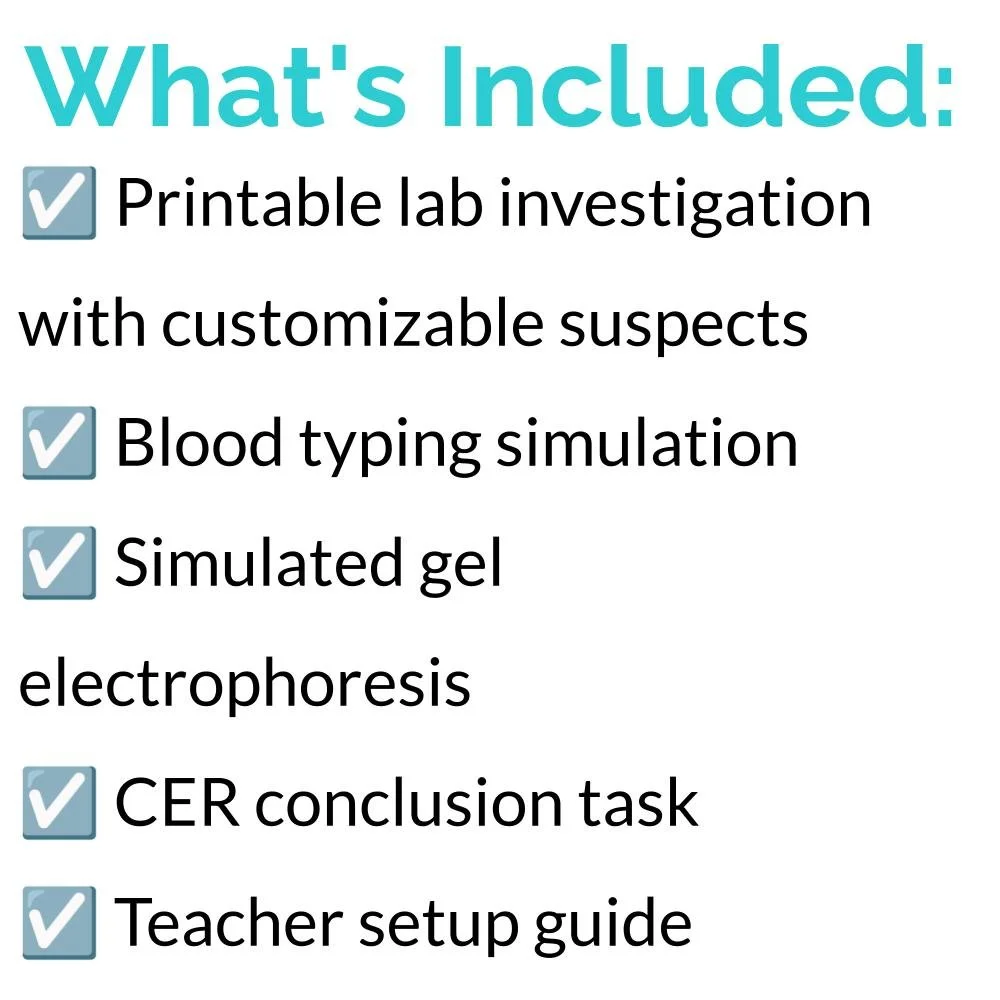 Image 3 of 4
 Image 4 of 4
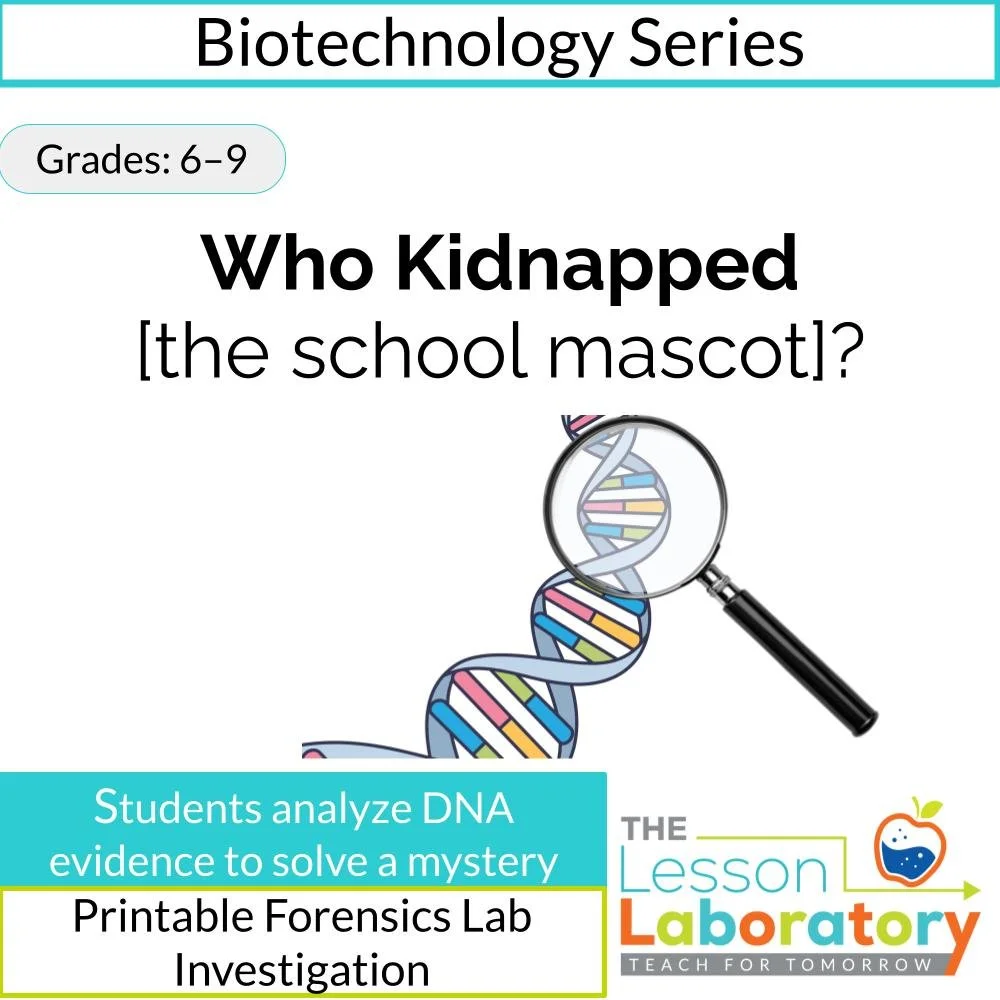
Interactive Biology Lab on Blood Types, Restriction Enzymes & Gel Electrophoresis.
This printable lab investigation introduces students to blood typing, restriction enzymes, and DNA fragment analysis through a structured forensic scenario. Students use antigen–antibody reactions to narrow suspects and then simulate restriction enzyme digestion and gel electrophoresis to identify a match using molecular evidence.
The mystery framework provides engagement, but the focus remains on scientific reasoning and evidence-based analysis.
Students begin by conducting simulated ABO and Rh blood typing to eliminate suspects whose blood types do not match the crime scene evidence. Once the suspect pool is narrowed, students perform a paper-based restriction enzyme digestion and compare DNA fragment patterns using a simulated electrophoresis gel.
The lesson culminates in a structured Claim–Evidence–Reasoning conclusion in which students defend their identification using molecular data.
The lab is customizable. Teachers may edit suspect names and rotate the “guilty” individual between class periods, preventing answer sharing and increasing replay value.
Understanding ABO and Rh blood typing
Interpreting antigen–antibody reactions
Modeling restriction enzyme digestion
Comparing DNA fragment lengths
Analyzing simulated gel electrophoresis results
Constructing evidence-based scientific explanations
Materials are simple and accessible. The “blood typing” simulation uses household liquids to model clotting reactions, and DNA fragment analysis is completed using printable strips and gel templates. Clear teacher instructions and an anti-serum setup guide are included to streamline preparation.
This lab provides a structured introduction to molecular forensics while maintaining accessibility for middle and early high school learners. It reinforces core biotechnology concepts through hands-on investigation and analytical reasoning within a cohesive, classroom-ready format.
To preview this lesson, click here.
NGSS Alignment (High School):
HS-LS1-2; HS-LS1-1
NGSS Alignment (Middle School):
MS-LS3-1
Science & Engineering Practices (SEPs):
Developing and Using Models
Analyzing and Interpreting Data
Constructing Explanations
Engaging in Argument from Evidence
Crosscutting Concepts (CCCs):
Structure and Function
Cause and Effect
Patterns
Common Core (Literacy in Science):
RST.6-8.3; RST.6-8.7; WHST.6-8.1
Interactive Biology Lab on Blood Types, Restriction Enzymes & Gel Electrophoresis.
This printable lab investigation introduces students to blood typing, restriction enzymes, and DNA fragment analysis through a structured forensic scenario. Students use antigen–antibody reactions to narrow suspects and then simulate restriction enzyme digestion and gel electrophoresis to identify a match using molecular evidence.
The mystery framework provides engagement, but the focus remains on scientific reasoning and evidence-based analysis.
Students begin by conducting simulated ABO and Rh blood typing to eliminate suspects whose blood types do not match the crime scene evidence. Once the suspect pool is narrowed, students perform a paper-based restriction enzyme digestion and compare DNA fragment patterns using a simulated electrophoresis gel.
The lesson culminates in a structured Claim–Evidence–Reasoning conclusion in which students defend their identification using molecular data.
The lab is customizable. Teachers may edit suspect names and rotate the “guilty” individual between class periods, preventing answer sharing and increasing replay value.
Understanding ABO and Rh blood typing
Interpreting antigen–antibody reactions
Modeling restriction enzyme digestion
Comparing DNA fragment lengths
Analyzing simulated gel electrophoresis results
Constructing evidence-based scientific explanations
Materials are simple and accessible. The “blood typing” simulation uses household liquids to model clotting reactions, and DNA fragment analysis is completed using printable strips and gel templates. Clear teacher instructions and an anti-serum setup guide are included to streamline preparation.
This lab provides a structured introduction to molecular forensics while maintaining accessibility for middle and early high school learners. It reinforces core biotechnology concepts through hands-on investigation and analytical reasoning within a cohesive, classroom-ready format.
To preview this lesson, click here.
NGSS Alignment (High School):
HS-LS1-2; HS-LS1-1
NGSS Alignment (Middle School):
MS-LS3-1
Science & Engineering Practices (SEPs):
Developing and Using Models
Analyzing and Interpreting Data
Constructing Explanations
Engaging in Argument from Evidence
Crosscutting Concepts (CCCs):
Structure and Function
Cause and Effect
Patterns
Common Core (Literacy in Science):
RST.6-8.3; RST.6-8.7; WHST.6-8.1