Living vs. Non-Living Digital Lab | Interactive Biology Classification Lesson (Viruses, Prions, Yeast & More)
Engaging Google Slides investigation where students classify real-world examples, test predictions, and conduct MLA-formatted research.
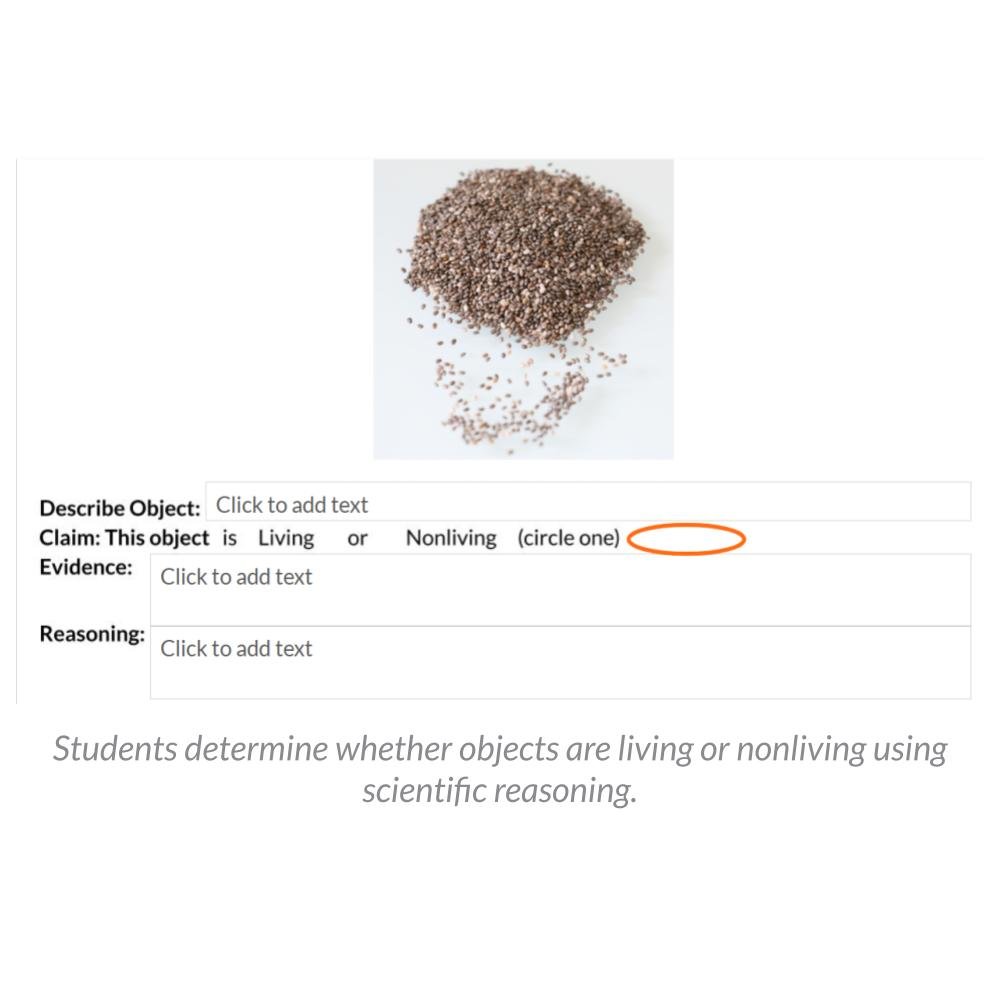
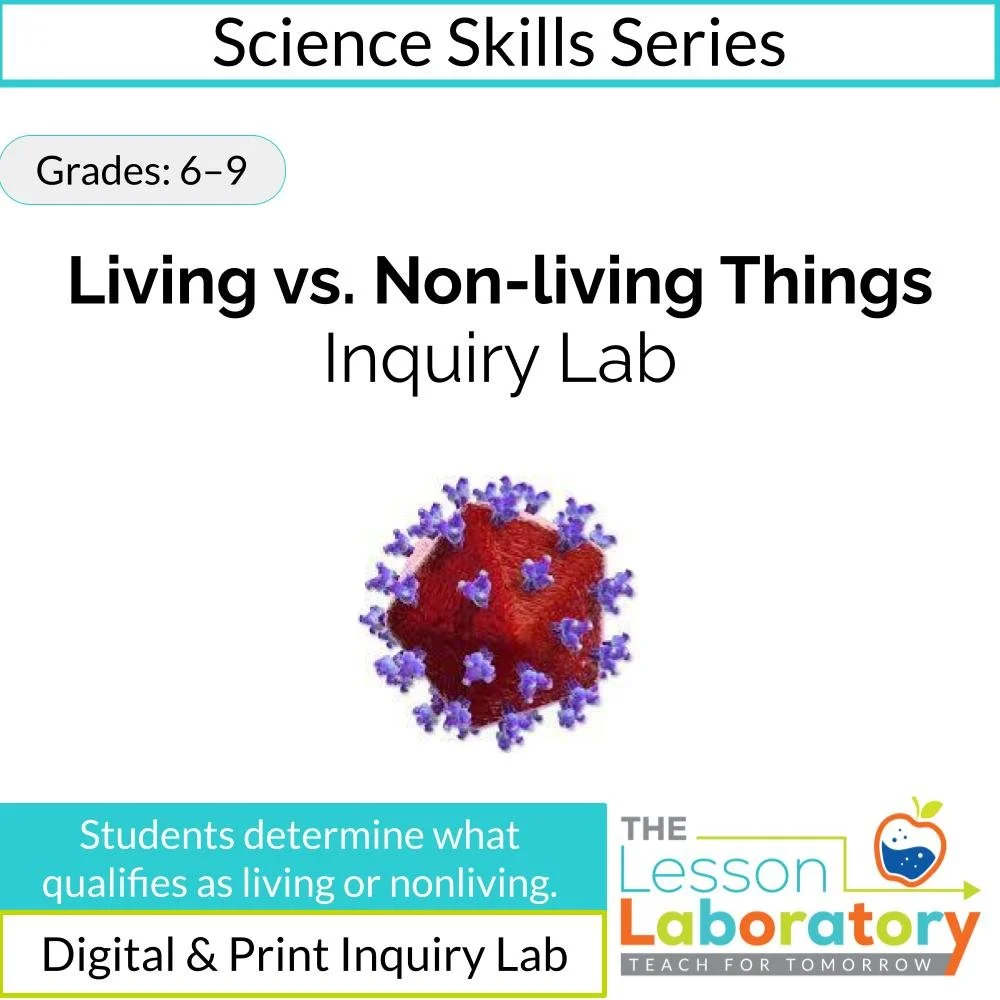
Delve into a captivating digital learning experience with this meticulously designed Google Slides assignment. Students will embark on an intellectual journey as they explore eight intriguing objects: a snail, a green plant, a branch, seeds, fire, a "mysterious brown powder" (yeast), a virus, and a misfolded prion protein.
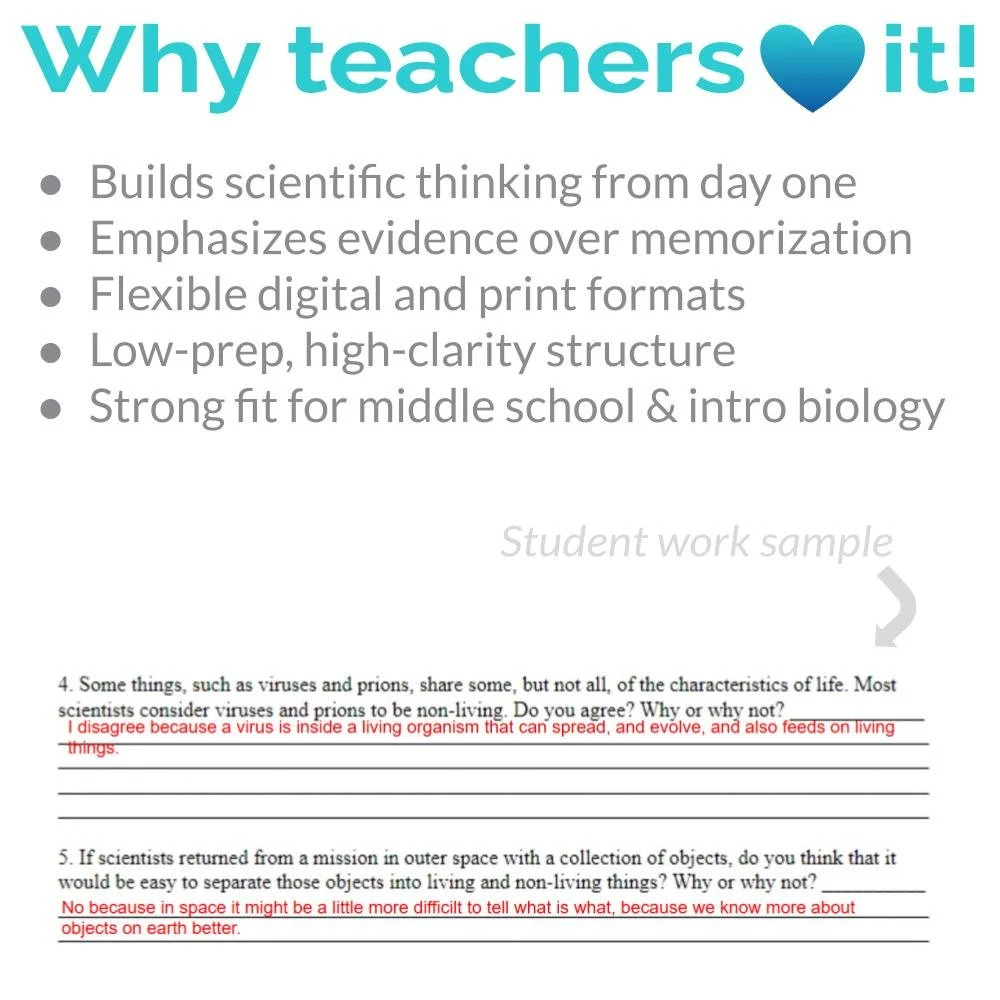
Each object presents a unique puzzle, challenging students to discern whether it possesses the spark of life or falls into the realm of the non-living. With critical thinking at the forefront, students are tasked with providing compelling evidence and sound reasoning to support their claims.
As the assignment progresses, students will compile a definitive list of criteria that they believe are indispensable for an object to be classified as living. This exercise encourages a deeper understanding of the characteristics of life.
The intellectual journey continues as students engage in comprehensive research, consulting three distinct scientific sources to validate their findings. This invaluable experience not only hones their research skills but also fosters a deeper appreciation for the scientific process.
Equip your students with the tools they need to think critically, analyze rigorously, and engage with the fundamental concepts of life science. This assignment is a gateway to a richer understanding of the world around them. Elevate your learning experience and empower your students with this transformative Life Science Exploration Assignment. Order now and ignite a passion for scientific inquiry!
Grade Recommendation
Middle School: 6th–8th grade
Aligns strongly with MS-LS1 (Structure & Function; Characteristics of Life).
Tasks like observation, classification, and applying life-function criteria fit perfectly.
High School: 9th–10th grade (Living Environment, Biology)
Models introductory classification and characteristics of life.
Research + MLA citations elevate it to HS rigor.
Includes advanced edge cases (viruses, prions).
Cross-Curricular Connections & Optional Extensions
ELA / Research Skills
Students conduct multi-source research, evaluate sources, and create MLA-formatted citations.
Practices comparing claims and evidence across sources.
Health / Public Health
Integrates viruses and prion disease examples with real-world health relevance.
Technology Integration
Students navigate digital research environments responsibly.
Can extend into evaluating website credibility or bias.
Optional Extension Ideas:
Mini-debate: “Are viruses alive?”
Data table comparing life functions across organisms and nonliving items
Construct a CER (Claim-Evidence-Reasoning) argument defending one classification
Join the Lesson Laboratory and Teach for Tomorrow!
NGSS Standards (MS + HS)
This digital lab aligns tightly with NGSS due to classification, evidence-based reasoning, and research components.
Middle School NGSS Performance Expectations
MS-LS1-1
Conduct an investigation to provide evidence that living things are made of cells.
Students use “made of cells” as one criterion and must assess viruses, prions, yeast, plants, etc.
MS-LS1-3
Use argument supported by evidence for how the body and its structures perform life functions.
Students apply life-function criteria to classify organisms.
MS-LS4-2
Apply scientific ideas to construct an explanation for the anatomical similarities and differences among organisms.
Comparing the characteristics of living systems (e.g., yeast vs. virus).
High School NGSS Performance Expectations
HS-LS1-1
Construct an explanation based on evidence for how the structure of DNA determines protein structure.
The prion example is directly tied to protein misfolding → structure determines function.
HS-LS1-2
Develop and use a model to illustrate the hierarchical organization of interacting systems providing functions within organisms.
Students consider what qualifies as an organism vs. a non-living chemical entity.
HS-LS1-6
Construct and revise an explanation based on evidence for how carbon, hydrogen, and oxygen form the molecules of life.
Yeast metabolism demonstration (sugar + water → CO₂ & odor) ties into biochemical processes.
NGSS Science & Engineering Practices (SEPs)
SEP 1: Asking Questions & Defining Problems
Students refine their definition of “life” and question characteristics.SEP 2: Developing & Using Models
Conceptual models of what qualifies something as living.SEP 4: Analyzing & Interpreting Data
Students interpret yeast activity, fire behavior, plant growth indicators, etc.SEP 7: Engaging in Argument from Evidence
Students justify classification (living vs. nonliving) with evidence.SEP 8: Obtaining, Evaluating, & Communicating Information
Students research through multiple sources, evaluate credibility, and cite using MLA.
NGSS Crosscutting Concepts (CCCs)
CCC: Structure & Function
Classification is rooted in whether structures allow life functions (cells, DNA, metabolic machinery).CCC: Stability & Change
Viruses and prions demonstrate how biological systems change over time (evolution, misfolding).CCC: Systems & System Models
Living vs. nonliving entities are treated as systems performing (or not performing) interconnected life processes.CCC: Cause & Effect
Students connect causes (e.g., presence of metabolic pathways) to effects (living status).
Common Core Standards
Because students complete a multi-source research assignment with MLA citations, ELA literacy standards strongly apply.
CCSS.ELA-LITERACY.RST.6-8.1 / RST.9-10.1
Cite specific textual evidence to support analysis.
CCSS.ELA-LITERACY.RST.6-8.7 / RST.9-10.7
Integrate quantitative and technical information from multiple sources.
CCSS.ELA-LITERACY.WHST.6-8.7 / WHST.9-10.7
Conduct short research projects to answer a question.
CCSS.ELA-LITERACY.WHST.6-8.8 / WHST.9-10.8
Gather information from multiple sources and assess credibility.
CCSS.ELA-LITERACY.WHST.6-8.9 / WHST.9-10.9
Draw evidence from informational texts to support analysis.
Engaging Google Slides investigation where students classify real-world examples, test predictions, and conduct MLA-formatted research.
Delve into a captivating digital learning experience with this meticulously designed Google Slides assignment. Students will embark on an intellectual journey as they explore eight intriguing objects: a snail, a green plant, a branch, seeds, fire, a "mysterious brown powder" (yeast), a virus, and a misfolded prion protein.
Each object presents a unique puzzle, challenging students to discern whether it possesses the spark of life or falls into the realm of the non-living. With critical thinking at the forefront, students are tasked with providing compelling evidence and sound reasoning to support their claims.
As the assignment progresses, students will compile a definitive list of criteria that they believe are indispensable for an object to be classified as living. This exercise encourages a deeper understanding of the characteristics of life.
The intellectual journey continues as students engage in comprehensive research, consulting three distinct scientific sources to validate their findings. This invaluable experience not only hones their research skills but also fosters a deeper appreciation for the scientific process.
Equip your students with the tools they need to think critically, analyze rigorously, and engage with the fundamental concepts of life science. This assignment is a gateway to a richer understanding of the world around them. Elevate your learning experience and empower your students with this transformative Life Science Exploration Assignment. Order now and ignite a passion for scientific inquiry!
Grade Recommendation
Middle School: 6th–8th grade
Aligns strongly with MS-LS1 (Structure & Function; Characteristics of Life).
Tasks like observation, classification, and applying life-function criteria fit perfectly.
High School: 9th–10th grade (Living Environment, Biology)
Models introductory classification and characteristics of life.
Research + MLA citations elevate it to HS rigor.
Includes advanced edge cases (viruses, prions).
Cross-Curricular Connections & Optional Extensions
ELA / Research Skills
Students conduct multi-source research, evaluate sources, and create MLA-formatted citations.
Practices comparing claims and evidence across sources.
Health / Public Health
Integrates viruses and prion disease examples with real-world health relevance.
Technology Integration
Students navigate digital research environments responsibly.
Can extend into evaluating website credibility or bias.
Optional Extension Ideas:
Mini-debate: “Are viruses alive?”
Data table comparing life functions across organisms and nonliving items
Construct a CER (Claim-Evidence-Reasoning) argument defending one classification
Join the Lesson Laboratory and Teach for Tomorrow!
NGSS Standards (MS + HS)
This digital lab aligns tightly with NGSS due to classification, evidence-based reasoning, and research components.
Middle School NGSS Performance Expectations
MS-LS1-1
Conduct an investigation to provide evidence that living things are made of cells.
Students use “made of cells” as one criterion and must assess viruses, prions, yeast, plants, etc.
MS-LS1-3
Use argument supported by evidence for how the body and its structures perform life functions.
Students apply life-function criteria to classify organisms.
MS-LS4-2
Apply scientific ideas to construct an explanation for the anatomical similarities and differences among organisms.
Comparing the characteristics of living systems (e.g., yeast vs. virus).
High School NGSS Performance Expectations
HS-LS1-1
Construct an explanation based on evidence for how the structure of DNA determines protein structure.
The prion example is directly tied to protein misfolding → structure determines function.
HS-LS1-2
Develop and use a model to illustrate the hierarchical organization of interacting systems providing functions within organisms.
Students consider what qualifies as an organism vs. a non-living chemical entity.
HS-LS1-6
Construct and revise an explanation based on evidence for how carbon, hydrogen, and oxygen form the molecules of life.
Yeast metabolism demonstration (sugar + water → CO₂ & odor) ties into biochemical processes.
NGSS Science & Engineering Practices (SEPs)
SEP 1: Asking Questions & Defining Problems
Students refine their definition of “life” and question characteristics.SEP 2: Developing & Using Models
Conceptual models of what qualifies something as living.SEP 4: Analyzing & Interpreting Data
Students interpret yeast activity, fire behavior, plant growth indicators, etc.SEP 7: Engaging in Argument from Evidence
Students justify classification (living vs. nonliving) with evidence.SEP 8: Obtaining, Evaluating, & Communicating Information
Students research through multiple sources, evaluate credibility, and cite using MLA.
NGSS Crosscutting Concepts (CCCs)
CCC: Structure & Function
Classification is rooted in whether structures allow life functions (cells, DNA, metabolic machinery).CCC: Stability & Change
Viruses and prions demonstrate how biological systems change over time (evolution, misfolding).CCC: Systems & System Models
Living vs. nonliving entities are treated as systems performing (or not performing) interconnected life processes.CCC: Cause & Effect
Students connect causes (e.g., presence of metabolic pathways) to effects (living status).
Common Core Standards
Because students complete a multi-source research assignment with MLA citations, ELA literacy standards strongly apply.
CCSS.ELA-LITERACY.RST.6-8.1 / RST.9-10.1
Cite specific textual evidence to support analysis.
CCSS.ELA-LITERACY.RST.6-8.7 / RST.9-10.7
Integrate quantitative and technical information from multiple sources.
CCSS.ELA-LITERACY.WHST.6-8.7 / WHST.9-10.7
Conduct short research projects to answer a question.
CCSS.ELA-LITERACY.WHST.6-8.8 / WHST.9-10.8
Gather information from multiple sources and assess credibility.
CCSS.ELA-LITERACY.WHST.6-8.9 / WHST.9-10.9
Draw evidence from informational texts to support analysis.