 Image 1 of 4
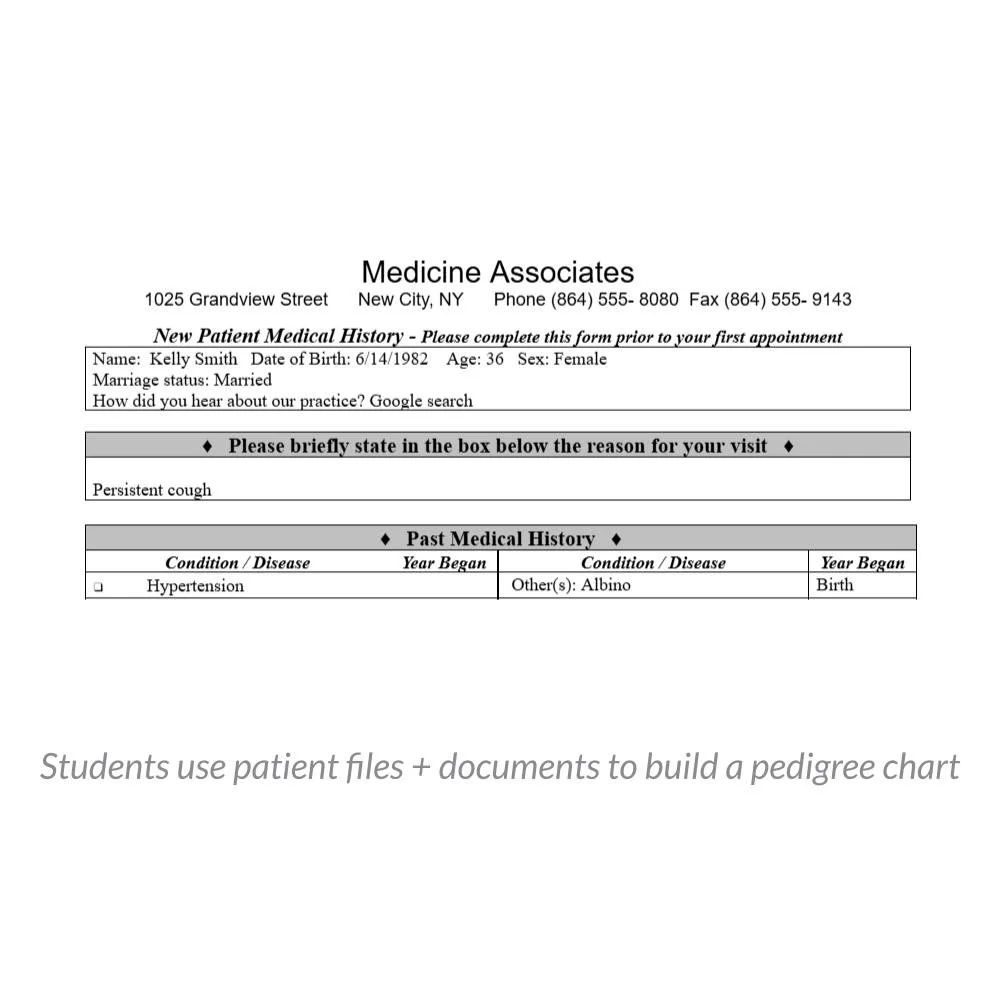 Image 2 of 4
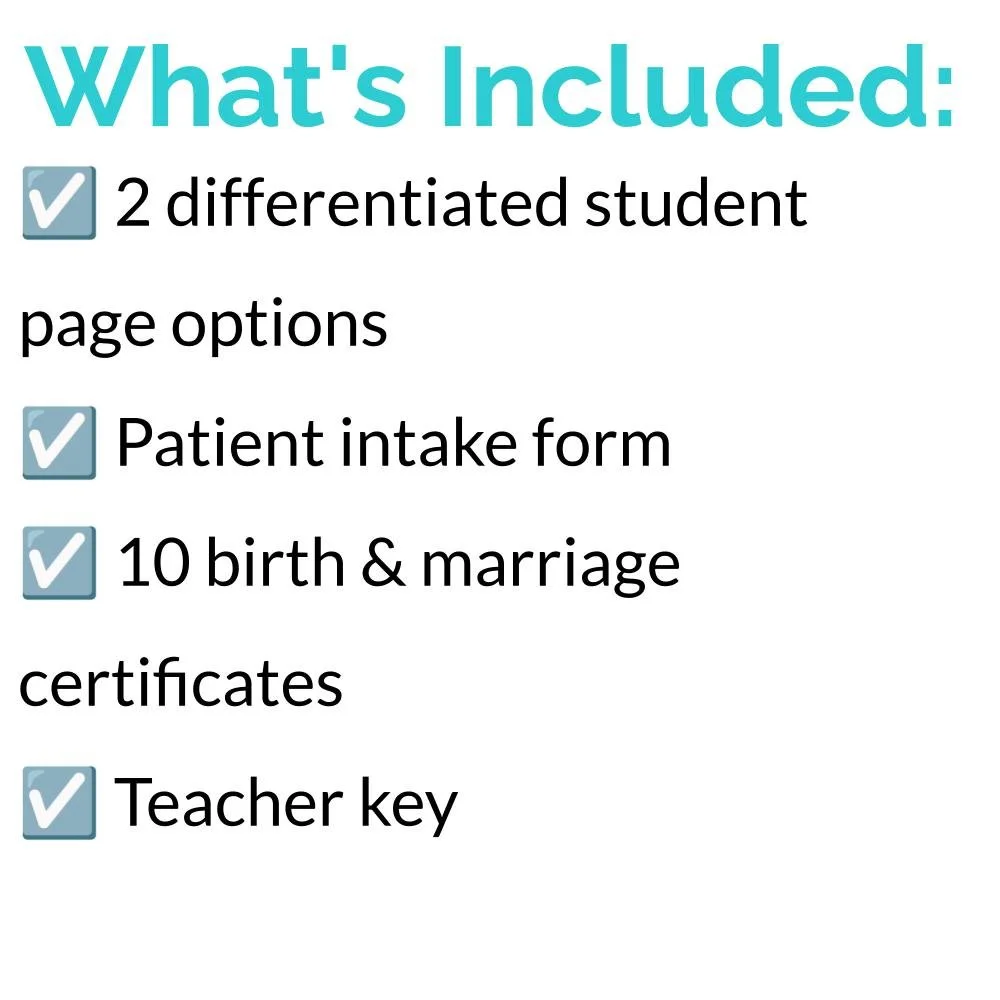 Image 3 of 4
 Image 4 of 4
Genetics Inheritance Practice Using Birth Certificates & Patient History Forms.
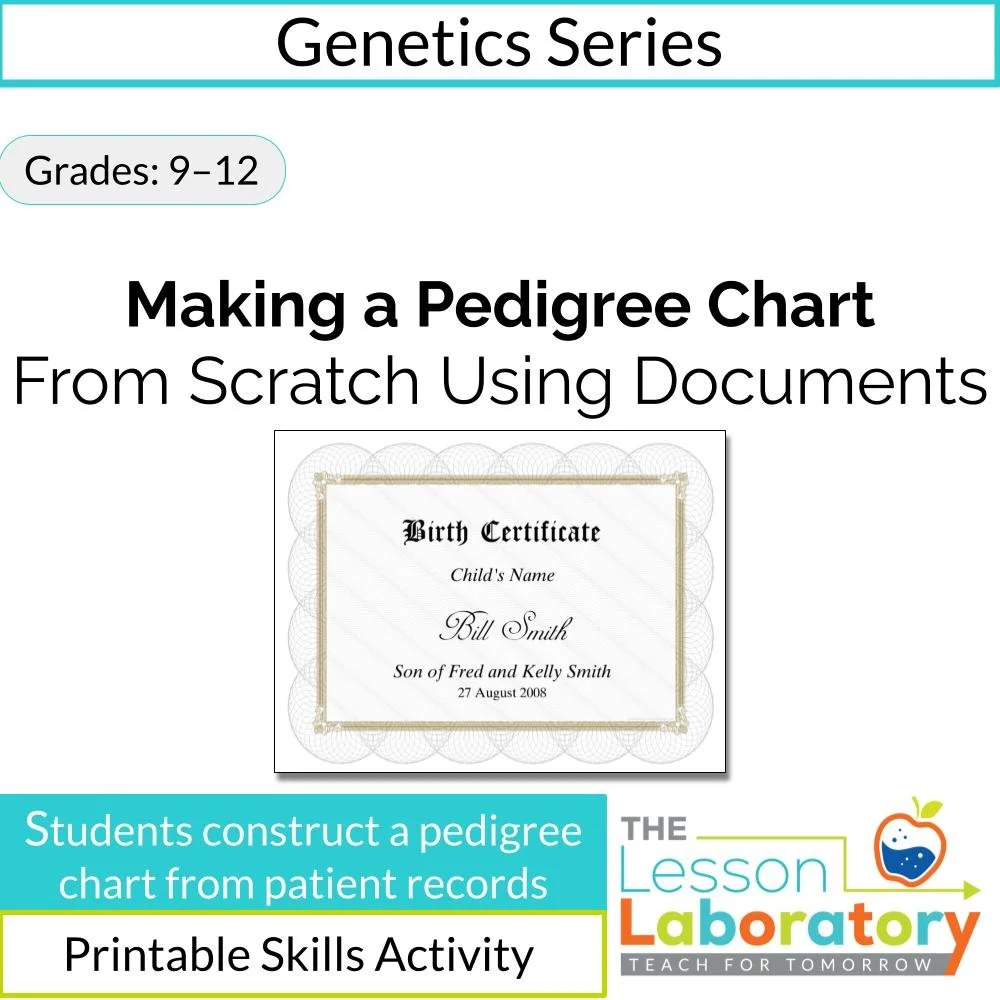
This short, applied genetics activity asks students to construct a complete pedigree chart using simulated medical and family records. Rather than interpreting a pre-made diagram, students must translate information from patient intake forms, birth certificates, and marriage records into a correctly structured pedigree.
Students apply and reinforce core genetics skills by:
• Representing family relationships accurately
• Tracking inheritance across generations
• Inferring possible genotypes from given information
• Using evidence to make and justify predictions
Two differentiated versions are included. One version provides a completely blank workspace for students who are ready to build a pedigree independently. The second version includes relationship lines to support students who need additional structural guidance. Teachers can assign either version based on instructional goals or student readiness.
This activity is designed to fit within a single class period (approximately 20–30 minutes) and works well as a review task, formative assessment, or station activity within a genetics unit. An answer key is included for efficient grading and feedback.
By working with realistic documents and constructing their own pedigree charts, students gain practical experience with a foundational genetics skill that supports later work with inheritance patterns and genetic disorders.
To see a preview of this lesson, click here.
NGSS Alignment (High School):
HS-LS3-1
Science & Engineering Practices (SEPs):
Developing and Using Models
Analyzing and Interpreting Data
Constructing Explanations
Engaging in Argument from Evidence
Crosscutting Concepts (CCCs):
Structure and Function
Cause and Effect
Patterns
Common Core (Literacy in Science):
RST.9-10.1; RST.9-10.7
Bundle Upgrade Policy
This lesson is included in one or more bundles. To support flexible purchasing and long-term use of our curriculum, Lesson Laboratory offers a bundle upgrade policy.
If you purchase this lesson and decide at a later date that you would like to upgrade to a bundle, you may request a store credit equal to the total amount paid for duplicate items.
To request an upgrade credit, please email thelessonlaboratory@gmail.com and include:
Your username
The order numbers for both the original purchase(s) and the bundle
The names of the duplicate resources
Requests must be submitted within 30 days of the bundle purchase. Credits are issued as store credit for future Lesson Laboratory purchases and are not provided as cash refunds.
This policy applies only to purchases of resources that are later included in a Lesson Laboratory bundle and is limited to one adjustment per upgrade pathway.
Genetics Inheritance Practice Using Birth Certificates & Patient History Forms.
This short, applied genetics activity asks students to construct a complete pedigree chart using simulated medical and family records. Rather than interpreting a pre-made diagram, students must translate information from patient intake forms, birth certificates, and marriage records into a correctly structured pedigree.
Students apply and reinforce core genetics skills by:
• Representing family relationships accurately
• Tracking inheritance across generations
• Inferring possible genotypes from given information
• Using evidence to make and justify predictions
Two differentiated versions are included. One version provides a completely blank workspace for students who are ready to build a pedigree independently. The second version includes relationship lines to support students who need additional structural guidance. Teachers can assign either version based on instructional goals or student readiness.
This activity is designed to fit within a single class period (approximately 20–30 minutes) and works well as a review task, formative assessment, or station activity within a genetics unit. An answer key is included for efficient grading and feedback.
By working with realistic documents and constructing their own pedigree charts, students gain practical experience with a foundational genetics skill that supports later work with inheritance patterns and genetic disorders.
To see a preview of this lesson, click here.
NGSS Alignment (High School):
HS-LS3-1
Science & Engineering Practices (SEPs):
Developing and Using Models
Analyzing and Interpreting Data
Constructing Explanations
Engaging in Argument from Evidence
Crosscutting Concepts (CCCs):
Structure and Function
Cause and Effect
Patterns
Common Core (Literacy in Science):
RST.9-10.1; RST.9-10.7
Bundle Upgrade Policy
This lesson is included in one or more bundles. To support flexible purchasing and long-term use of our curriculum, Lesson Laboratory offers a bundle upgrade policy.
If you purchase this lesson and decide at a later date that you would like to upgrade to a bundle, you may request a store credit equal to the total amount paid for duplicate items.
To request an upgrade credit, please email thelessonlaboratory@gmail.com and include:
Your username
The order numbers for both the original purchase(s) and the bundle
The names of the duplicate resources
Requests must be submitted within 30 days of the bundle purchase. Credits are issued as store credit for future Lesson Laboratory purchases and are not provided as cash refunds.
This policy applies only to purchases of resources that are later included in a Lesson Laboratory bundle and is limited to one adjustment per upgrade pathway.