Natural Selection Stations Lab | Interactive Evolution Activity on Skin Color, Mimicry, Coevolution & Genetic Disorders

$6.25

A multi-station Google Slides lab where students rotate through five evidence-based natural selection challenges, complete checkpoints, and apply real-world evolutionary concepts.


Prepare your students for an enthralling exploration into the intricate world of natural selection with our meticulously crafted remote-learning ready Google Slides lesson. Designed to captivate, challenge, and stimulate critical thinking, this advanced lesson delves into captivating real-life examples of natural selection, immersing students in an intellectual journey like never before.

Why Choose Our Natural Selection Odyssey?
A Journey Beyond Basics: Elevate your students' understanding with real-world scenarios that transcend the basics of natural selection. This lesson is tailored for students already comfortable with the foundational concepts, ensuring they're primed for a deeper dive.
Student-Centered Enrichment: Empower your students with a thought-provoking, problem-solving approach. Each station demands genuine thoughtfulness, nurturing independent thinking and fostering a sense of discovery.
Learning Beyond the Classroom: Enrich not just your curriculum but also your students' perspectives. Our lessons provide insight into real-world implications, shedding light on issues like racial prejudice and colorism through the lens of natural selection.

Embark on the Natural Selection Quest:
Station One: Delve into the fascinating diversity of human skin colors, unraveling the evolutionary reasons behind it. This journey isn't just captivating; it's a testament to the nonsensical nature of racial prejudice and colorism.
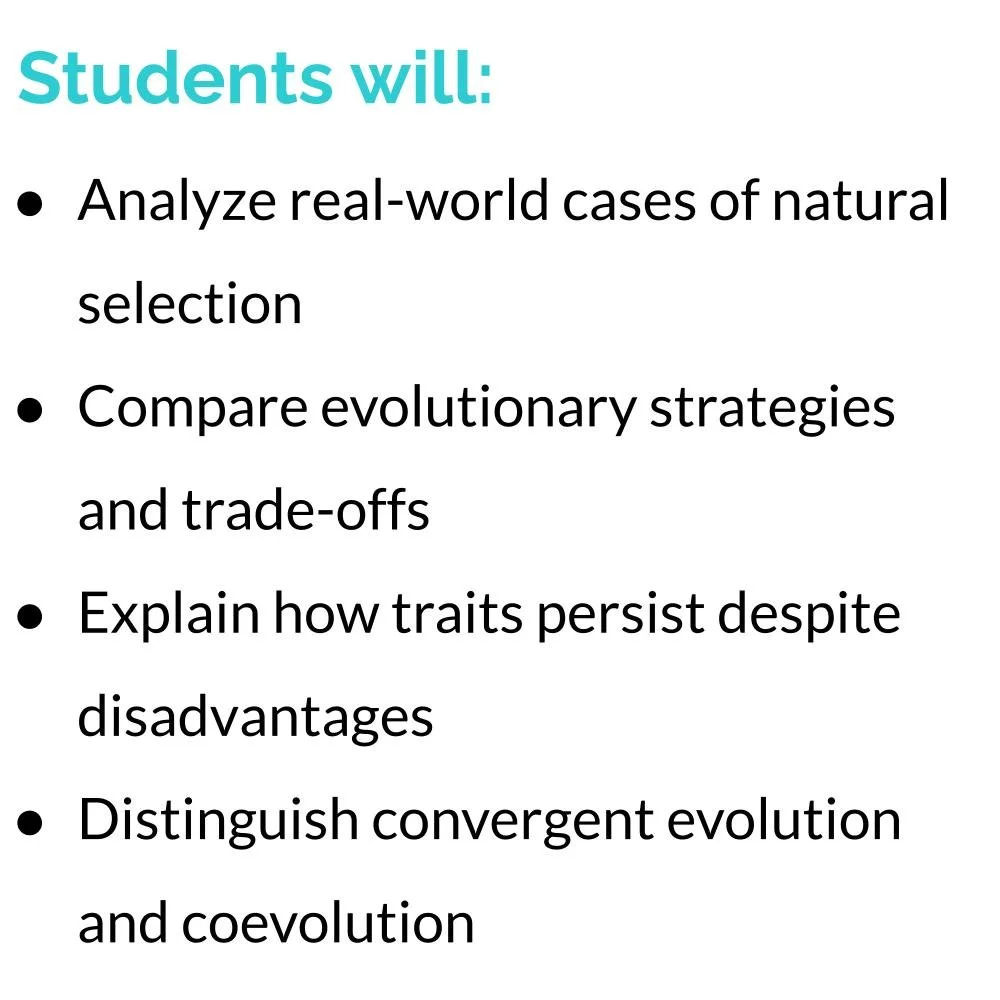
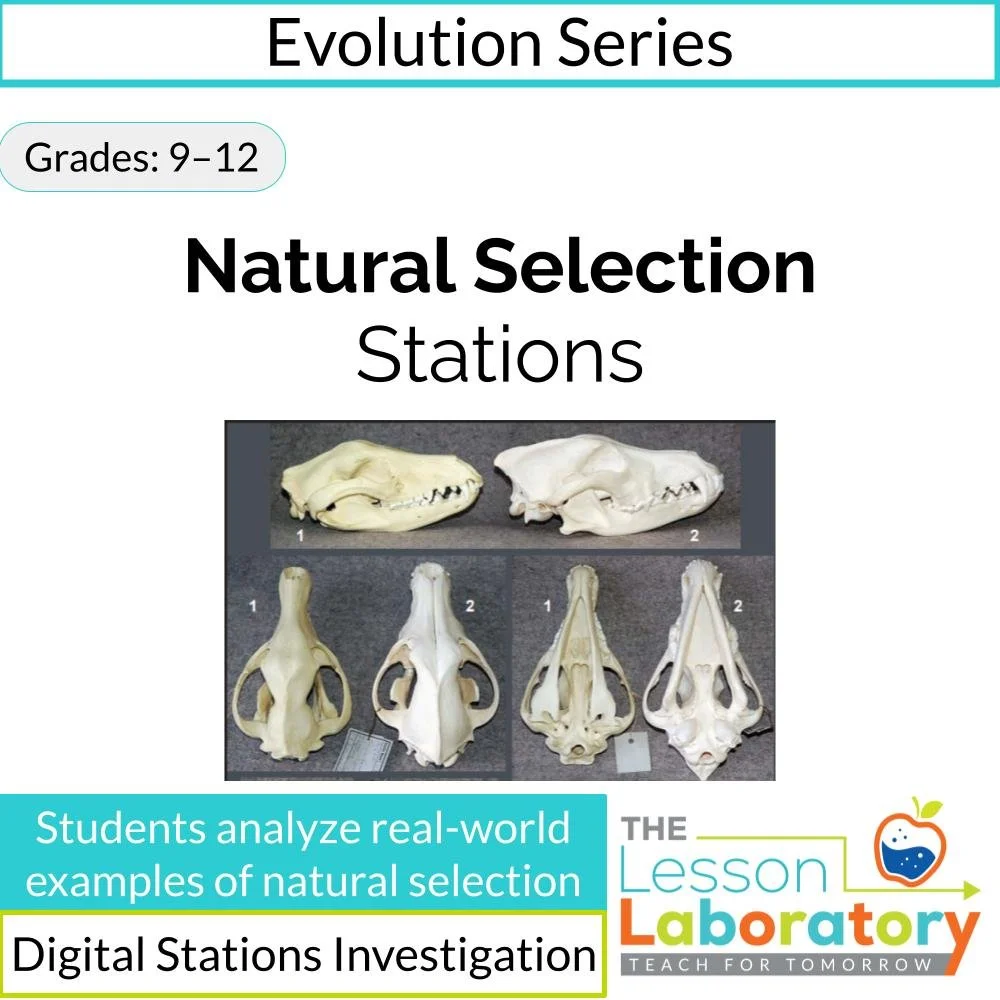
Station Two: Examine unlabeled skulls, decipher their similarities and differences, and uncover the intriguing tale of marsupial wolves and gray wolves. Discover the subtleties of convergent evolution, revealing the reasons behind their uncanny resemblance despite distant relation.
Station Three: Step into the shoes of Darwin and Wallace, exploring the art of predicting adaptations through the study of orchids. Engage with real-life examples of coevolution, understanding how intricately intertwined species impact each other's evolution.
Station Four: Immerse yourself in the world of male crickets, deciphering the evolutionary strategies behind distinct mating behaviors. Analyze the captivating comic "Survival of the Sneakiest," shedding light on how natural selection shapes behaviors.
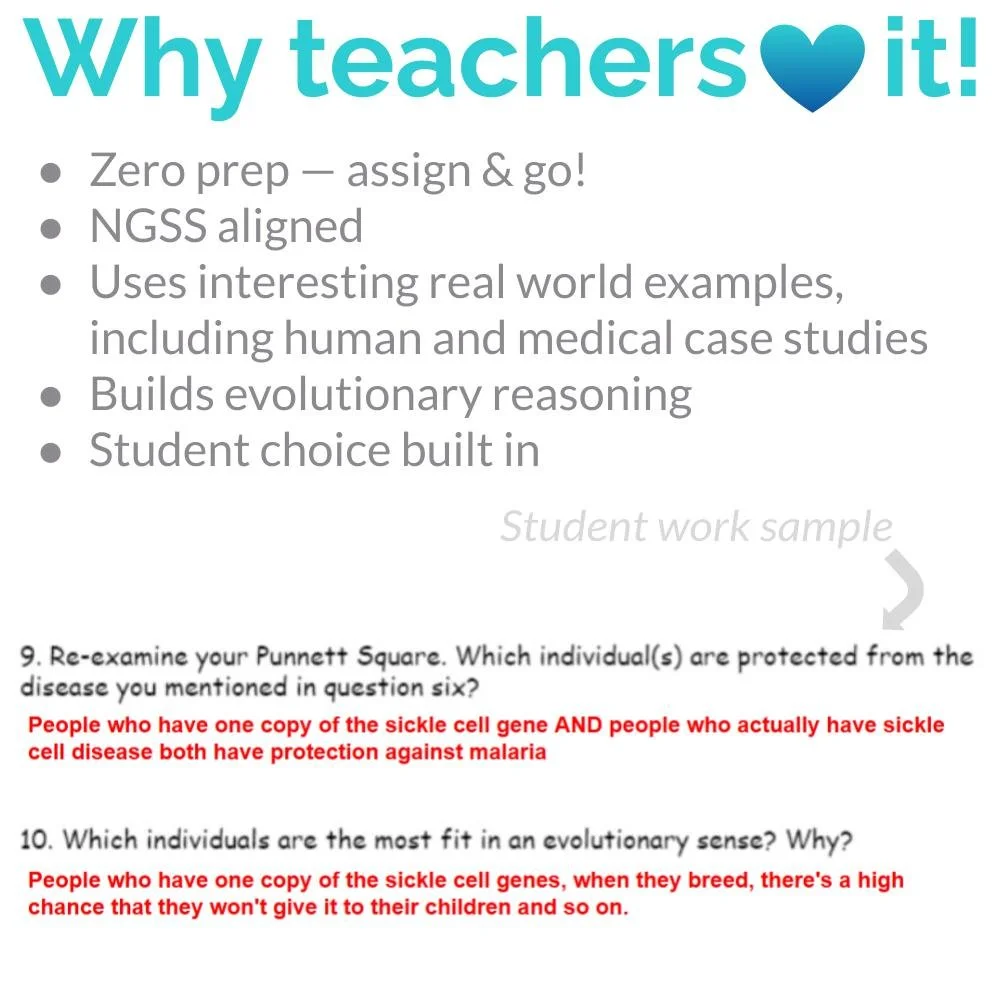
Station Five: Delve into the realm of genetics, unraveling the perplexing persistence of deadly diseases within the human population. Explore the evolutionary paradox behind diseases like sickle cell anemia and cystic fibrosis, revealing the intricate dance of survival.

Open the Doors to Deeper Understanding:
This isn't just a lesson; it's a voyage into the heart of evolutionary marvels. With captivating stations, thought-provoking scenarios, and real-world insights, our Google Slides lesson transforms your classroom into a hub of discovery and intellectual growth.

Elevate your students' learning journey with an experience that goes beyond textbooks and classrooms. Secure your access now and embark on a natural selection odyssey that will reshape the way your students perceive the world around them.

To preview this product, highlight the link below and paste the address into your web browser.
https://docs.google.com/presentation/d/1awzTlD8ImTEvXwGyorCtABzXj4RXq69_XWP_7rwRt-4/edit?usp=sharing

Grade Recommendation

Middle School: Grades 7–8

Students can meaningfully complete all tasks with mild scaffolding.

High School: Grades 9–10 Biology / Living Environment

The lab includes advanced evolution content such as:

  • vitamin D and folate biochemistry

  • convergent vs. divergent evolution

  • coevolution arms races

  • heterozygote advantage in sickle cell & cystic fibrosis
    This makes it ideal for HS-level evolutionary biology as well.

Cross-Curricular Connections & Extensions

ELA

  • Short written responses at each checkpoint

  • Evidence-based explanations (“Why did Inuit not develop light skin?”)

Health Science

  • Skin cancer, vitamin D deficiency, folate deficiency, malaria, cholera

  • Genetic diseases + public health relevance

Geography / Social Studies

  • Mapping ancestral skin color distributions

  • Environmental influences on human variation

Data Literacy

  • Students analyze maps, charts, and genetic inheritance diagrams.

Extension Options

  • CER writing task on coevolution examples

  • Debate: “Is mimicry always beneficial?”

  • Graphing allele frequency changes (sickle cell OR cystic fibrosis allele)

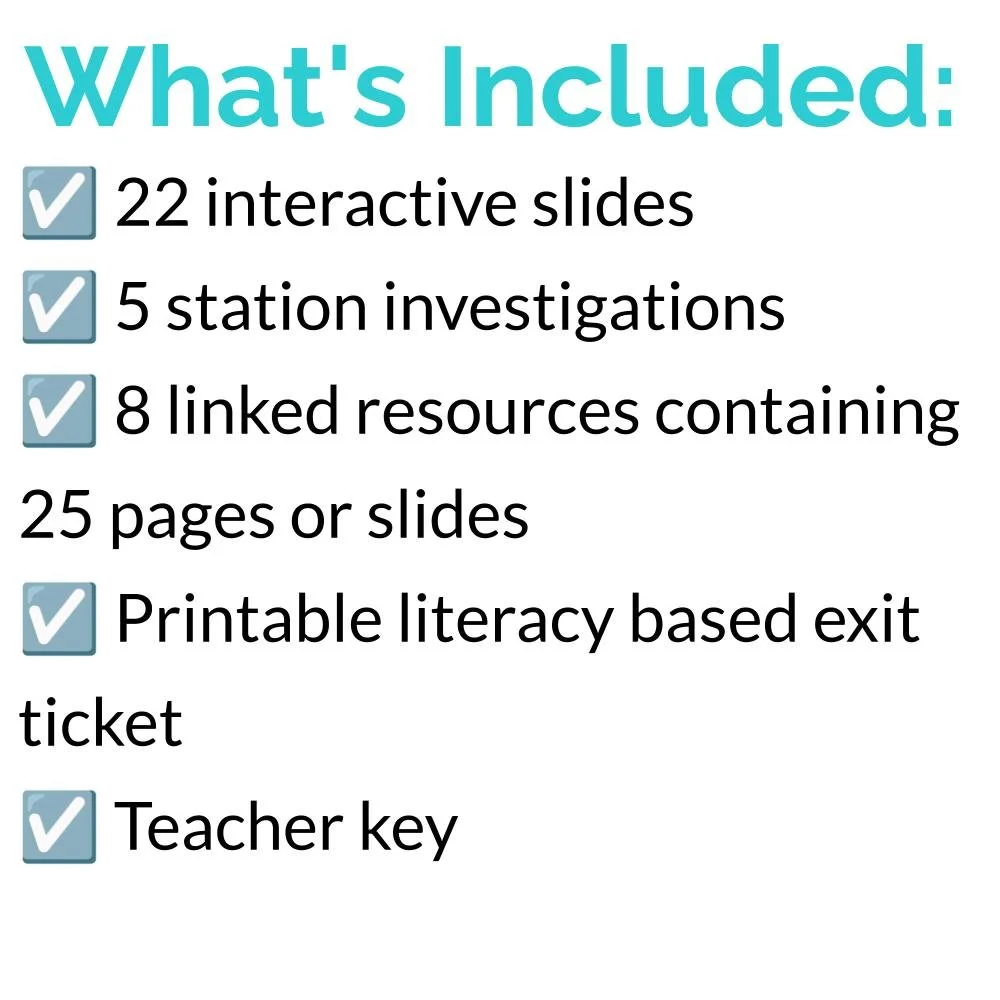
Daily slide + literacy - based exit ticket included with purchase

Join the Lesson Laboratory and Teach for Tomorrow!

NGSS Standards (MS + HS) Including CCCs & SEPs

This stations lab is exceptionally rich in NGSS alignment because it incorporates human evolution, mutation advantages, coevolution, mimicry, and selective pressure mechanisms.

Middle School NGSS

MS-LS4-2

Apply scientific ideas to construct explanations for anatomical similarities and differences among modern organisms.

  • Students compare human groups, mimic species, and convergent species.
    Natural Selection Stations

MS-LS4-3

Analyze displays of pictorial data to compare organisms and infer patterns of ancestry and descent.

  • Students analyze skull characteristics and environmental maps.

MS-LS4-4

Natural selection leads to changes in traits over time.

  • Mimicry, pigmentation, coevolution, sneaky male crickets.

MS-LS4-6

Use mathematical or computational thinking to support explanations of how populations change.

  • Punnett squares for sickle cell and cystic fibrosis.

High School NGSS

HS-LS4-2

Construct explanations based on evidence that evolution results from four factors, including mutation and differential survival.

  • Heterozygote advantage

  • Selection pressure from malaria and cholera.

HS-LS4-3

Apply statistics/probability to support explanations.

  • Punnett squares and probability of offspring genotypes.

HS-LS4-4

Natural selection leads to adaptation of populations.

  • Skin color evolution, mimicry, coevolution, crickets.

HS-LS4-5

Evaluate the evidence that conditions affect species evolution.

  • Vitamin D & folate pressures, predation pressures, infectious disease pressures.

Science & Engineering Practices (SEPs)

  • Analyzing & Interpreting Data
    Maps, nutrition labels, skull diagrams, Punnett squares.

  • Constructing Explanations
    Students write explanation boxes at the end of each station.

  • Engaging in Argument from Evidence
    Justifying which allele remains in a population.

  • Obtaining, Evaluating, and Communicating Information
    Students interact with videos, text sources, photos, and diagrams.

Crosscutting Concepts (CCCs)

  • Cause & Effect
    Environmental pressure → trait frequency changes.

  • Patterns
    Skin color patterns across the globe.

  • Structure & Function
    Mimicry coloration, cricket behavior, skull structure.

  • Stability & Change
    Allele persistence despite disease (e.g., sickle cell).

Common Core Standards (ELA)

The stations require reading scientific passages, synthesizing videos, and writing explanations.

  • CCSS.ELA-LITERACY.RST.6-8.1 / RST.9-10.1

    Citing evidence from texts, videos, and diagrams.

  • CCSS.ELA-LITERACY.RST.6-8.7 / RST.9-10.7

    Integrating information from multiple sources (maps, photos, articles).

  • CCSS.ELA-LITERACY.WHST.6-8.2 / WHST.9-10.2

    Writing explanatory texts to convey evolutionary concepts.

  • CCSS.ELA-LITERACY.WHST.6-8.9 / WHST.9-10.9

    Drawing evidence from informational texts.


A multi-station Google Slides lab where students rotate through five evidence-based natural selection challenges, complete checkpoints, and apply real-world evolutionary concepts.


Prepare your students for an enthralling exploration into the intricate world of natural selection with our meticulously crafted remote-learning ready Google Slides lesson. Designed to captivate, challenge, and stimulate critical thinking, this advanced lesson delves into captivating real-life examples of natural selection, immersing students in an intellectual journey like never before.

Why Choose Our Natural Selection Odyssey?
A Journey Beyond Basics: Elevate your students' understanding with real-world scenarios that transcend the basics of natural selection. This lesson is tailored for students already comfortable with the foundational concepts, ensuring they're primed for a deeper dive.
Student-Centered Enrichment: Empower your students with a thought-provoking, problem-solving approach. Each station demands genuine thoughtfulness, nurturing independent thinking and fostering a sense of discovery.
Learning Beyond the Classroom: Enrich not just your curriculum but also your students' perspectives. Our lessons provide insight into real-world implications, shedding light on issues like racial prejudice and colorism through the lens of natural selection.

Embark on the Natural Selection Quest:
Station One: Delve into the fascinating diversity of human skin colors, unraveling the evolutionary reasons behind it. This journey isn't just captivating; it's a testament to the nonsensical nature of racial prejudice and colorism.
Station Two: Examine unlabeled skulls, decipher their similarities and differences, and uncover the intriguing tale of marsupial wolves and gray wolves. Discover the subtleties of convergent evolution, revealing the reasons behind their uncanny resemblance despite distant relation.
Station Three: Step into the shoes of Darwin and Wallace, exploring the art of predicting adaptations through the study of orchids. Engage with real-life examples of coevolution, understanding how intricately intertwined species impact each other's evolution.
Station Four: Immerse yourself in the world of male crickets, deciphering the evolutionary strategies behind distinct mating behaviors. Analyze the captivating comic "Survival of the Sneakiest," shedding light on how natural selection shapes behaviors.
Station Five: Delve into the realm of genetics, unraveling the perplexing persistence of deadly diseases within the human population. Explore the evolutionary paradox behind diseases like sickle cell anemia and cystic fibrosis, revealing the intricate dance of survival.

Open the Doors to Deeper Understanding:
This isn't just a lesson; it's a voyage into the heart of evolutionary marvels. With captivating stations, thought-provoking scenarios, and real-world insights, our Google Slides lesson transforms your classroom into a hub of discovery and intellectual growth.

Elevate your students' learning journey with an experience that goes beyond textbooks and classrooms. Secure your access now and embark on a natural selection odyssey that will reshape the way your students perceive the world around them.

To preview this product, highlight the link below and paste the address into your web browser.
https://docs.google.com/presentation/d/1awzTlD8ImTEvXwGyorCtABzXj4RXq69_XWP_7rwRt-4/edit?usp=sharing

Grade Recommendation

Middle School: Grades 7–8

Students can meaningfully complete all tasks with mild scaffolding.

High School: Grades 9–10 Biology / Living Environment

The lab includes advanced evolution content such as:

  • vitamin D and folate biochemistry

  • convergent vs. divergent evolution

  • coevolution arms races

  • heterozygote advantage in sickle cell & cystic fibrosis
    This makes it ideal for HS-level evolutionary biology as well.

Cross-Curricular Connections & Extensions

ELA

  • Short written responses at each checkpoint

  • Evidence-based explanations (“Why did Inuit not develop light skin?”)

Health Science

  • Skin cancer, vitamin D deficiency, folate deficiency, malaria, cholera

  • Genetic diseases + public health relevance

Geography / Social Studies

  • Mapping ancestral skin color distributions

  • Environmental influences on human variation

Data Literacy

  • Students analyze maps, charts, and genetic inheritance diagrams.

Extension Options

  • CER writing task on coevolution examples

  • Debate: “Is mimicry always beneficial?”

  • Graphing allele frequency changes (sickle cell OR cystic fibrosis allele)

Daily slide + literacy - based exit ticket included with purchase

Join the Lesson Laboratory and Teach for Tomorrow!

NGSS Standards (MS + HS) Including CCCs & SEPs

This stations lab is exceptionally rich in NGSS alignment because it incorporates human evolution, mutation advantages, coevolution, mimicry, and selective pressure mechanisms.

Middle School NGSS

MS-LS4-2

Apply scientific ideas to construct explanations for anatomical similarities and differences among modern organisms.

  • Students compare human groups, mimic species, and convergent species.
    Natural Selection Stations

MS-LS4-3

Analyze displays of pictorial data to compare organisms and infer patterns of ancestry and descent.

  • Students analyze skull characteristics and environmental maps.

MS-LS4-4

Natural selection leads to changes in traits over time.

  • Mimicry, pigmentation, coevolution, sneaky male crickets.

MS-LS4-6

Use mathematical or computational thinking to support explanations of how populations change.

  • Punnett squares for sickle cell and cystic fibrosis.

High School NGSS

HS-LS4-2

Construct explanations based on evidence that evolution results from four factors, including mutation and differential survival.

  • Heterozygote advantage

  • Selection pressure from malaria and cholera.

HS-LS4-3

Apply statistics/probability to support explanations.

  • Punnett squares and probability of offspring genotypes.

HS-LS4-4

Natural selection leads to adaptation of populations.

  • Skin color evolution, mimicry, coevolution, crickets.

HS-LS4-5

Evaluate the evidence that conditions affect species evolution.

  • Vitamin D & folate pressures, predation pressures, infectious disease pressures.

Science & Engineering Practices (SEPs)

  • Analyzing & Interpreting Data
    Maps, nutrition labels, skull diagrams, Punnett squares.

  • Constructing Explanations
    Students write explanation boxes at the end of each station.

  • Engaging in Argument from Evidence
    Justifying which allele remains in a population.

  • Obtaining, Evaluating, and Communicating Information
    Students interact with videos, text sources, photos, and diagrams.

Crosscutting Concepts (CCCs)

  • Cause & Effect
    Environmental pressure → trait frequency changes.

  • Patterns
    Skin color patterns across the globe.

  • Structure & Function
    Mimicry coloration, cricket behavior, skull structure.

  • Stability & Change
    Allele persistence despite disease (e.g., sickle cell).

Common Core Standards (ELA)

The stations require reading scientific passages, synthesizing videos, and writing explanations.

  • CCSS.ELA-LITERACY.RST.6-8.1 / RST.9-10.1

    Citing evidence from texts, videos, and diagrams.

  • CCSS.ELA-LITERACY.RST.6-8.7 / RST.9-10.7

    Integrating information from multiple sources (maps, photos, articles).

  • CCSS.ELA-LITERACY.WHST.6-8.2 / WHST.9-10.2

    Writing explanatory texts to convey evolutionary concepts.

  • CCSS.ELA-LITERACY.WHST.6-8.9 / WHST.9-10.9

    Drawing evidence from informational texts.