 Image 1 of 4
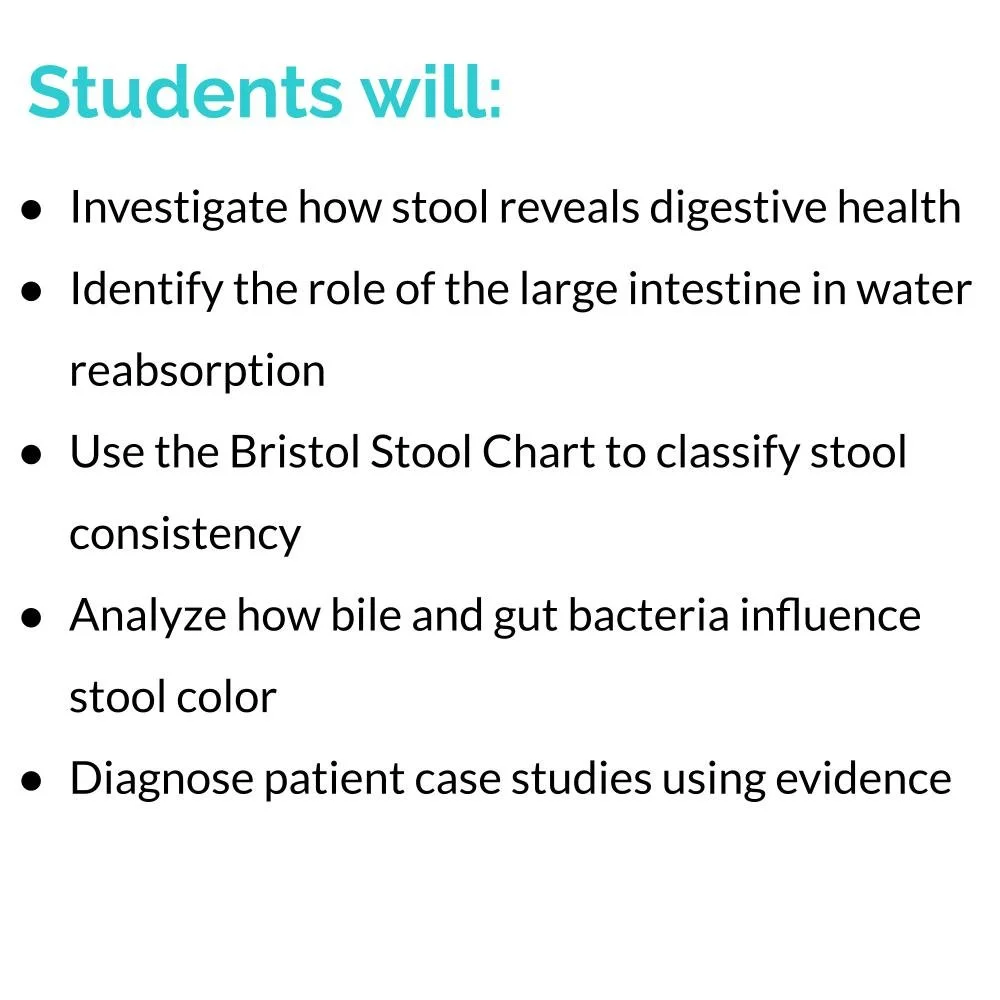 Image 2 of 4
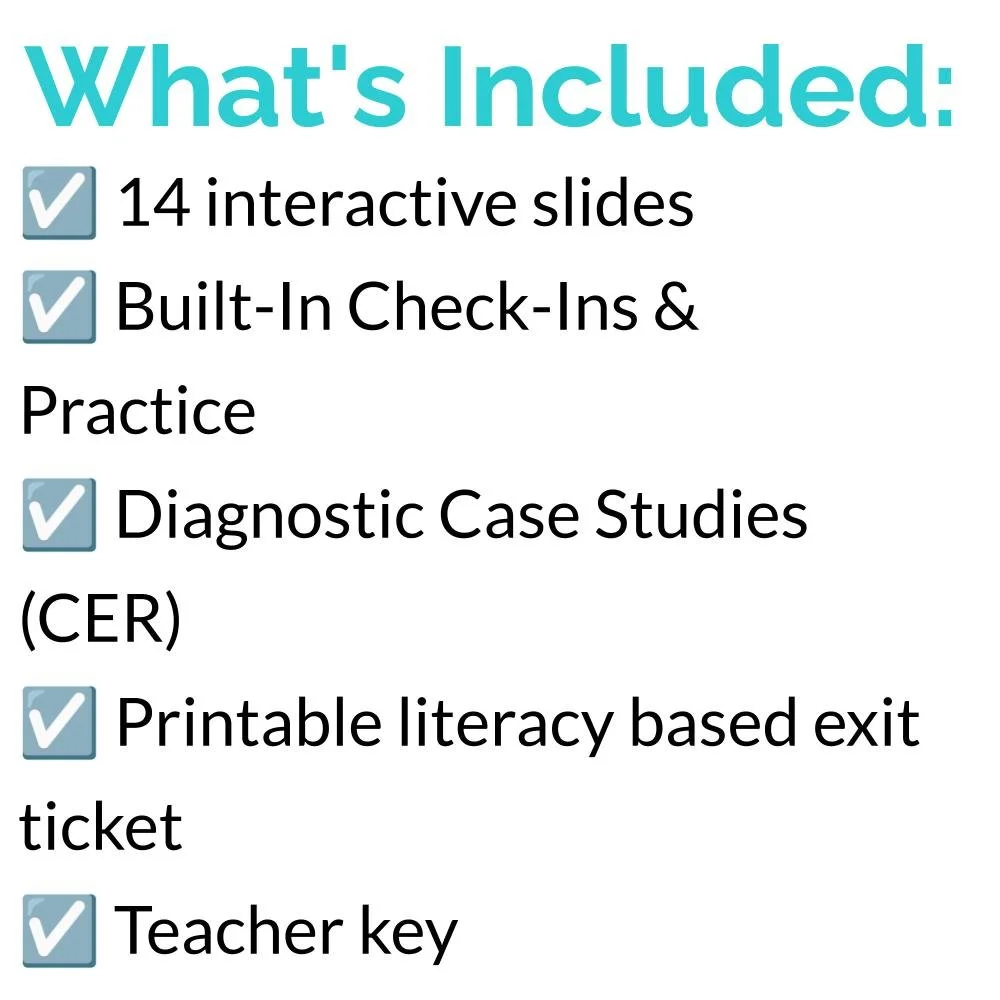 Image 3 of 4
 Image 4 of 4
Interactive Digestive System Case Study | Human Body Basics | Google Slides + CER Activity.
How much can doctors learn from stool?
In this interactive digestive system lesson, students analyze stool the way a physician would — using consistency, color, and patient history to make evidence-based health conclusions. Rather than memorizing digestive vocabulary, students apply structure–function reasoning to understand how the large intestine regulates water balance, how bile affects stool color, and how gut bacteria influence digestive health.
This lesson moves from prehistoric coprolites to modern patient diagnosis, guiding students through increasingly sophisticated diagnostic reasoning tasks.
Investigate fossilized stool (coprolites) to infer diet and health
Identify which digestive organ reabsorbs water and explain its role in constipation and diarrhea
Use the Bristol Stool Chart to classify stool consistency
Analyze how stool color forms (bilirubin → bile → gut bacteria → stercobilin)
Distinguish between harmless and medically significant color changes
Complete structured CER-based diagnostic cases as the “doctor”
Students finish the lesson applying their understanding to real-world patient scenarios, making claims and supporting them with evidence.
Fully digital, no-prep Google Slides format
Structured progression from concept introduction to application
Built-in check-ins and interactive drag-and-drop tasks
Mechanism-based explanations (not just vocabulary)
Clear connection between digestive structure and observable outcomes
Includes teacher key and printable literacy-based exit ticket
This lesson fits seamlessly into a Human Body Basics or introductory high school biology unit on digestion and human body systems.
To see a preview of this lesson, click here.
NGSS Alignment (Middle School):
MS-LS1-3
Science & Engineering Practices (SEPs):
Analyzing and Interpreting Data
Constructing Explanations
Engaging in Argument from Evidence
Crosscutting Concepts (CCCs):
Structure and Function
Cause and Effect
Systems and System Models
Common Core (Literacy in Science):
CCSS.ELA-LITERACY.RST.6-8.7; CCSS.ELA-LITERACY.WHST.6-8.1
Interactive Digestive System Case Study | Human Body Basics | Google Slides + CER Activity.
How much can doctors learn from stool?
In this interactive digestive system lesson, students analyze stool the way a physician would — using consistency, color, and patient history to make evidence-based health conclusions. Rather than memorizing digestive vocabulary, students apply structure–function reasoning to understand how the large intestine regulates water balance, how bile affects stool color, and how gut bacteria influence digestive health.
This lesson moves from prehistoric coprolites to modern patient diagnosis, guiding students through increasingly sophisticated diagnostic reasoning tasks.
Investigate fossilized stool (coprolites) to infer diet and health
Identify which digestive organ reabsorbs water and explain its role in constipation and diarrhea
Use the Bristol Stool Chart to classify stool consistency
Analyze how stool color forms (bilirubin → bile → gut bacteria → stercobilin)
Distinguish between harmless and medically significant color changes
Complete structured CER-based diagnostic cases as the “doctor”
Students finish the lesson applying their understanding to real-world patient scenarios, making claims and supporting them with evidence.
Fully digital, no-prep Google Slides format
Structured progression from concept introduction to application
Built-in check-ins and interactive drag-and-drop tasks
Mechanism-based explanations (not just vocabulary)
Clear connection between digestive structure and observable outcomes
Includes teacher key and printable literacy-based exit ticket
This lesson fits seamlessly into a Human Body Basics or introductory high school biology unit on digestion and human body systems.
To see a preview of this lesson, click here.
NGSS Alignment (Middle School):
MS-LS1-3
Science & Engineering Practices (SEPs):
Analyzing and Interpreting Data
Constructing Explanations
Engaging in Argument from Evidence
Crosscutting Concepts (CCCs):
Structure and Function
Cause and Effect
Systems and System Models
Common Core (Literacy in Science):
CCSS.ELA-LITERACY.RST.6-8.7; CCSS.ELA-LITERACY.WHST.6-8.1