 Image 1 of 4
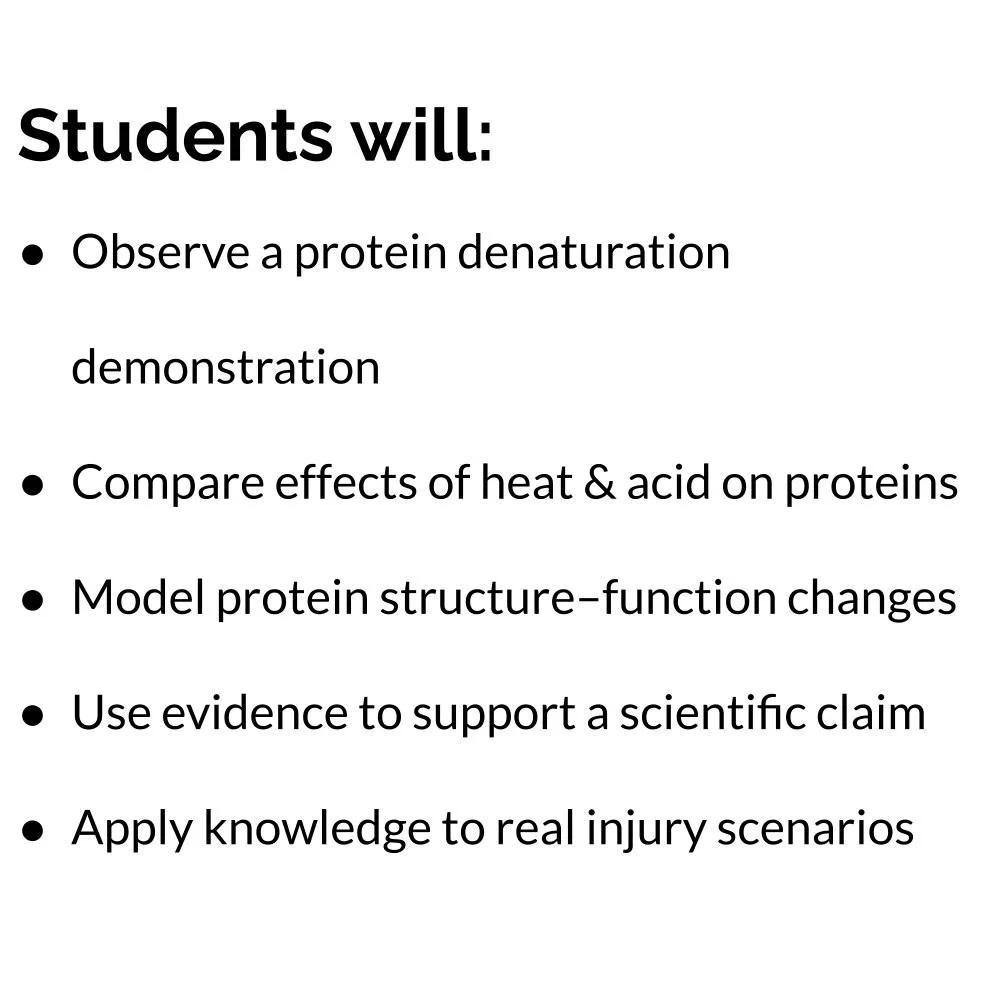 Image 2 of 4
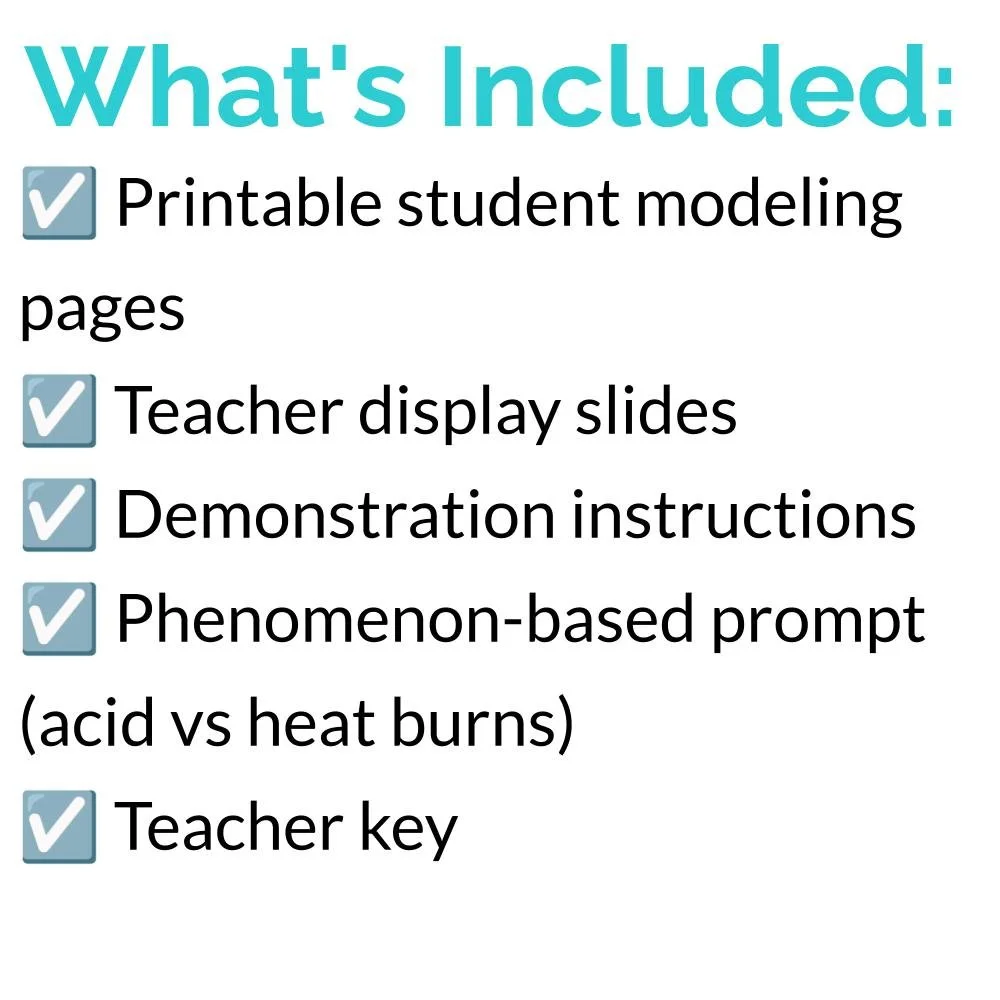 Image 3 of 4
 Image 4 of 4
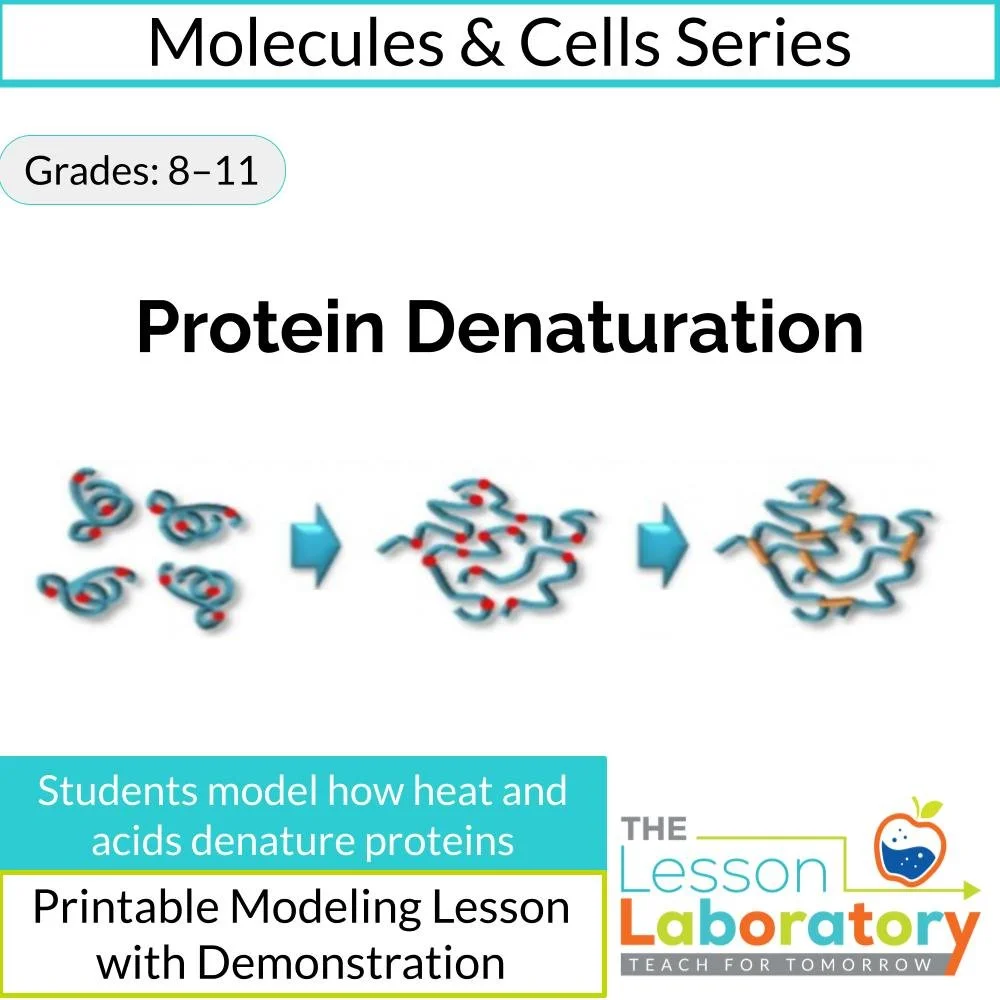
Students model how temperature and pH change protein structure.
This lesson introduces protein denaturation through a real-world phenomenon and a structured modeling sequence. Students investigate whether chemical burns and heat burns damage tissue in the same way by examining how acids and heat affect protein structure.
The lesson begins with a phenomenon-based question: Can an acid burn be treated the same way as a heat burn? Students analyze evidence from a teacher-led demonstration and use that evidence to build an explanation for how different conditions alter protein shape.
Students then construct a model of protein structure and revise it to show how heat and acids disrupt that structure. Rather than memorizing a definition of denaturation, students reason from evidence to explain how changes in temperature and pH affect protein folding and function. They use a Claim–Evidence–Reasoning framework to support their conclusions and compare similarities and differences between chemical and thermal damage.
This resource is designed as a conceptual mechanism lesson within a biomolecules or proteins unit. It supports understanding of:
Protein structure–function relationships
Denaturation caused by heat and acids
How molecular changes lead to tissue damage
Scientific explanation using evidence
The lesson includes:
Printable student modeling pages
Teacher display slides
Demonstration instructions
Teacher key
This lesson works well after students have been introduced to proteins and before or during enzyme instruction. It provides a clear, evidence-based foundation for understanding how environmental conditions affect protein structure and function.
For a preview of this lesson, click here.
NGSS Alignment (High School)
HS-LS1-2
NGSS Alignment (Middle School)
MS-LS1-2
Science & Engineering Practices (SEPs)
Planning and Carrying Out Investigations
Constructing Explanations
Engaging in Argument from Evidence
Crosscutting Concepts (CCCs)
Structure and Function
Cause and Effect
Common Core (Literacy in Science)
RST.6-8.4, RST.9-10.4
WHST.6-8.1, WHST.9-10.1
Bundle Upgrade Policy
This lesson is included in one or more bundles. To support flexible purchasing and long-term use of our curriculum, Lesson Laboratory offers a bundle upgrade policy.
If you purchase this lesson and decide at a later date that you would like to upgrade to a bundle, you may request a store credit equal to the total amount paid for duplicate items.
To request an upgrade credit, please email thelessonlaboratory@gmail.com and include:
Your username
The order numbers for both the original purchase(s) and the bundle
The names of the duplicate resources
Requests must be submitted within 30 days of the bundle purchase. Credits are issued as store credit for future Lesson Laboratory purchases and are not provided as cash refunds.
This policy applies only to purchases of resources that are later included in a Lesson Laboratory bundle and is limited to one adjustment per upgrade pathway.
Students model how temperature and pH change protein structure.
This lesson introduces protein denaturation through a real-world phenomenon and a structured modeling sequence. Students investigate whether chemical burns and heat burns damage tissue in the same way by examining how acids and heat affect protein structure.
The lesson begins with a phenomenon-based question: Can an acid burn be treated the same way as a heat burn? Students analyze evidence from a teacher-led demonstration and use that evidence to build an explanation for how different conditions alter protein shape.
Students then construct a model of protein structure and revise it to show how heat and acids disrupt that structure. Rather than memorizing a definition of denaturation, students reason from evidence to explain how changes in temperature and pH affect protein folding and function. They use a Claim–Evidence–Reasoning framework to support their conclusions and compare similarities and differences between chemical and thermal damage.
This resource is designed as a conceptual mechanism lesson within a biomolecules or proteins unit. It supports understanding of:
Protein structure–function relationships
Denaturation caused by heat and acids
How molecular changes lead to tissue damage
Scientific explanation using evidence
The lesson includes:
Printable student modeling pages
Teacher display slides
Demonstration instructions
Teacher key
This lesson works well after students have been introduced to proteins and before or during enzyme instruction. It provides a clear, evidence-based foundation for understanding how environmental conditions affect protein structure and function.
For a preview of this lesson, click here.
NGSS Alignment (High School)
HS-LS1-2
NGSS Alignment (Middle School)
MS-LS1-2
Science & Engineering Practices (SEPs)
Planning and Carrying Out Investigations
Constructing Explanations
Engaging in Argument from Evidence
Crosscutting Concepts (CCCs)
Structure and Function
Cause and Effect
Common Core (Literacy in Science)
RST.6-8.4, RST.9-10.4
WHST.6-8.1, WHST.9-10.1
Bundle Upgrade Policy
This lesson is included in one or more bundles. To support flexible purchasing and long-term use of our curriculum, Lesson Laboratory offers a bundle upgrade policy.
If you purchase this lesson and decide at a later date that you would like to upgrade to a bundle, you may request a store credit equal to the total amount paid for duplicate items.
To request an upgrade credit, please email thelessonlaboratory@gmail.com and include:
Your username
The order numbers for both the original purchase(s) and the bundle
The names of the duplicate resources
Requests must be submitted within 30 days of the bundle purchase. Credits are issued as store credit for future Lesson Laboratory purchases and are not provided as cash refunds.
This policy applies only to purchases of resources that are later included in a Lesson Laboratory bundle and is limited to one adjustment per upgrade pathway.