Scientific Method Through History – Analyzing Famous Scientific Mistakes (Interactive Lesson)

$5.75

Time-Travel Inquiry Lesson on Bad Science, Experimental Design & Claim–Evidence–Reasoning.

Bring the scientific method to life with a time-traveling investigation of real scientific mistakes!

In this highly interactive and visually engaging lesson, students examine real historical case studies where scientists got it wrong:
John Needham’s spontaneous generation experiment
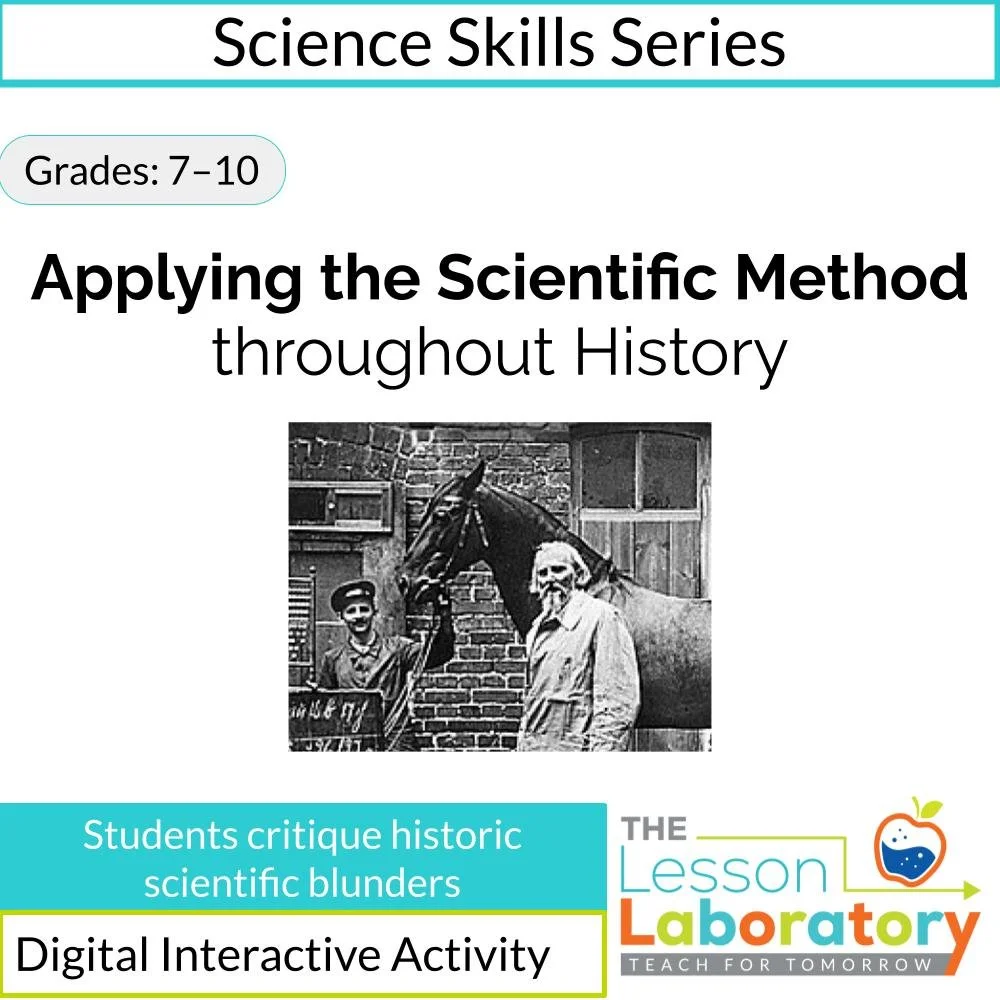
Clever Hans and the observer-expectancy effect
Darwin’s incorrect hypothesis of blended heredity

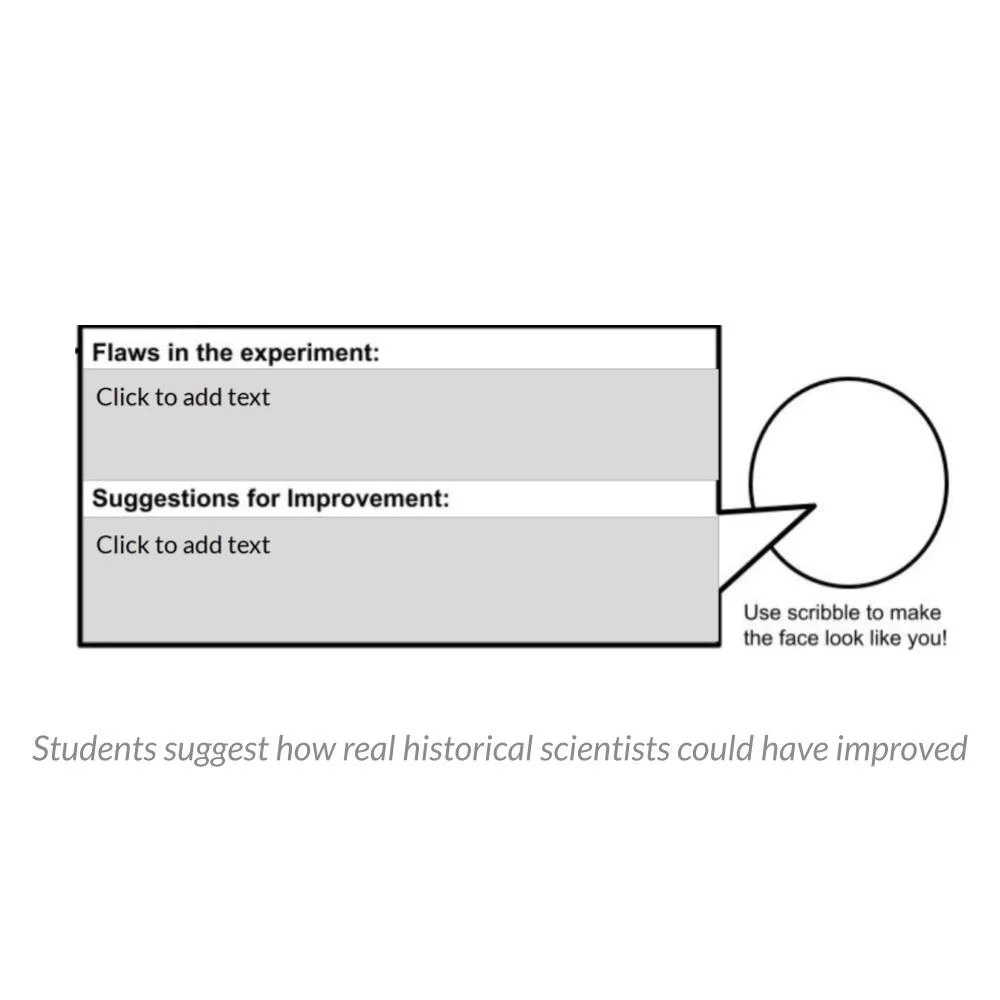
Through step-by-step guided analysis, students learn to identify flawed procedures, missing controls, invalid reasoning, and incorrect conclusions. They then apply modern principles of the scientific method to redesign the experiments the right way.

The lesson ends with a student-choice research “time stop,” where learners independently explore another famous scientific error using a linked timeline of case studies.

Perfect for middle school and high school science, this lesson builds real scientific literacy and encourages students to think like scientists—not just follow steps.

🌟 What’s Included

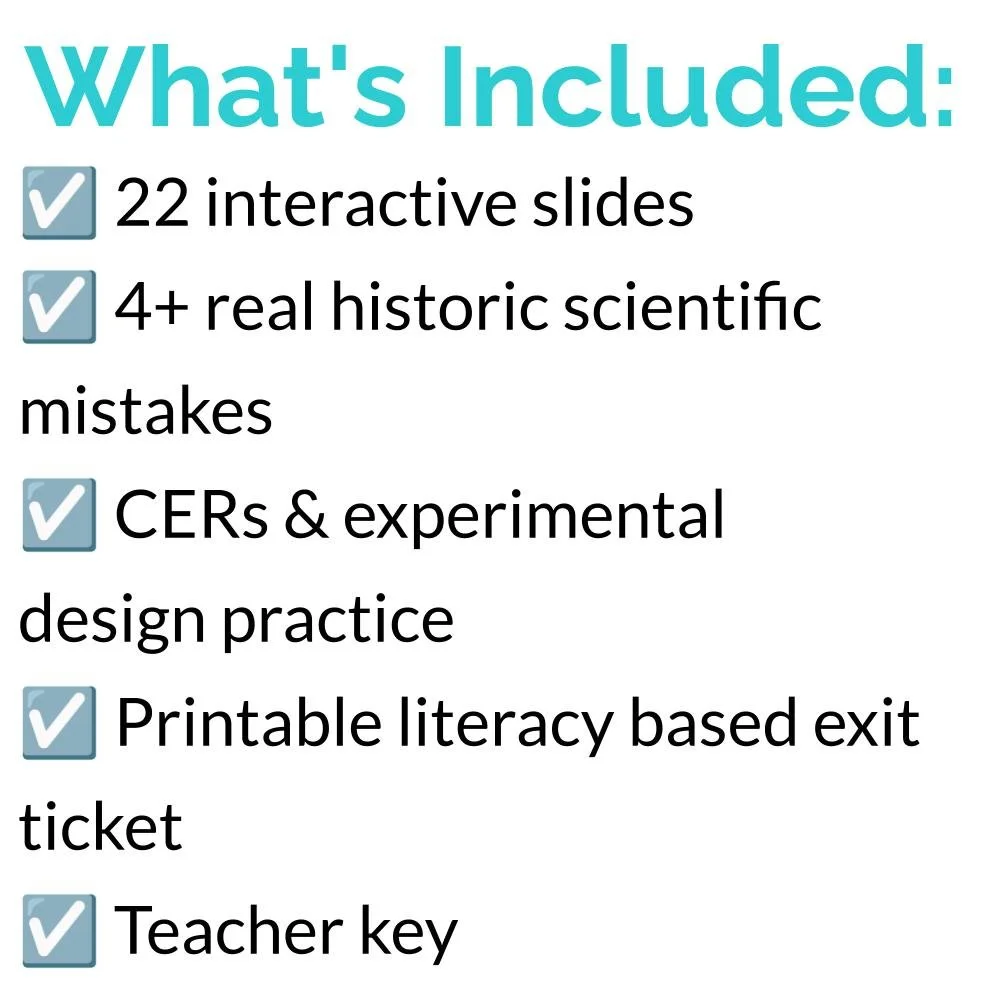
Fully editable Google Slides lesson ✔ Warm-up review of the scientific method ✔ 3 historical case studies analyzed through a modern lens ✔ CER writing prompts & structured scaffolds ✔ A “fix the experiment” redesign task ✔ Student-choice research stop with timeline link ✔ Printable or digital student sheets ✔ Complete teacher key ✔ Exit ticket assessment

💡 Why Teachers Love It

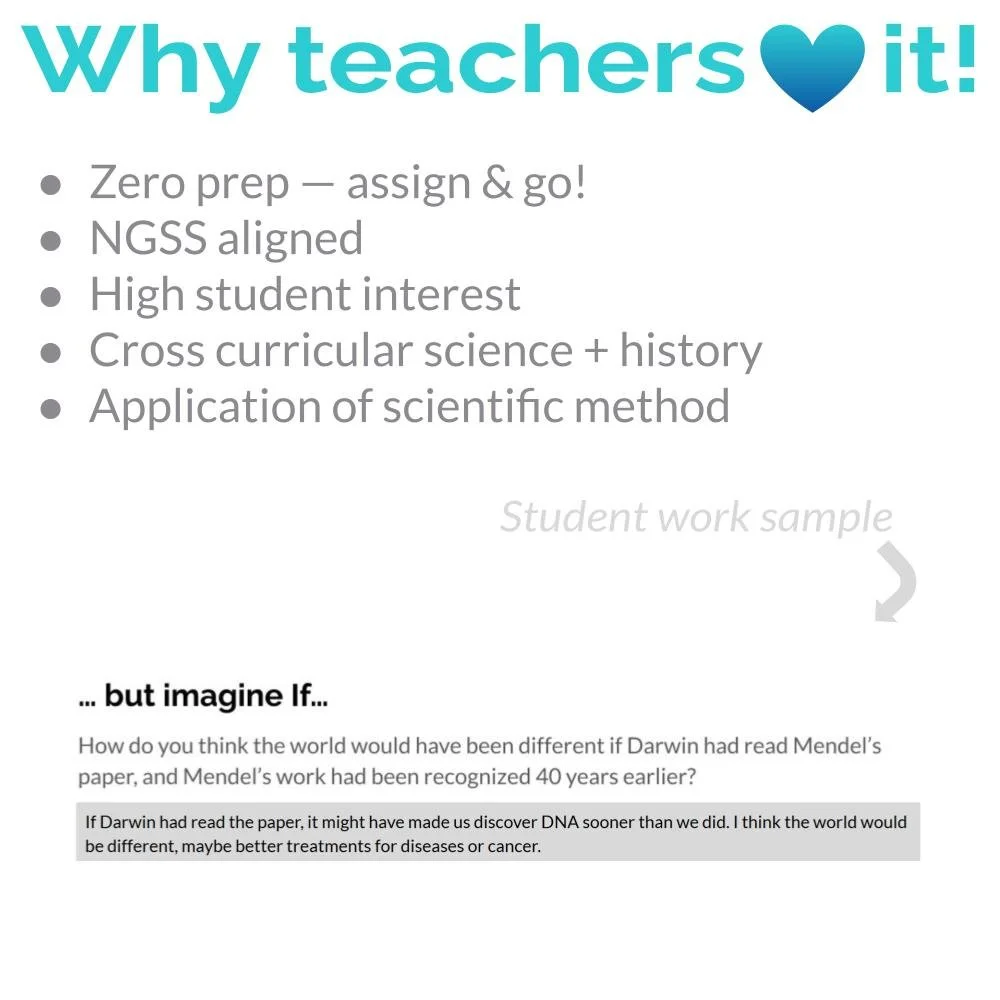
✔ Makes the scientific method meaningful, not memorized. Students see how and why experiments fail—building a deeper, more authentic understanding of real scientific practice.

✔ High engagement through storytelling. Each case study reads like a mystery: What went wrong? Why did people believe this? How do we know better now?

✔ Strong support for NGSS and CER writing. Teachers appreciate how clearly the lesson connects to analyzing experimental design, evaluating evidence, and constructing explanations.

✔ Differentiated for multiple grade levels. Challenging enough for high school, accessible enough for middle school—perfect for mixed-ability classes.

✔ No prep required. Everything is structured, scaffolded, and ready to assign in Google Classroom.

🧠 Skills Developed

  • Critical thinking

  • Evaluating scientific claims

  • Understanding controls & variables

  • CER writing

  • Historical literacy in science

  • Identifying bias in experiments

  • Rewriting flawed experimental designs

📚 Perfect For

  • Scientific method units

  • CER practice days

  • Early-year inquiry lessons

  • Sub plans

  • NGSS-aligned instruction

  • Interdisciplinary ELA/science lessons

Grade & Course Recommendations

Best fit:

  • Grades 7–10

  • Middle School Science

  • High School Biology

  • Introductory science/experimental design units

  • STEM electives

Why:

  • Reading load + CER writing = middle/high school ready

  • Historical examples align well with both MS-LS1/LS3 foundations and HS-level CER rigor

Cross-Curricular Connections & Extensions

ELA

  • Evaluating claims and evidence

  • Reading informational texts (historical primary sources)

  • CER structured writing

  • Argument writing and revision

History of Science

  • Enlightenment science

  • Evolution of scientific thought

  • Impact of communication failures (Darwin & Mendel)

Social Studies / Psychology

  • Observer-expectancy effect (Clever Hans case)

  • Cognitive bias in experimentation

Possible Extensions

  • “Rewrite the experiment” challenge

  • Students storyboard their own historical scientific misconception

  • Mini-debate: “Which scientific mistake was the most influential?”

  • Research paper comparing two scientific failures

  • Create a PSA: “How to Avoid Bad Science”

Daily slide + literacy - based exit ticket included with purchase

Join the Lesson Laboratory and Teach for Tomorrow!

NGSS Standards (Middle & High School)

Middle School NGSS

MS-ETS1-3 – Evaluate a design based on evidence to determine strengths and weaknesses.
MS-LS1-1 – Conduct investigations using scientific inquiry principles.
MS-LS3-2 – Use models to describe why traits do/do not pass on (Weismann example).
MS-LS4-2 – Identify patterns in evolutionary evidence (Darwin vs Mendel context).

Science & Engineering Practices (SEPs):

  • Analyzing and interpreting data

  • Constructing explanations

  • Engaging in argument from evidence

  • Asking questions & defining problems

Crosscutting Concepts (CCCs):

  • Cause & Effect – flawed variables lead to flawed results

  • Patterns – inheritance patterns refute pangenesis

  • Scientific Knowledge Assumes an Order & Consistency

  • Influence of Science on Society & Society on Science

High School NGSS

HS-LS3-1 – Ask questions about hereditary mechanisms.
HS-LS3-2 – Make and defend claims using evidence about genetic inheritance.
HS-ETS1-3 – Evaluate complex experiments, identifying flaws in design.
HS-LS4-1 – Analyze historical evidence supporting modern biological theories.

High School SEPs:

  • Developing and using models

  • Constructing arguments from evidence

  • Evaluating claims

  • Critiquing experimental designs

High School CCCs:

  • Stability & Change (why acquired characteristics fail)

  • Systems & System Models (proper vs. flawed experiments)

  • Empirical Evidence

Common Core Standards (MS & HS)

Middle School CCSS

CCSS.ELA-LITERACY.RST.6-8.1 – Cite evidence from informational texts.
CCSS.ELA-LITERACY.RST.6-8.8 – Distinguish among claims supported by evidence vs. speculation.
CCSS.ELA-LITERACY.WHST.6-8.1 – Write arguments focused on discipline-specific content.

High School CCSS

CCSS.ELA-LITERACY.RST.9-10.3 – Follow complex experimental procedures.
CCSS.ELA-LITERACY.RST.9-10.8 – Evaluate the validity of reasoning and the relevance of evidence.
CCSS.ELA-LITERACY.WHST.9-10.2 – Write explanatory texts within scientific topics.
CCSS.ELA-LITERACY.WHST.9-10.1 – Construct arguments using valid reasoning and evidence.

Time-Travel Inquiry Lesson on Bad Science, Experimental Design & Claim–Evidence–Reasoning.

Bring the scientific method to life with a time-traveling investigation of real scientific mistakes!

In this highly interactive and visually engaging lesson, students examine real historical case studies where scientists got it wrong:
John Needham’s spontaneous generation experiment
Clever Hans and the observer-expectancy effect
Darwin’s incorrect hypothesis of blended heredity

Through step-by-step guided analysis, students learn to identify flawed procedures, missing controls, invalid reasoning, and incorrect conclusions. They then apply modern principles of the scientific method to redesign the experiments the right way.

The lesson ends with a student-choice research “time stop,” where learners independently explore another famous scientific error using a linked timeline of case studies.

Perfect for middle school and high school science, this lesson builds real scientific literacy and encourages students to think like scientists—not just follow steps.

🌟 What’s Included

Fully editable Google Slides lesson ✔ Warm-up review of the scientific method ✔ 3 historical case studies analyzed through a modern lens ✔ CER writing prompts & structured scaffolds ✔ A “fix the experiment” redesign task ✔ Student-choice research stop with timeline link ✔ Printable or digital student sheets ✔ Complete teacher key ✔ Exit ticket assessment

💡 Why Teachers Love It

✔ Makes the scientific method meaningful, not memorized. Students see how and why experiments fail—building a deeper, more authentic understanding of real scientific practice.

✔ High engagement through storytelling. Each case study reads like a mystery: What went wrong? Why did people believe this? How do we know better now?

✔ Strong support for NGSS and CER writing. Teachers appreciate how clearly the lesson connects to analyzing experimental design, evaluating evidence, and constructing explanations.

✔ Differentiated for multiple grade levels. Challenging enough for high school, accessible enough for middle school—perfect for mixed-ability classes.

✔ No prep required. Everything is structured, scaffolded, and ready to assign in Google Classroom.

🧠 Skills Developed

  • Critical thinking

  • Evaluating scientific claims

  • Understanding controls & variables

  • CER writing

  • Historical literacy in science

  • Identifying bias in experiments

  • Rewriting flawed experimental designs

📚 Perfect For

  • Scientific method units

  • CER practice days

  • Early-year inquiry lessons

  • Sub plans

  • NGSS-aligned instruction

  • Interdisciplinary ELA/science lessons

Grade & Course Recommendations

Best fit:

  • Grades 7–10

  • Middle School Science

  • High School Biology

  • Introductory science/experimental design units

  • STEM electives

Why:

  • Reading load + CER writing = middle/high school ready

  • Historical examples align well with both MS-LS1/LS3 foundations and HS-level CER rigor

Cross-Curricular Connections & Extensions

ELA

  • Evaluating claims and evidence

  • Reading informational texts (historical primary sources)

  • CER structured writing

  • Argument writing and revision

History of Science

  • Enlightenment science

  • Evolution of scientific thought

  • Impact of communication failures (Darwin & Mendel)

Social Studies / Psychology

  • Observer-expectancy effect (Clever Hans case)

  • Cognitive bias in experimentation

Possible Extensions

  • “Rewrite the experiment” challenge

  • Students storyboard their own historical scientific misconception

  • Mini-debate: “Which scientific mistake was the most influential?”

  • Research paper comparing two scientific failures

  • Create a PSA: “How to Avoid Bad Science”

Daily slide + literacy - based exit ticket included with purchase

Join the Lesson Laboratory and Teach for Tomorrow!

NGSS Standards (Middle & High School)

Middle School NGSS

MS-ETS1-3 – Evaluate a design based on evidence to determine strengths and weaknesses.
MS-LS1-1 – Conduct investigations using scientific inquiry principles.
MS-LS3-2 – Use models to describe why traits do/do not pass on (Weismann example).
MS-LS4-2 – Identify patterns in evolutionary evidence (Darwin vs Mendel context).

Science & Engineering Practices (SEPs):

  • Analyzing and interpreting data

  • Constructing explanations

  • Engaging in argument from evidence

  • Asking questions & defining problems

Crosscutting Concepts (CCCs):

  • Cause & Effect – flawed variables lead to flawed results

  • Patterns – inheritance patterns refute pangenesis

  • Scientific Knowledge Assumes an Order & Consistency

  • Influence of Science on Society & Society on Science

High School NGSS

HS-LS3-1 – Ask questions about hereditary mechanisms.
HS-LS3-2 – Make and defend claims using evidence about genetic inheritance.
HS-ETS1-3 – Evaluate complex experiments, identifying flaws in design.
HS-LS4-1 – Analyze historical evidence supporting modern biological theories.

High School SEPs:

  • Developing and using models

  • Constructing arguments from evidence

  • Evaluating claims

  • Critiquing experimental designs

High School CCCs:

  • Stability & Change (why acquired characteristics fail)

  • Systems & System Models (proper vs. flawed experiments)

  • Empirical Evidence

Common Core Standards (MS & HS)

Middle School CCSS

CCSS.ELA-LITERACY.RST.6-8.1 – Cite evidence from informational texts.
CCSS.ELA-LITERACY.RST.6-8.8 – Distinguish among claims supported by evidence vs. speculation.
CCSS.ELA-LITERACY.WHST.6-8.1 – Write arguments focused on discipline-specific content.

High School CCSS

CCSS.ELA-LITERACY.RST.9-10.3 – Follow complex experimental procedures.
CCSS.ELA-LITERACY.RST.9-10.8 – Evaluate the validity of reasoning and the relevance of evidence.
CCSS.ELA-LITERACY.WHST.9-10.2 – Write explanatory texts within scientific topics.
CCSS.ELA-LITERACY.WHST.9-10.1 – Construct arguments using valid reasoning and evidence.