 Image 1 of 4
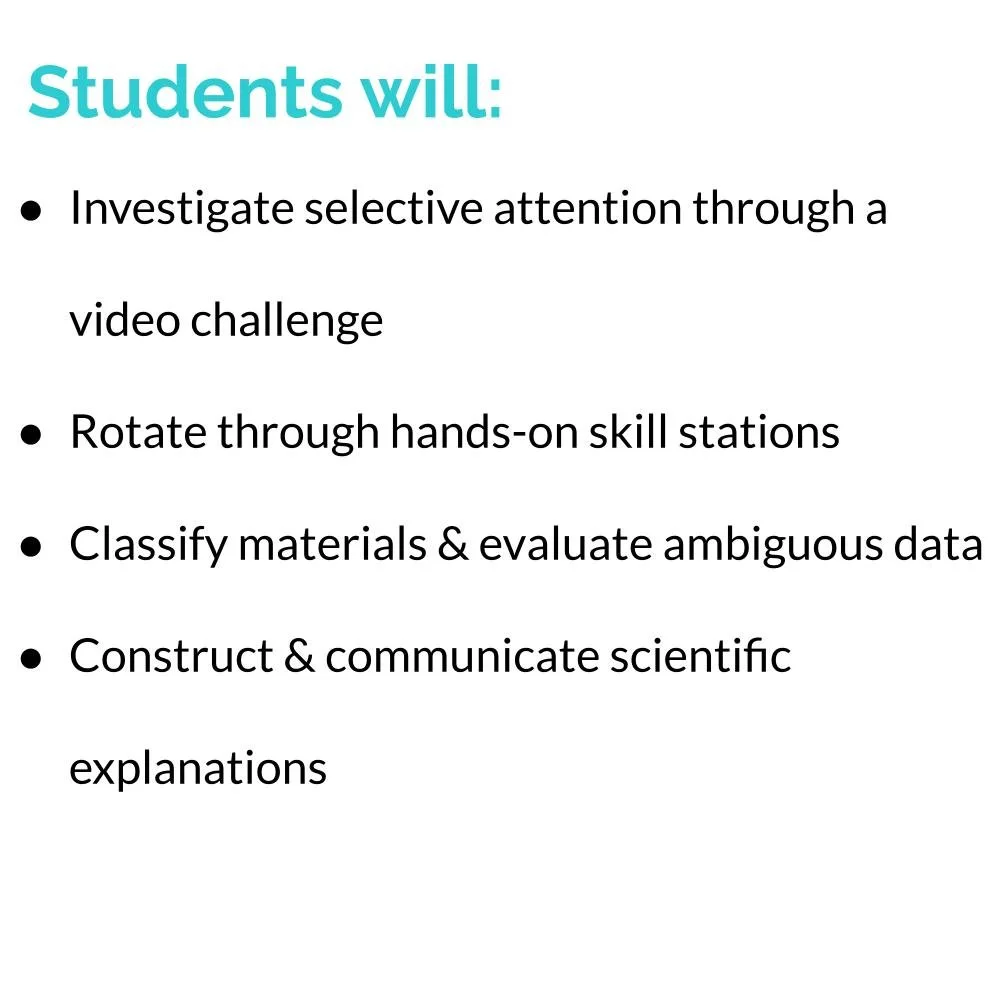 Image 2 of 4
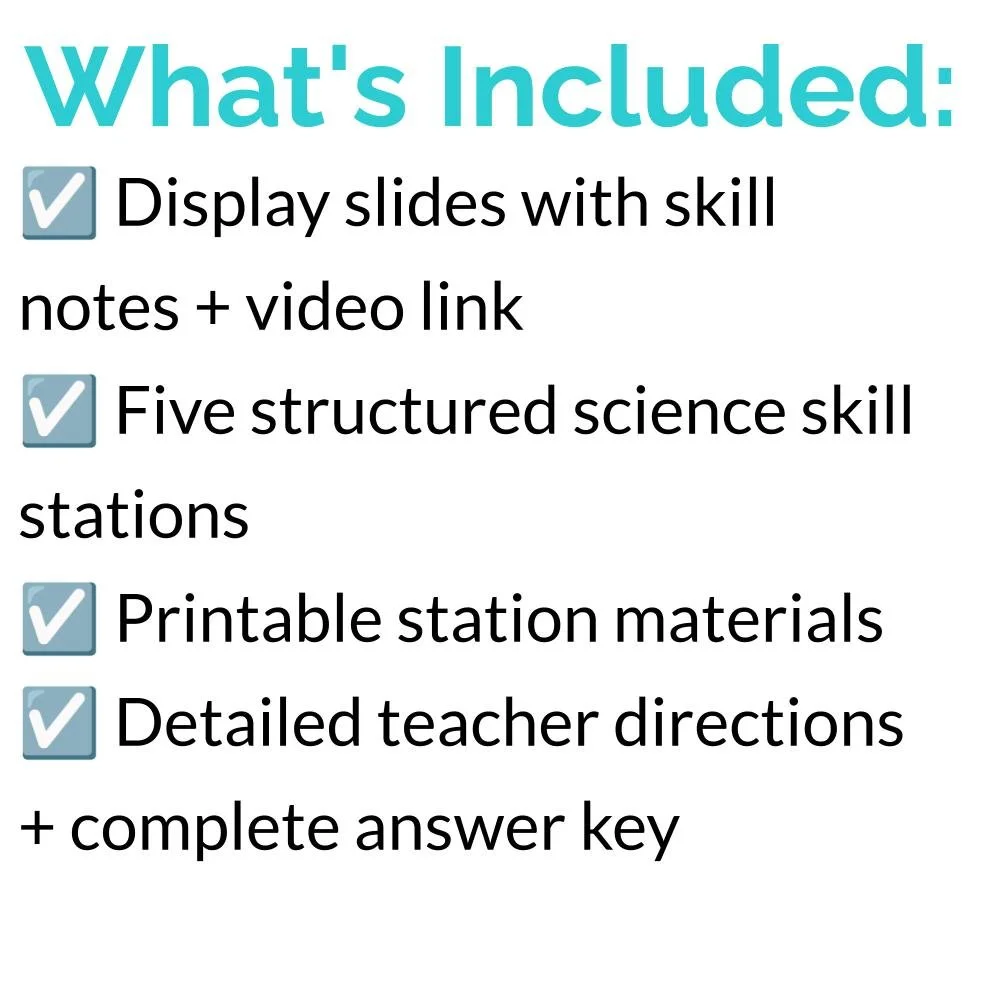 Image 3 of 4
 Image 4 of 4
Hands-On Lab Rotation with Optical Illusions, Modeling, Classification & Communication.
This hands-on station lesson introduces students to six core scientific skills: observation, inference, prediction, categorization, modeling, and communication. Students learn that science is not a collection of facts, but a structured process for interpreting the world.
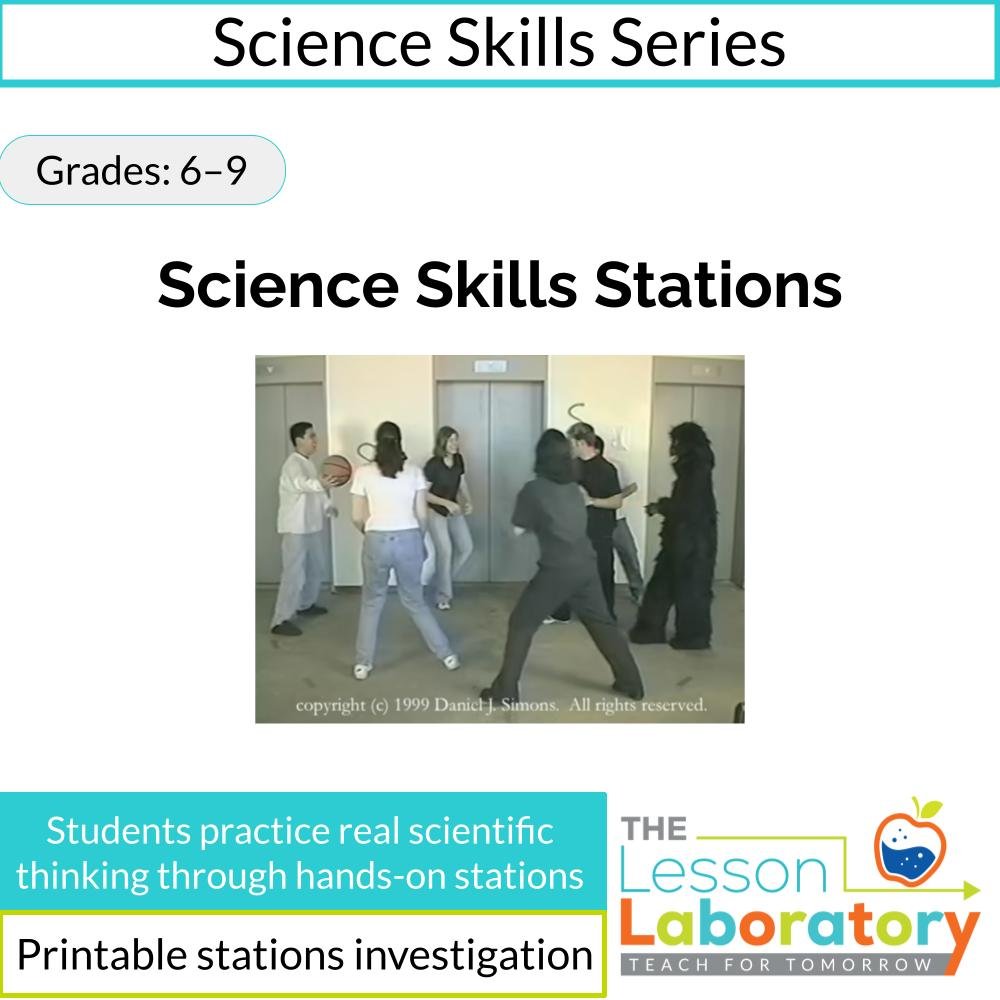
The lesson begins with a selective attention challenge based on the well-known “gorilla” video. Students are asked to focus on a specific task and later reflect on what they may have missed. This experience anchors the central message of the lesson: careful observation and evidence-based reasoning matter.
Students then rotate through five structured stations that allow them to practice each skill directly.
Observation: Use multiple senses to describe and categorize unfamiliar scents.
Inference & Prediction: Analyze liquid mixtures, make predictions, and revise thinking as new evidence emerges.
Evaluating Perception: Measure optical illusions to distinguish observation from assumption.
Classification: Sort materials into categories and reconsider definitions when faced with ambiguous examples such as oobleck.
Modeling: Examine scientific models and create their own to represent systems that cannot be observed directly.
The lesson concludes with scientific communication and reflection questions that reinforce key distinctions between observation, inference, and prediction, and emphasize the importance of revising ideas in light of new information.
This resource provides complete teacher directions, printable station materials, student recording sheets, and a full answer key. It is designed to establish strong scientific thinking norms, support inquiry-based learning, and build a foundation for future laboratory work.
To see a preview of this lesson, click here.
NGSS Alignment (Middle School):
MS-ETS1-2
Science & Engineering Practices (SEPs):
Developing and Using Models
Analyzing and Interpreting Data
Constructing Explanations
Obtaining, Evaluating, and Communicating Information
Crosscutting Concepts (CCCs):
Structure and Function
Cause and Effect
Systems and System Models
Common Core (Literacy in Science):
CCSS.ELA-LITERACY.RST.6-8.3; CCSS.ELA-LITERACY.WHST.6-8.2; CCSS.ELA-LITERACY.SL.6-8.1
Hands-On Lab Rotation with Optical Illusions, Modeling, Classification & Communication.
This hands-on station lesson introduces students to six core scientific skills: observation, inference, prediction, categorization, modeling, and communication. Students learn that science is not a collection of facts, but a structured process for interpreting the world.
The lesson begins with a selective attention challenge based on the well-known “gorilla” video. Students are asked to focus on a specific task and later reflect on what they may have missed. This experience anchors the central message of the lesson: careful observation and evidence-based reasoning matter.
Students then rotate through five structured stations that allow them to practice each skill directly.
Observation: Use multiple senses to describe and categorize unfamiliar scents.
Inference & Prediction: Analyze liquid mixtures, make predictions, and revise thinking as new evidence emerges.
Evaluating Perception: Measure optical illusions to distinguish observation from assumption.
Classification: Sort materials into categories and reconsider definitions when faced with ambiguous examples such as oobleck.
Modeling: Examine scientific models and create their own to represent systems that cannot be observed directly.
The lesson concludes with scientific communication and reflection questions that reinforce key distinctions between observation, inference, and prediction, and emphasize the importance of revising ideas in light of new information.
This resource provides complete teacher directions, printable station materials, student recording sheets, and a full answer key. It is designed to establish strong scientific thinking norms, support inquiry-based learning, and build a foundation for future laboratory work.
To see a preview of this lesson, click here.
NGSS Alignment (Middle School):
MS-ETS1-2
Science & Engineering Practices (SEPs):
Developing and Using Models
Analyzing and Interpreting Data
Constructing Explanations
Obtaining, Evaluating, and Communicating Information
Crosscutting Concepts (CCCs):
Structure and Function
Cause and Effect
Systems and System Models
Common Core (Literacy in Science):
CCSS.ELA-LITERACY.RST.6-8.3; CCSS.ELA-LITERACY.WHST.6-8.2; CCSS.ELA-LITERACY.SL.6-8.1