 Image 1 of 4
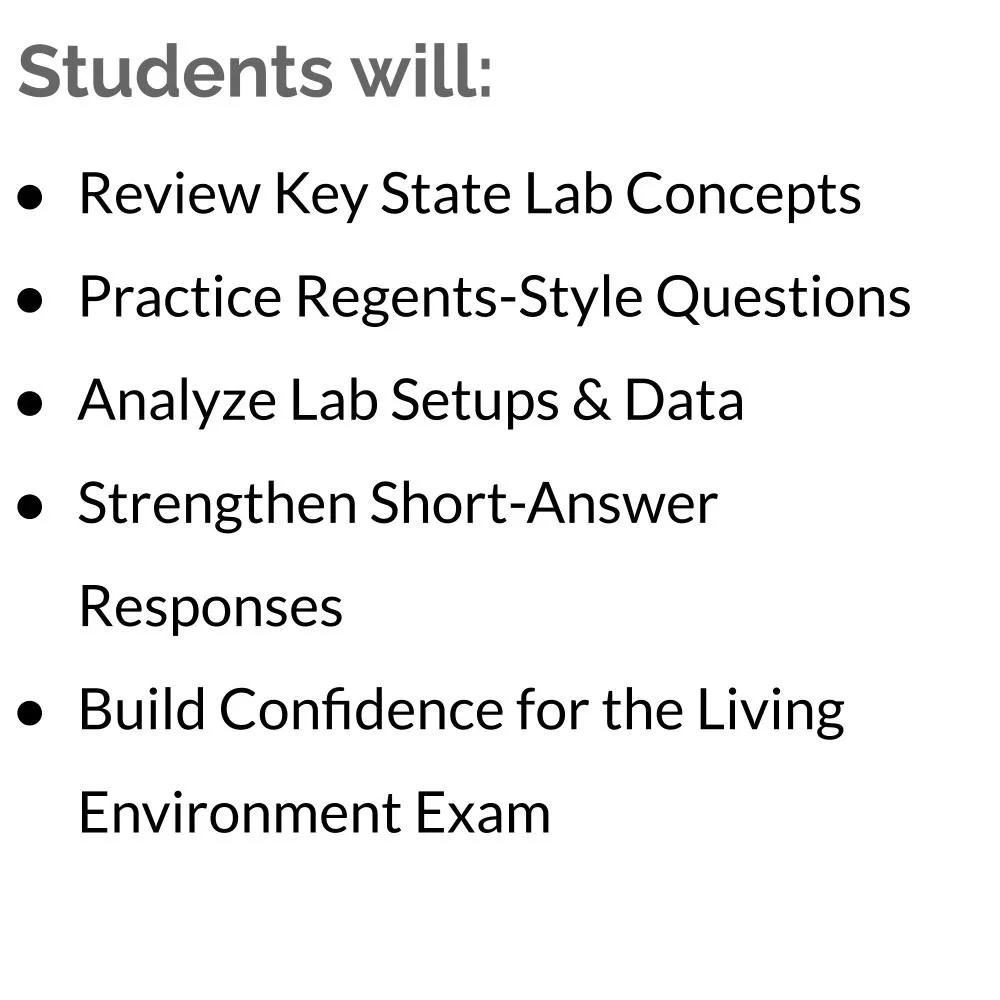 Image 2 of 4
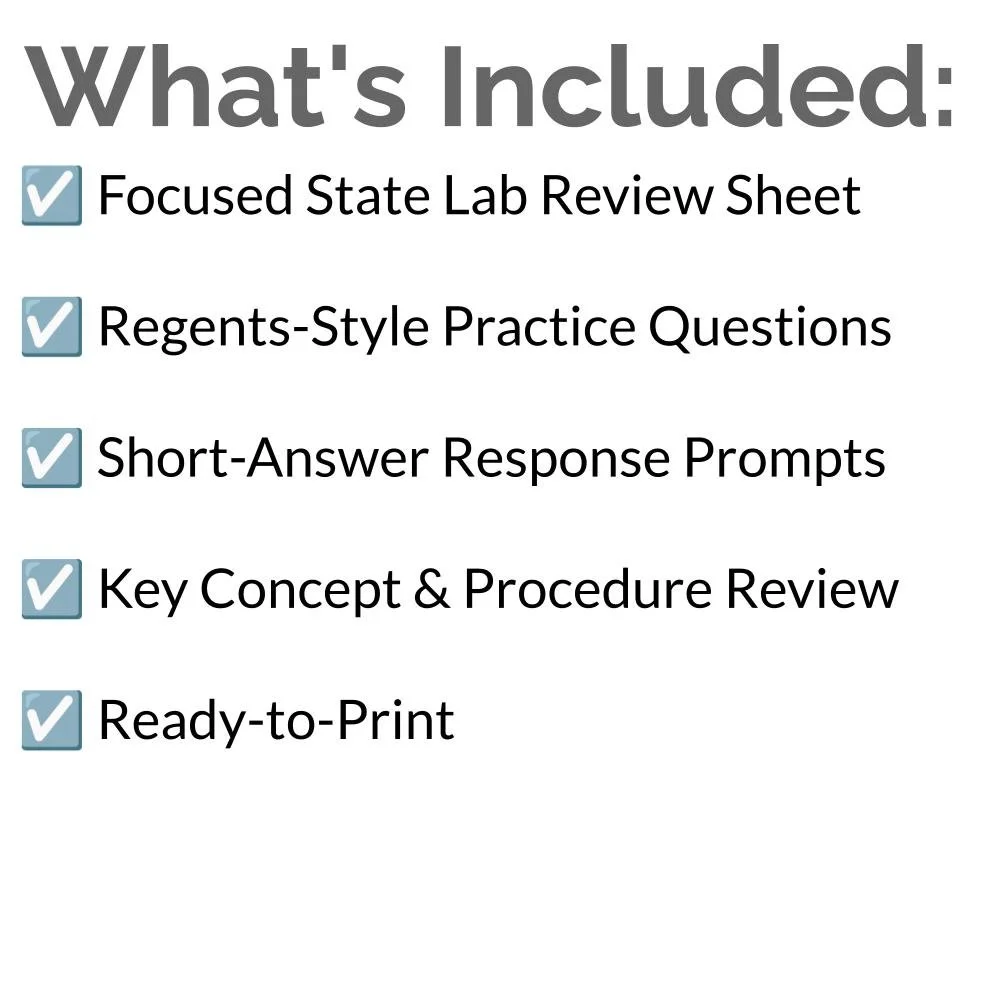 Image 3 of 4
 Image 4 of 4
Natural Selection, Competition & Speciation Review Packet | Evolution State Lab Practice.
This focused review sheet is designed to support students as they prepare for the Beaks of Finches State Lab component of the NYS Living Environment Regents exam.
Students revisit the core principles of natural selection, competition, variation, and speciation through structured concept review and Regents-style practice questions. The resource emphasizes clarity of reasoning and familiarity with the types of prompts students may encounter on Part D of the exam.
This is a targeted support tool intended to reinforce key lab concepts—not a full lesson replacement.
Concise review of essential State Lab concepts
Regents-style short-answer and analysis questions
Practice interpreting lab setups and evolutionary scenarios
Structured opportunities to strengthen constructed responses
Ready-to-print format for flexible classroom use
Content has been developed using prior Regents exam trends, classroom experience, and original instructional design to ensure alignment with exam expectations.
Focused Regents review sessions
Small-group intervention
Independent exam preparation
Quick refresher prior to assessment
This free Boot Camp sheet is part of the NYS Living Environment Regents Review support line.
HS-LS4-1:Communicate scientific information that common ancestry and biological evolution are supported by multiple lines of evidence.
HS-LS4-2:Construct an explanation based on evidence that evolution results from four factors: population potential, genetic variation, competition, and environment.
HS-LS4-3:Apply concepts of statistics and probability to support explanations that organisms with advantageous traits tend to survive and reproduce.
Analyzing and interpreting data
Constructing explanations
Engaging in argument from evidence
Cause and effect
Patterns
Stability and change
Natural Selection, Competition & Speciation Review Packet | Evolution State Lab Practice.
This focused review sheet is designed to support students as they prepare for the Beaks of Finches State Lab component of the NYS Living Environment Regents exam.
Students revisit the core principles of natural selection, competition, variation, and speciation through structured concept review and Regents-style practice questions. The resource emphasizes clarity of reasoning and familiarity with the types of prompts students may encounter on Part D of the exam.
This is a targeted support tool intended to reinforce key lab concepts—not a full lesson replacement.
Concise review of essential State Lab concepts
Regents-style short-answer and analysis questions
Practice interpreting lab setups and evolutionary scenarios
Structured opportunities to strengthen constructed responses
Ready-to-print format for flexible classroom use
Content has been developed using prior Regents exam trends, classroom experience, and original instructional design to ensure alignment with exam expectations.
Focused Regents review sessions
Small-group intervention
Independent exam preparation
Quick refresher prior to assessment
This free Boot Camp sheet is part of the NYS Living Environment Regents Review support line.
HS-LS4-1:Communicate scientific information that common ancestry and biological evolution are supported by multiple lines of evidence.
HS-LS4-2:Construct an explanation based on evidence that evolution results from four factors: population potential, genetic variation, competition, and environment.
HS-LS4-3:Apply concepts of statistics and probability to support explanations that organisms with advantageous traits tend to survive and reproduce.
Analyzing and interpreting data
Constructing explanations
Engaging in argument from evidence
Cause and effect
Patterns
Stability and change