 Image 1 of 4
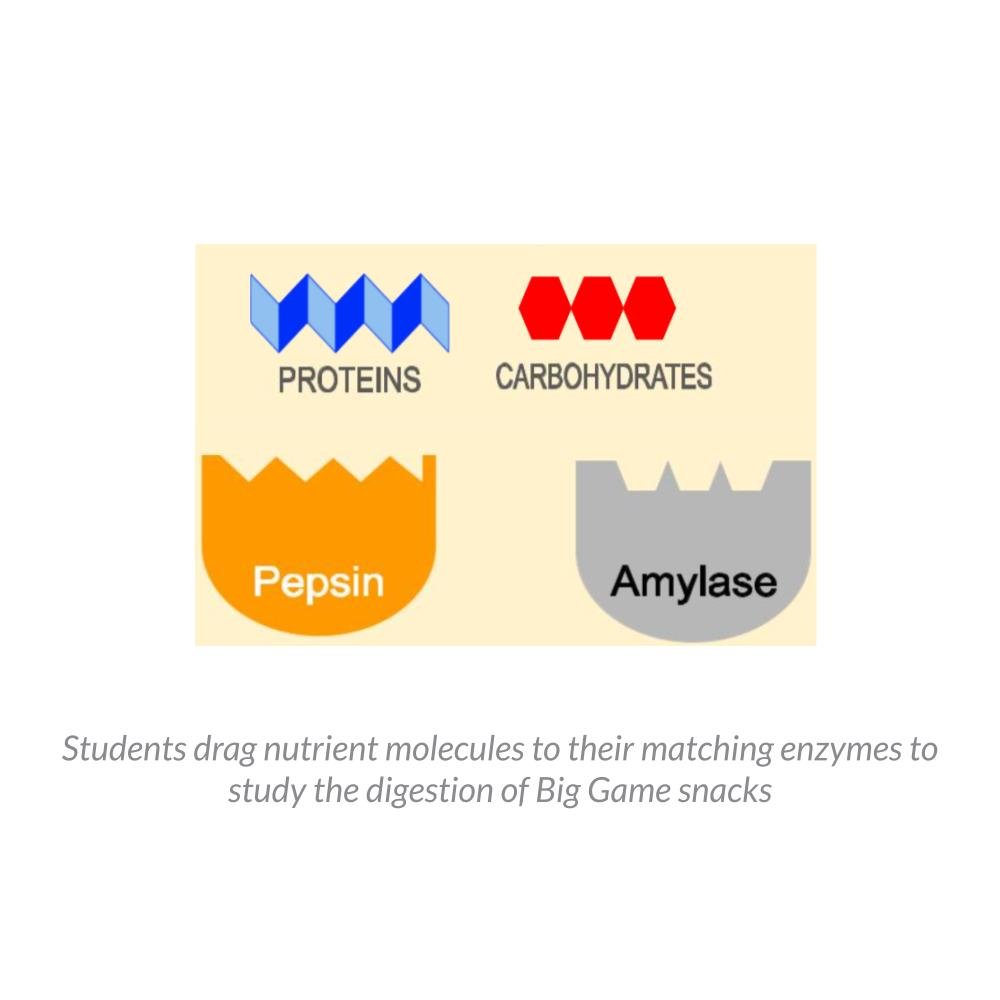 Image 2 of 4
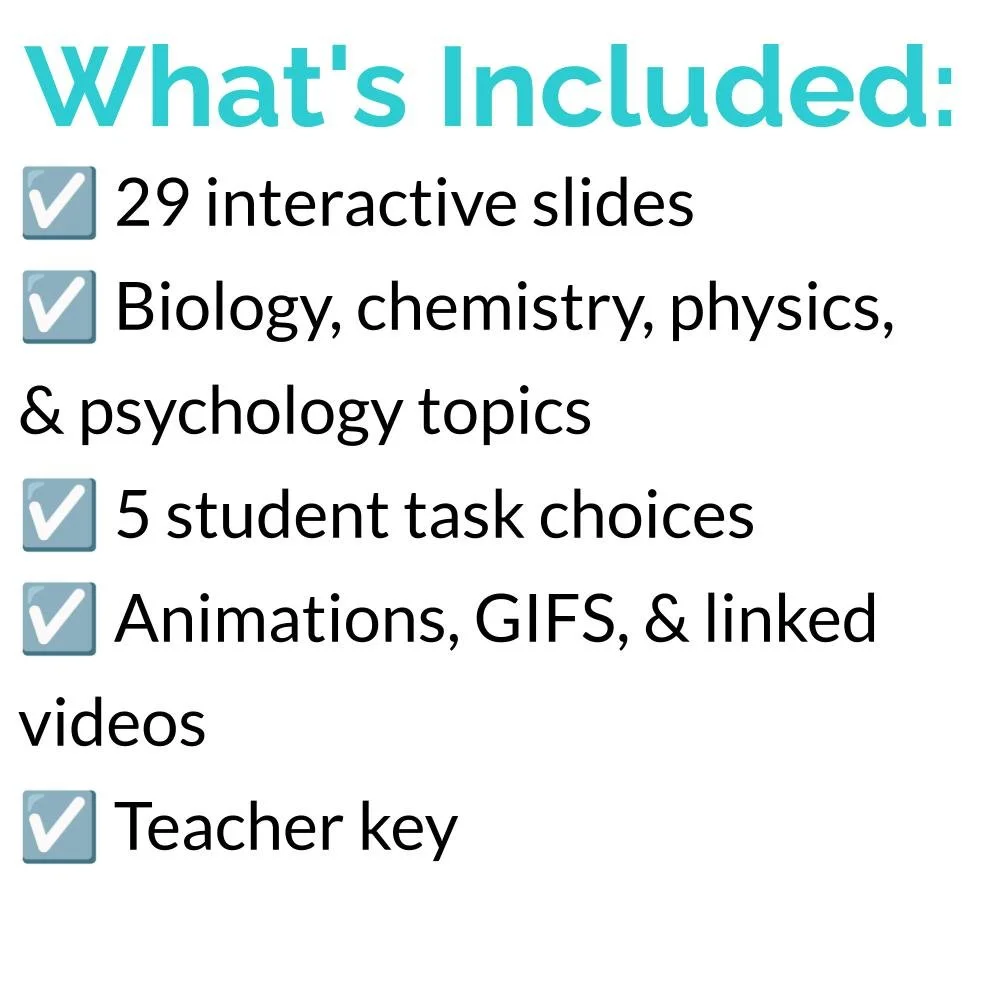 Image 3 of 4
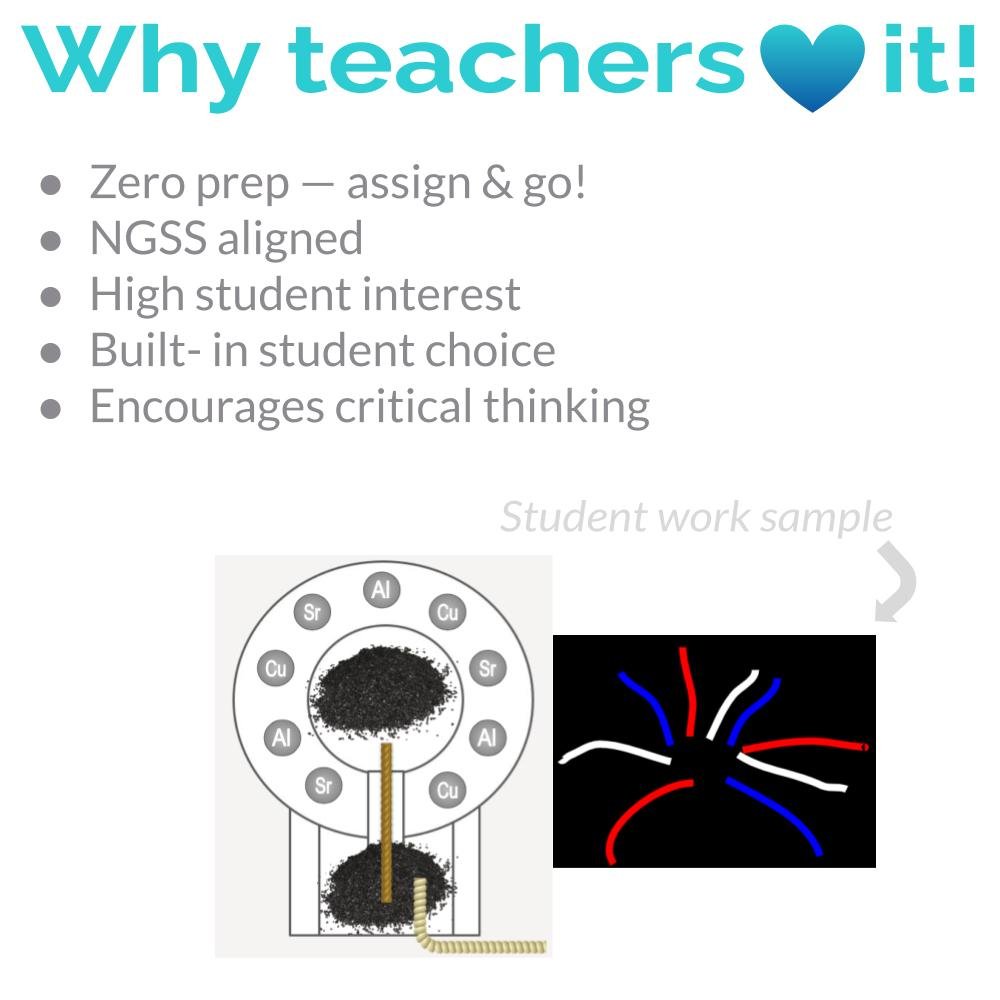 Image 4 of 4
An Interdisciplinary Set of Stations Connecting Biology, Chemistry, and Physics
This digital stations lesson uses a football theme to engage students in a series of short, focused investigations across multiple areas of science. Students rotate through five independent activities that apply scientific concepts to familiar real-world contexts.
Rather than completing a single worksheet, students interact with simulations, images, data, and scenarios that require them to analyze, explain, and apply scientific ideas.
Students complete five self-contained station activities:
Muscle Contraction
Students examine how muscle fibers contract by analyzing sarcomere models, videos, and guided questions.
Digestion and Enzymes
Students investigate how macromolecules are broken down in the small intestine and explore how enzyme function relates to digestion and genetic disorders.
Newton’s Laws and Motion
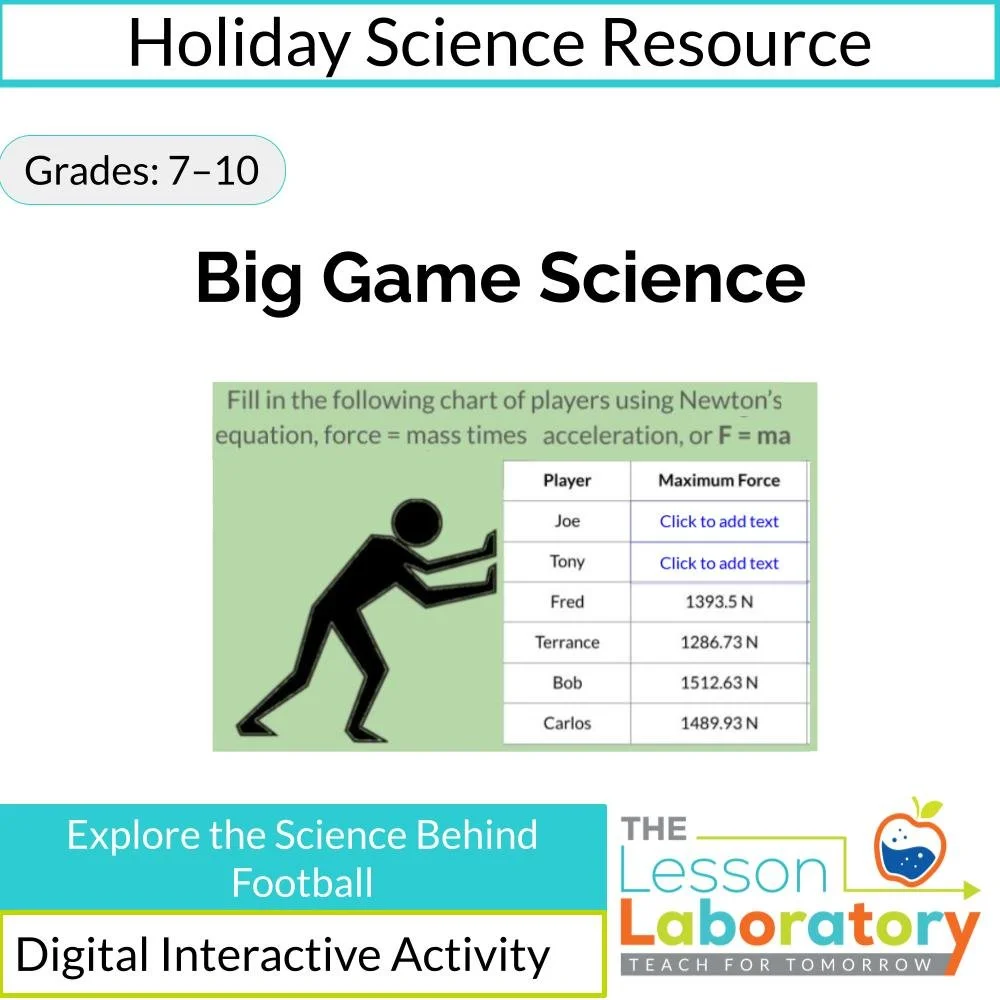
Students apply the equation F = ma to determine which football players are best suited for different positions based on mass and acceleration.
Advertising and Consumer Science
Students analyze logos and commercials to understand how design and psychology influence consumer behavior, then create their own advertisements using scientific principles of persuasion.
Fireworks and Pyrotechnics
Students explore the chemistry and physics behind fireworks and design a model halftime fireworks display based on what they learn.
Each station can be completed independently, allowing teachers to run this lesson as rotations, small groups, or a choice-based assignment.
• Muscle contraction and structure
• Enzymes and digestion
• Force, mass, and acceleration
• Consumer psychology and advertising
• Chemistry and physics of fireworks
• Application of science to real-world scenarios
• High engagement without sacrificing content
• Works well for stations or independent work
• Integrates multiple science disciplines
• Supports different interests and learning styles
• Easy to assign digitally
• Minimal prep required
This resource is a digital stations-style lesson (Google Slides compatible) with built-in student tasks.
Includes:
✔ Five independent station activities
✔ Student instructions
✔ Teacher answer key
✔ Printable literacy-based exit ticket
• Middle school science
• Introductory high school science
• Review or enrichment days
• Holiday or special event lessons
• Sub plans
• Interdisciplinary science classes
To preview this product, click here.
NGSS Alignment:
MS-LS1-2, MS-LS1-3
HS-LS1-2, HS-LS1-7
MS-PS1-2
MS-PS2-2
Science & Engineering Practices (SEPs):
Developing and Using Models; Analyzing and Interpreting Data; Constructing Explanations; Engaging in Argument from Evidence
Crosscutting Concepts (CCCs):
Structure and Function; Cause and Effect; Systems and System Models; Energy and Matter; Patterns
Common Core (Literacy & Math):
RST.6-8.1, RST.9-10.1
RST.6-8.7, RST.9-10.7
WHST.6-8.2, WHST.9-10.2
6.RP.A.3
Bundle Upgrade Policy
This lesson is included in one or more bundles. To support flexible purchasing and long-term use of our curriculum, Lesson Laboratory offers a bundle upgrade policy.
If you purchase this lesson and decide at a later date that you would like to upgrade to a bundle, you may request a store credit equal to the total amount paid for duplicate items.
To request an upgrade credit, please email thelessonlaboratory@gmail.com and include:
Your username
The order numbers for both the original purchase(s) and the bundle
The names of the duplicate resources
Requests must be submitted within 30 days of the bundle purchase. Credits are issued as store credit for future Lesson Laboratory purchases and are not provided as cash refunds.
This policy applies only to purchases of resources that are later included in a Lesson Laboratory bundle and is limited to one adjustment per upgrade pathway.
An Interdisciplinary Set of Stations Connecting Biology, Chemistry, and Physics
This digital stations lesson uses a football theme to engage students in a series of short, focused investigations across multiple areas of science. Students rotate through five independent activities that apply scientific concepts to familiar real-world contexts.
Rather than completing a single worksheet, students interact with simulations, images, data, and scenarios that require them to analyze, explain, and apply scientific ideas.
Students complete five self-contained station activities:
Muscle Contraction
Students examine how muscle fibers contract by analyzing sarcomere models, videos, and guided questions.
Digestion and Enzymes
Students investigate how macromolecules are broken down in the small intestine and explore how enzyme function relates to digestion and genetic disorders.
Newton’s Laws and Motion
Students apply the equation F = ma to determine which football players are best suited for different positions based on mass and acceleration.
Advertising and Consumer Science
Students analyze logos and commercials to understand how design and psychology influence consumer behavior, then create their own advertisements using scientific principles of persuasion.
Fireworks and Pyrotechnics
Students explore the chemistry and physics behind fireworks and design a model halftime fireworks display based on what they learn.
Each station can be completed independently, allowing teachers to run this lesson as rotations, small groups, or a choice-based assignment.
• Muscle contraction and structure
• Enzymes and digestion
• Force, mass, and acceleration
• Consumer psychology and advertising
• Chemistry and physics of fireworks
• Application of science to real-world scenarios
• High engagement without sacrificing content
• Works well for stations or independent work
• Integrates multiple science disciplines
• Supports different interests and learning styles
• Easy to assign digitally
• Minimal prep required
This resource is a digital stations-style lesson (Google Slides compatible) with built-in student tasks.
Includes:
✔ Five independent station activities
✔ Student instructions
✔ Teacher answer key
✔ Printable literacy-based exit ticket
• Middle school science
• Introductory high school science
• Review or enrichment days
• Holiday or special event lessons
• Sub plans
• Interdisciplinary science classes
To preview this product, click here.
NGSS Alignment:
MS-LS1-2, MS-LS1-3
HS-LS1-2, HS-LS1-7
MS-PS1-2
MS-PS2-2
Science & Engineering Practices (SEPs):
Developing and Using Models; Analyzing and Interpreting Data; Constructing Explanations; Engaging in Argument from Evidence
Crosscutting Concepts (CCCs):
Structure and Function; Cause and Effect; Systems and System Models; Energy and Matter; Patterns
Common Core (Literacy & Math):
RST.6-8.1, RST.9-10.1
RST.6-8.7, RST.9-10.7
WHST.6-8.2, WHST.9-10.2
6.RP.A.3
Bundle Upgrade Policy
This lesson is included in one or more bundles. To support flexible purchasing and long-term use of our curriculum, Lesson Laboratory offers a bundle upgrade policy.
If you purchase this lesson and decide at a later date that you would like to upgrade to a bundle, you may request a store credit equal to the total amount paid for duplicate items.
To request an upgrade credit, please email thelessonlaboratory@gmail.com and include:
Your username
The order numbers for both the original purchase(s) and the bundle
The names of the duplicate resources
Requests must be submitted within 30 days of the bundle purchase. Credits are issued as store credit for future Lesson Laboratory purchases and are not provided as cash refunds.
This policy applies only to purchases of resources that are later included in a Lesson Laboratory bundle and is limited to one adjustment per upgrade pathway.