 Image 1 of 4
 Image 2 of 4
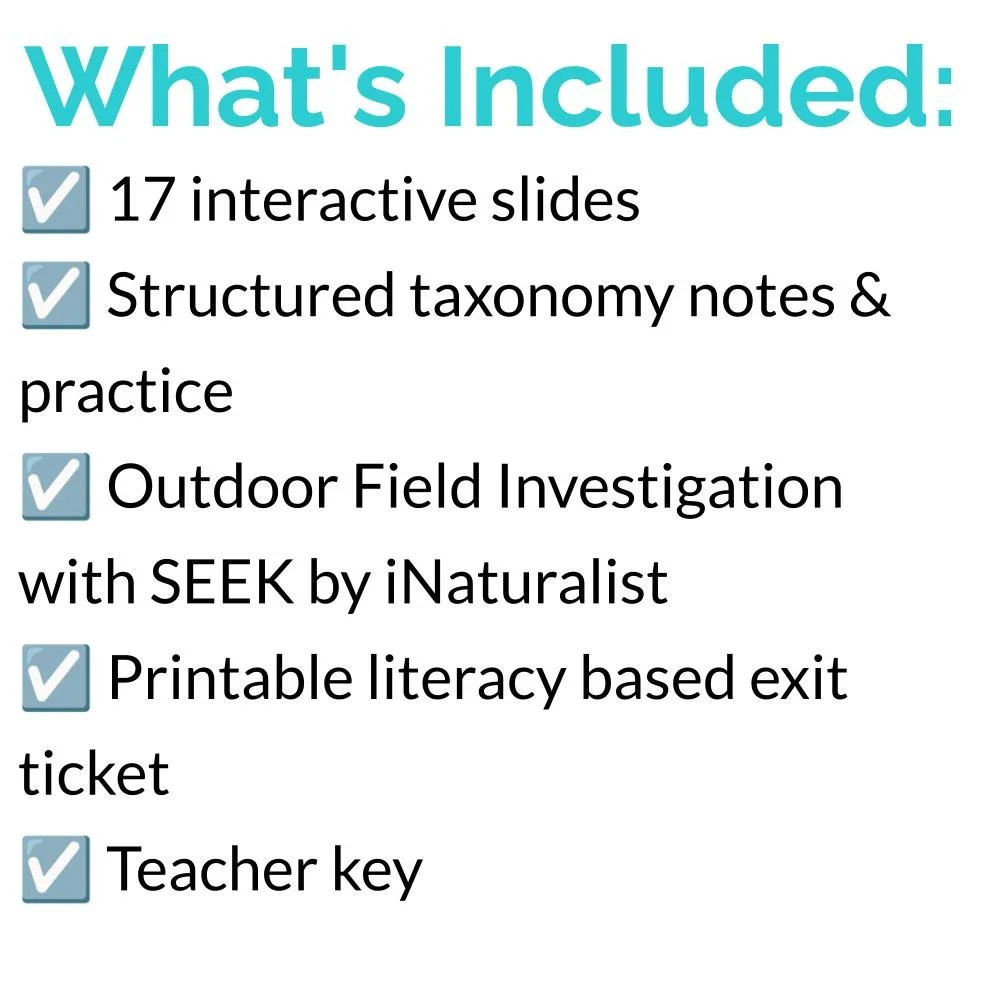 Image 3 of 4
 Image 4 of 4
Digital Outdoor Biology Activity | Classification, Linnaean System & Real-World Observation.
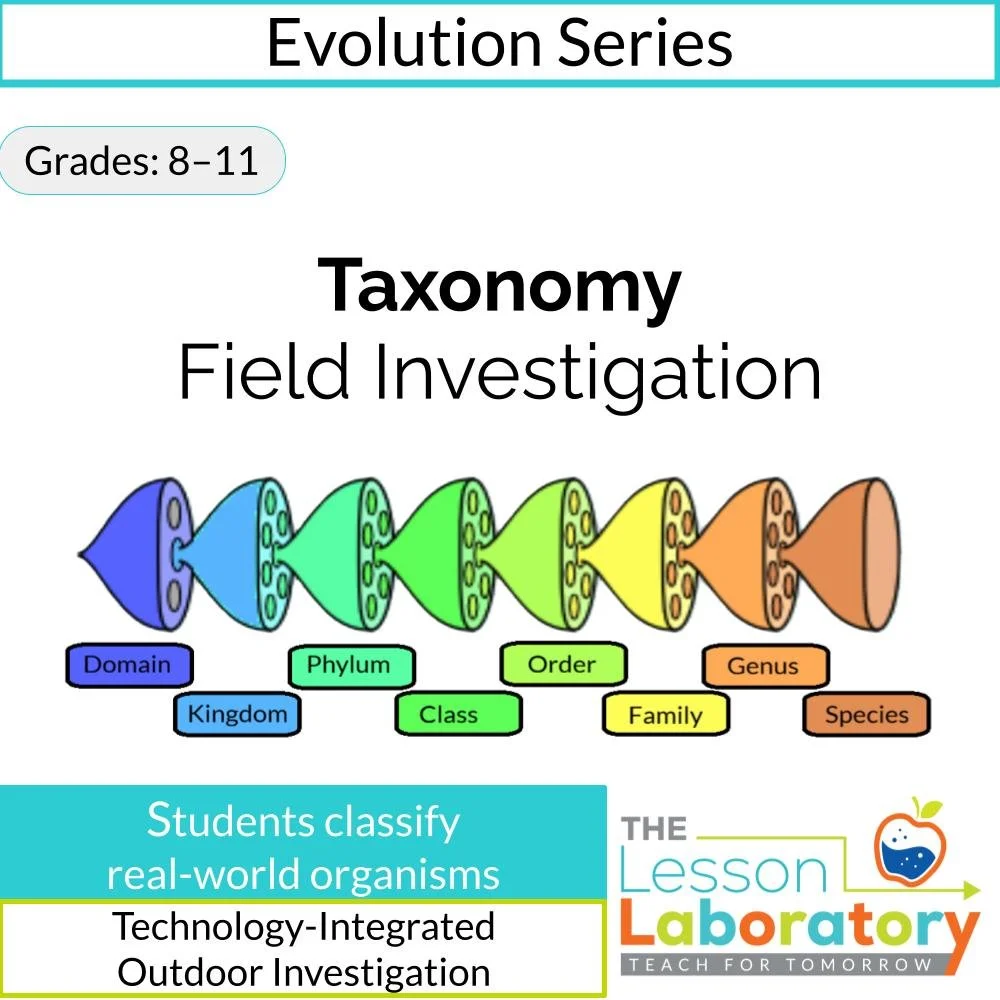
This lesson applies formal taxonomy to real-world organism identification through a structured field investigation.
Students begin by reviewing the Linnaean classification system, including domains, kingdoms, and the full hierarchical structure from domain to species. They practice categorizing organisms and analyze the classification of humans as a model example before transitioning into applied work.
Students then use the free SEEK by iNaturalist app to identify and classify organisms in their local environment. The app supports real-time identification using a device camera, allowing students to observe authentic biodiversity and record taxonomic data directly from their surroundings.
The focus of the lesson is not on the technology itself, but on how classification systems are applied in practice.
Structured notes on the Linnaean system and biological hierarchy
Practice categorizing organisms into major biological groups
Guided download and setup of the SEEK app
Outdoor organism identification and data collection
Classroom analysis and classification recording
Exit ticket for reflection and reinforcement
Students document multiple organisms, trace their classification, and interpret how hierarchical systems organize biodiversity.
Biological hierarchy (Domain → Species)
Distinguishing major kingdoms of life
Applying taxonomic structure to real organisms
Connecting classroom classification to field observation
Using technology as a scientific tool
Biodiversity & Classification units
Middle or high school general biology
Outdoor or field-based learning days
Technology-integrated instruction
This lesson bridges formal taxonomy with authentic scientific observation, allowing students to see classification systems operating in the natural world around them.
To see a preview of this lesson, click here.
NGSS Alignment (High School):
none- aligns with SEPs and CCCs
NGSS Alignment (Middle School):
none- aligns with SEPs and CCCs
Science & Engineering Practices (SEPs):
Developing and Using Models
Analyzing and Interpreting Data
Engaging in Argument from Evidence
Crosscutting Concepts (CCCs):
Structure and Function
Patterns
Common Core (Literacy in Science):
CCSS.ELA-LITERACY.RST.6-8.7 / RST.9-10.7; CCSS.ELA-LITERACY.WHST.6-8.2 / WHST.9-10.2
Bundle Upgrade Policy
This lesson is included in one or more bundles. To support flexible purchasing and long-term use of our curriculum, Lesson Laboratory offers a bundle upgrade policy.
If you purchase this lesson and decide at a later date that you would like to upgrade to a bundle, you may request a store credit equal to the total amount paid for duplicate items.
To request an upgrade credit, please email thelessonlaboratory@gmail.com and include:
Your username
The order numbers for both the original purchase(s) and the bundle
The names of the duplicate resources
Requests must be submitted within 30 days of the bundle purchase. Credits are issued as store credit for future Lesson Laboratory purchases and are not provided as cash refunds.
This policy applies only to purchases of resources that are later included in a Lesson Laboratory bundle and is limited to one adjustment per upgrade pathway.
Digital Outdoor Biology Activity | Classification, Linnaean System & Real-World Observation.
This lesson applies formal taxonomy to real-world organism identification through a structured field investigation.
Students begin by reviewing the Linnaean classification system, including domains, kingdoms, and the full hierarchical structure from domain to species. They practice categorizing organisms and analyze the classification of humans as a model example before transitioning into applied work.
Students then use the free SEEK by iNaturalist app to identify and classify organisms in their local environment. The app supports real-time identification using a device camera, allowing students to observe authentic biodiversity and record taxonomic data directly from their surroundings.
The focus of the lesson is not on the technology itself, but on how classification systems are applied in practice.
Structured notes on the Linnaean system and biological hierarchy
Practice categorizing organisms into major biological groups
Guided download and setup of the SEEK app
Outdoor organism identification and data collection
Classroom analysis and classification recording
Exit ticket for reflection and reinforcement
Students document multiple organisms, trace their classification, and interpret how hierarchical systems organize biodiversity.
Biological hierarchy (Domain → Species)
Distinguishing major kingdoms of life
Applying taxonomic structure to real organisms
Connecting classroom classification to field observation
Using technology as a scientific tool
Biodiversity & Classification units
Middle or high school general biology
Outdoor or field-based learning days
Technology-integrated instruction
This lesson bridges formal taxonomy with authentic scientific observation, allowing students to see classification systems operating in the natural world around them.
To see a preview of this lesson, click here.
NGSS Alignment (High School):
none- aligns with SEPs and CCCs
NGSS Alignment (Middle School):
none- aligns with SEPs and CCCs
Science & Engineering Practices (SEPs):
Developing and Using Models
Analyzing and Interpreting Data
Engaging in Argument from Evidence
Crosscutting Concepts (CCCs):
Structure and Function
Patterns
Common Core (Literacy in Science):
CCSS.ELA-LITERACY.RST.6-8.7 / RST.9-10.7; CCSS.ELA-LITERACY.WHST.6-8.2 / WHST.9-10.2
Bundle Upgrade Policy
This lesson is included in one or more bundles. To support flexible purchasing and long-term use of our curriculum, Lesson Laboratory offers a bundle upgrade policy.
If you purchase this lesson and decide at a later date that you would like to upgrade to a bundle, you may request a store credit equal to the total amount paid for duplicate items.
To request an upgrade credit, please email thelessonlaboratory@gmail.com and include:
Your username
The order numbers for both the original purchase(s) and the bundle
The names of the duplicate resources
Requests must be submitted within 30 days of the bundle purchase. Credits are issued as store credit for future Lesson Laboratory purchases and are not provided as cash refunds.
This policy applies only to purchases of resources that are later included in a Lesson Laboratory bundle and is limited to one adjustment per upgrade pathway.