 Image 1 of 4
 Image 2 of 4
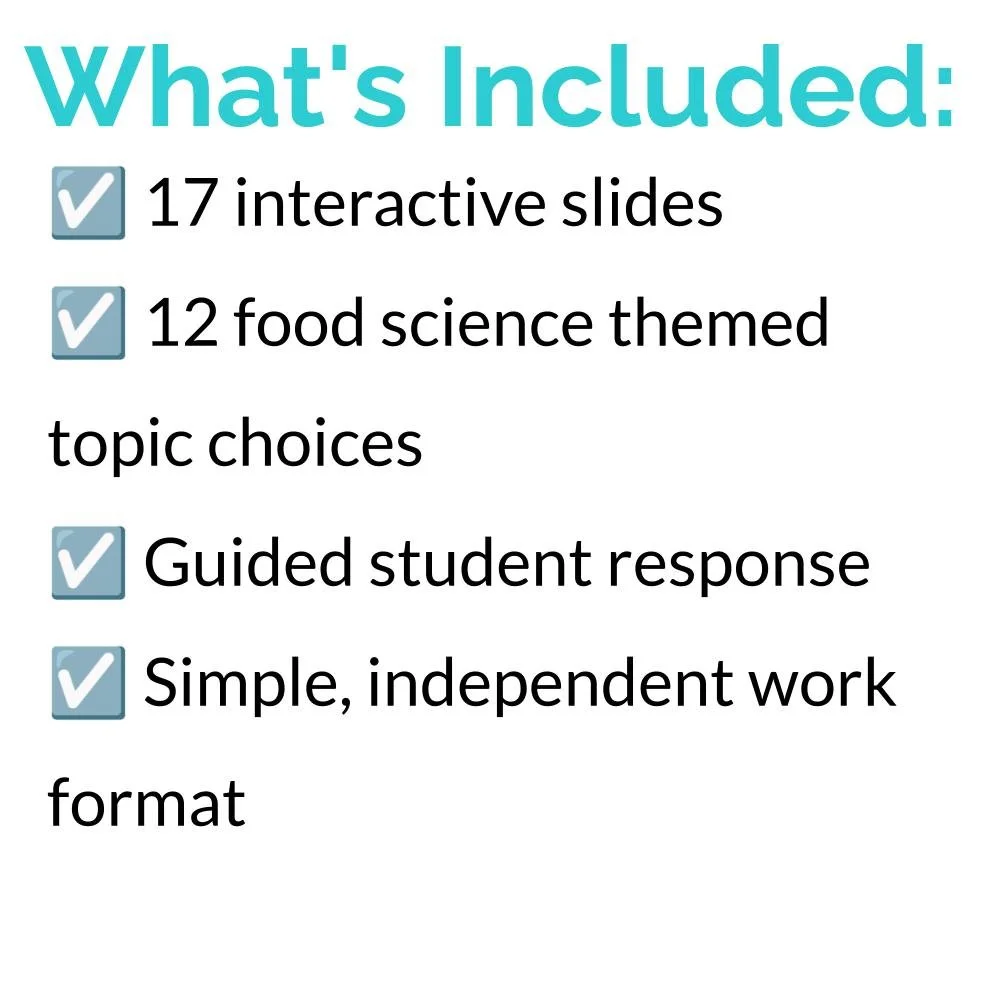 Image 3 of 4
 Image 4 of 4
Engaging Video-Based Science Menu for Middle & High School – Perfect for Pre-Holiday Lessons or Sub Plans.
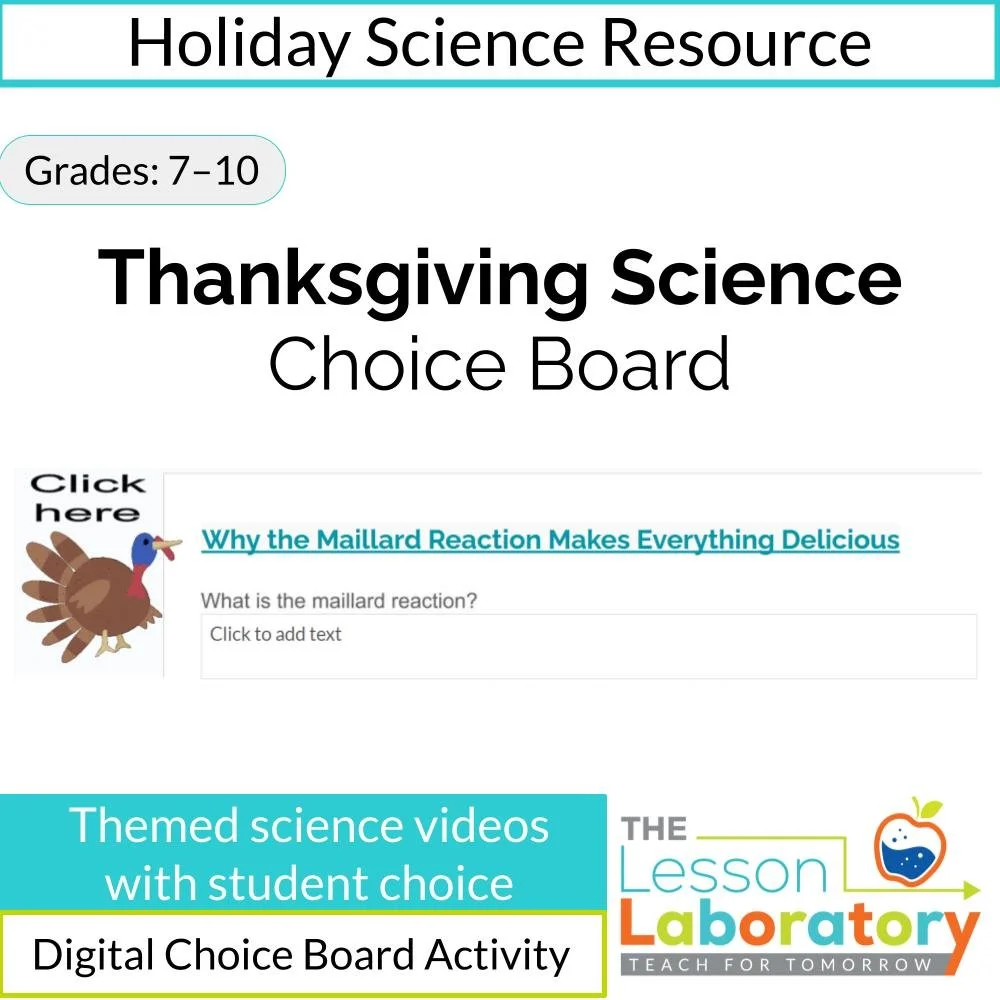
This Google Slides lesson uses short, curated videos to examine the science behind common Thanksgiving foods through a structured student-choice format. Students select from a set of food-based investigations and analyze each topic using guided questions.
Students choose from approximately twelve food-related science topics and:
watch short, kid-friendly videos
answer content-based and reasoning questions
explain the scientific processes involved in cooking and flavor
Topics include examples such as:
the Maillard reaction and browning
the chemistry of sweetness
why garlic smells the way it does
how cookies and other baked goods form
and other Thanksgiving-related food science phenomena
The lesson is organized as a choice board, with a recommended number of activities to complete while allowing flexibility based on time and instructional goals. Each food icon links to a slide with multiple related videos, allowing students to explore a topic in greater depth before returning to the main menu.
This lesson is designed to support:
application of chemistry and biology concepts to everyday food
explanation of familiar phenomena using scientific ideas
engagement through structured student choice
short-form analysis of multimedia science sources
It functions well as:
a seasonal science activity
an enrichment or review task
a low-prep digital choice board lesson
The format allows students to connect classroom science to real-world experiences while practicing explanation and interpretation rather than passive viewing.
PLEASE MAKE SURE THAT YOUR SCHOOL/DISTRICT ALLOWS YOUTUBE ACCESS BEFORE PURCHASE.
To preview this lesson, click here.
Science & Engineering Practices (SEPs):
Obtaining, Evaluating, and Communicating Information; Constructing Explanations
Crosscutting Concepts (CCCs):
Cause and Effect; Structure and Function
Common Core (Literacy in Science):
RST.6-8.7, RST.9-10.7
WHST.6-8.2, WHST.9-10.2
Bundle Upgrade Policy
This lesson is included in one or more bundles. To support flexible purchasing and long-term use of our curriculum, Lesson Laboratory offers a bundle upgrade policy.
If you purchase this lesson and decide at a later date that you would like to upgrade to a bundle, you may request a store credit equal to the total amount paid for duplicate items.
To request an upgrade credit, please email thelessonlaboratory@gmail.com and include:
Your username
The order numbers for both the original purchase(s) and the bundle
The names of the duplicate resources
Requests must be submitted within 30 days of the bundle purchase. Credits are issued as store credit for future Lesson Laboratory purchases and are not provided as cash refunds.
This policy applies only to purchases of resources that are later included in a Lesson Laboratory bundle and is limited to one adjustment per upgrade pathway.
Engaging Video-Based Science Menu for Middle & High School – Perfect for Pre-Holiday Lessons or Sub Plans.
This Google Slides lesson uses short, curated videos to examine the science behind common Thanksgiving foods through a structured student-choice format. Students select from a set of food-based investigations and analyze each topic using guided questions.
Students choose from approximately twelve food-related science topics and:
watch short, kid-friendly videos
answer content-based and reasoning questions
explain the scientific processes involved in cooking and flavor
Topics include examples such as:
the Maillard reaction and browning
the chemistry of sweetness
why garlic smells the way it does
how cookies and other baked goods form
and other Thanksgiving-related food science phenomena
The lesson is organized as a choice board, with a recommended number of activities to complete while allowing flexibility based on time and instructional goals. Each food icon links to a slide with multiple related videos, allowing students to explore a topic in greater depth before returning to the main menu.
This lesson is designed to support:
application of chemistry and biology concepts to everyday food
explanation of familiar phenomena using scientific ideas
engagement through structured student choice
short-form analysis of multimedia science sources
It functions well as:
a seasonal science activity
an enrichment or review task
a low-prep digital choice board lesson
The format allows students to connect classroom science to real-world experiences while practicing explanation and interpretation rather than passive viewing.
PLEASE MAKE SURE THAT YOUR SCHOOL/DISTRICT ALLOWS YOUTUBE ACCESS BEFORE PURCHASE.
To preview this lesson, click here.
Science & Engineering Practices (SEPs):
Obtaining, Evaluating, and Communicating Information; Constructing Explanations
Crosscutting Concepts (CCCs):
Cause and Effect; Structure and Function
Common Core (Literacy in Science):
RST.6-8.7, RST.9-10.7
WHST.6-8.2, WHST.9-10.2
Bundle Upgrade Policy
This lesson is included in one or more bundles. To support flexible purchasing and long-term use of our curriculum, Lesson Laboratory offers a bundle upgrade policy.
If you purchase this lesson and decide at a later date that you would like to upgrade to a bundle, you may request a store credit equal to the total amount paid for duplicate items.
To request an upgrade credit, please email thelessonlaboratory@gmail.com and include:
Your username
The order numbers for both the original purchase(s) and the bundle
The names of the duplicate resources
Requests must be submitted within 30 days of the bundle purchase. Credits are issued as store credit for future Lesson Laboratory purchases and are not provided as cash refunds.
This policy applies only to purchases of resources that are later included in a Lesson Laboratory bundle and is limited to one adjustment per upgrade pathway.