 Image 1 of 4
 Image 2 of 4
 Image 3 of 4
 Image 4 of 4
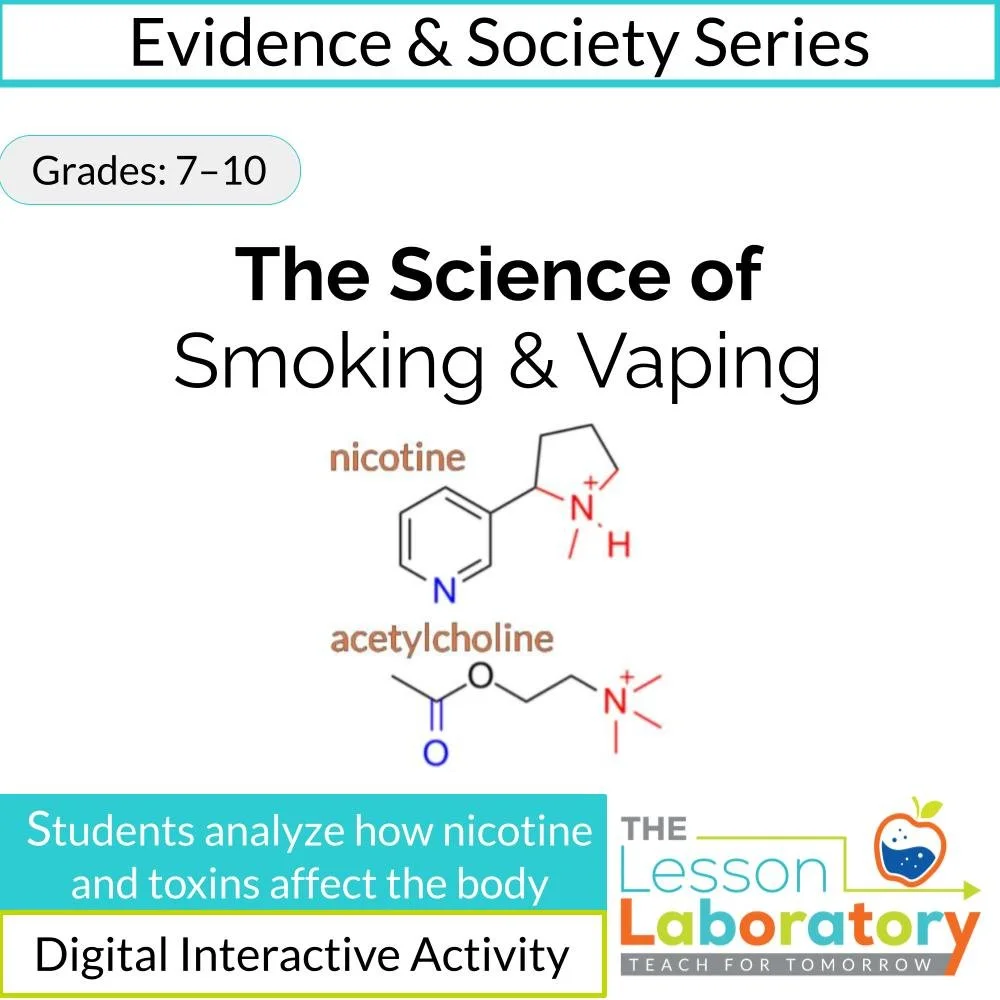
Students investigate how chemicals in cigarettes and vapes damage the body, disrupt cells, and cause nicotine addiction.
Students often hear that smoking and vaping are harmful, but rarely examine the biological mechanisms that explain why. In this lesson, students investigate how chemicals in cigarettes and e-cigarettes damage the body at multiple levels of biological organization—from molecules and cells to organs and behavior.
In The Science of Smoking & Vaping, students begin by reviewing the structure of the respiratory system and the role of the lungs in efficient gas exchange. They then examine how smoking and vaping interfere with that system through a series of guided investigations. Students analyze how carbon monoxide interferes with oxygen transport in the blood, explore how extreme heat denatures proteins in lung tissue, and examine how toxic chemicals such as benzene and hydrogen cyanide disrupt normal cellular processes.
The lesson concludes with an investigation into the neuroscience of nicotine addiction. Students compare the structures of nicotine and acetylcholine, analyze how nicotine interacts with receptors in the brain, and model how dopamine signaling reinforces addictive behaviors. Through this process, students develop a scientific explanation for how nicotine hijacks the brain’s reward system and leads to dependence.
This lesson is designed to help students move beyond simple warnings about smoking and vaping and instead understand the scientific mechanisms behind addiction and physiological damage.
Students will:
Label the major structures of the respiratory system
Investigate chemicals found in cigarettes and vapes
Model how carbon monoxide disrupts oxygen transport in the blood
Analyze how heat can denature proteins in lung tissue
Examine how toxic chemicals damage DNA and cellular processes
Complete a CER explaining how hydrogen cyanide disrupts cell function
Model how nicotine interacts with brain receptors and affects dopamine signaling
Analyze how these processes lead to nicotine addiction
Teachers value this lesson because it:
Explains smoking and vaping through scientific mechanisms rather than warnings alone
Connects molecular biology, cell biology, and physiology in a single coherent investigation
Encourages evidence-based reasoning and explanation writing
Includes multiple interactive tasks that promote active student thinking
Works well for biology, health science, or human body units
Interactive digital lesson slides
Teacher answer key
CER reasoning task
External video analysis activity
Printable literacy-based exit ticket
Designed for grades 7–10, but flexible for:
middle school life science
high school biology
health or drug-education units
human body systems courses
Respiratory system function
Gas exchange in the lungs
Toxic chemicals in cigarettes and vapes
Carbon monoxide and oxygen transport
Protein denaturation from heat exposure
DNA damage and carcinogens
Cellular respiration disruption
Nicotine, dopamine, and addiction
To preview this lesson, click here.
HS-LS1-2
HS-LS1-3
MS-LS1-3
MS-LS1-7
Developing and Using Models; Constructing Explanations; Engaging in Argument from Evidence; Analyzing and Interpreting Data
Cause and Effect; Structure and Function; Systems and System Models
RST.9-10.4, RST.11-12.4
RST.9-10.7, RST.11-12.7
RST.9-10.8, RST.11-12.8
WHST.9-10.1, WHST.11-12.1
Students investigate how chemicals in cigarettes and vapes damage the body, disrupt cells, and cause nicotine addiction.
Students often hear that smoking and vaping are harmful, but rarely examine the biological mechanisms that explain why. In this lesson, students investigate how chemicals in cigarettes and e-cigarettes damage the body at multiple levels of biological organization—from molecules and cells to organs and behavior.
In The Science of Smoking & Vaping, students begin by reviewing the structure of the respiratory system and the role of the lungs in efficient gas exchange. They then examine how smoking and vaping interfere with that system through a series of guided investigations. Students analyze how carbon monoxide interferes with oxygen transport in the blood, explore how extreme heat denatures proteins in lung tissue, and examine how toxic chemicals such as benzene and hydrogen cyanide disrupt normal cellular processes.
The lesson concludes with an investigation into the neuroscience of nicotine addiction. Students compare the structures of nicotine and acetylcholine, analyze how nicotine interacts with receptors in the brain, and model how dopamine signaling reinforces addictive behaviors. Through this process, students develop a scientific explanation for how nicotine hijacks the brain’s reward system and leads to dependence.
This lesson is designed to help students move beyond simple warnings about smoking and vaping and instead understand the scientific mechanisms behind addiction and physiological damage.
Students will:
Label the major structures of the respiratory system
Investigate chemicals found in cigarettes and vapes
Model how carbon monoxide disrupts oxygen transport in the blood
Analyze how heat can denature proteins in lung tissue
Examine how toxic chemicals damage DNA and cellular processes
Complete a CER explaining how hydrogen cyanide disrupts cell function
Model how nicotine interacts with brain receptors and affects dopamine signaling
Analyze how these processes lead to nicotine addiction
Teachers value this lesson because it:
Explains smoking and vaping through scientific mechanisms rather than warnings alone
Connects molecular biology, cell biology, and physiology in a single coherent investigation
Encourages evidence-based reasoning and explanation writing
Includes multiple interactive tasks that promote active student thinking
Works well for biology, health science, or human body units
Interactive digital lesson slides
Teacher answer key
CER reasoning task
External video analysis activity
Printable literacy-based exit ticket
Designed for grades 7–10, but flexible for:
middle school life science
high school biology
health or drug-education units
human body systems courses
Respiratory system function
Gas exchange in the lungs
Toxic chemicals in cigarettes and vapes
Carbon monoxide and oxygen transport
Protein denaturation from heat exposure
DNA damage and carcinogens
Cellular respiration disruption
Nicotine, dopamine, and addiction
To preview this lesson, click here.
HS-LS1-2
HS-LS1-3
MS-LS1-3
MS-LS1-7
Developing and Using Models; Constructing Explanations; Engaging in Argument from Evidence; Analyzing and Interpreting Data
Cause and Effect; Structure and Function; Systems and System Models
RST.9-10.4, RST.11-12.4
RST.9-10.7, RST.11-12.7
RST.9-10.8, RST.11-12.8
WHST.9-10.1, WHST.11-12.1